
How to Play the Cdim Guitar Chord (C Diminished, Explained)
The Cdim triad shape, the Cdim7 shape most charts actually mean, why it buzzes, and how to use it as a passing chord between C, Dm, and G7.

To play a C diminished (Cdim) chord on guitar, mute the low E and high E strings, then put your index finger on the 3rd fret of the A string, your middle finger on the 4th fret of the D string, your ring finger on the 4th fret of the B string, and your pinky on the 5th fret of the G string. Strum only the four middle strings. That gives you C, Eb, and Gb, the three notes of a C diminished triad. Most chord charts that say "Cdim," though, actually mean Cdim7, a related four-note chord with its own shape, covered right after this one. Everything below sorts out which is which, why the shape buzzes, and how to move in and out of it.
The Cdim chord, string by string
Here is the full shape as a table. "Finger" uses standard numbering: 1 is your index finger, 2 is your middle finger, 3 is your ring finger, 4 is your pinky.
| String | Fret | Finger |
|---|---|---|
| 6 (low E) | Muted, do not play | - |
| 5 (A) | 3 | 1 (index) |
| 4 (D) | 4 | 2 (middle) |
| 3 (G) | 5 | 4 (pinky) |
| 2 (B) | 4 | 3 (ring) |
| 1 (high E) | Muted, do not play | - |
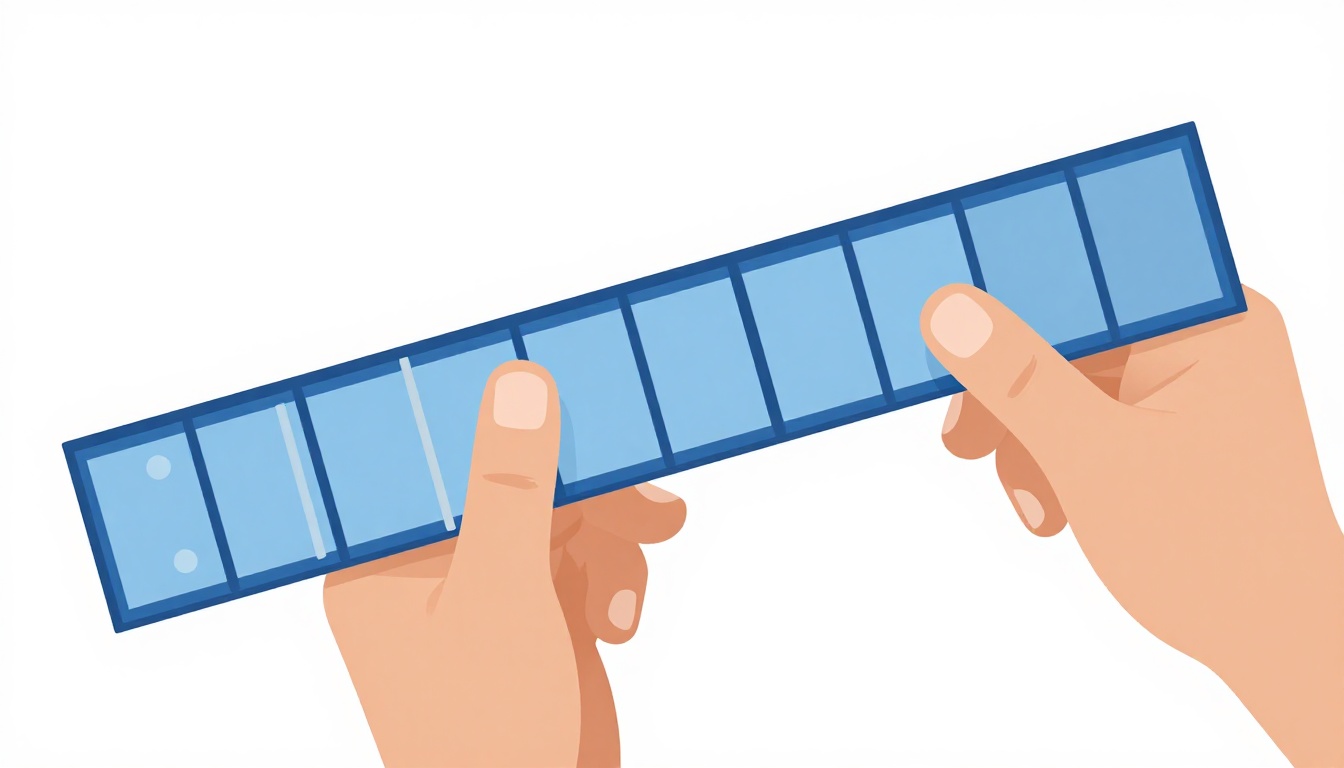
Notice the four fingers are stacked close together across only three frets, 3 to 5, which is a tighter cluster than most open chords ask for. That closeness is not a mistake in the shape, it is what a diminished chord's notes actually require, since a diminished triad's three notes sit closer together in pitch than a major or minor triad's do.
Which strings to strum
Strum from the A string down through the B string, four strings total, and leave both outer strings, low E and high E, silent. The open low E is an E natural and the open high E is also an E natural, and neither E is one of Cdim's three notes, C, Eb, and Gb, so letting either ring in adds a note that clashes with the tense, unsettled sound the chord is built to produce.
Two ways to keep both outer strings out of the strum:
- Aim your strumming hand to start on the A string and stop after the B string. This takes deliberate attention at first, since most open chords use all six strings and your hand may default to a full sweep out of habit.
- Let your index finger's tip lean back slightly to touch the low E string. Because your index finger is already reaching for the A string, the side of that same finger often rests close enough to the low E to deaden it without extra effort. The high E string needs a separate check, since nothing in this shape naturally touches it; many players simply aim their strum to stop short of it.
Strum slowly and listen to the very first and last sound in the stroke. A low thud at the start means the low E snuck in. A ringing top note after the rest of the chord has stopped means the high E did.
What "diminished" means, in the notes themselves
A C diminished triad is built from three notes: C, the root, Eb, the minor 3rd, and Gb, the diminished 5th. Written as a formula against the major scale, that is 1, b3, b5. Compare that to a plain C major chord, C, E, and G, and only one interval changes: the 5th drops from a perfect 5th, G, down a half step to a diminished 5th, Gb.
| Chord | Notes | Formula | Character |
|---|---|---|---|
| C (major) | C, E, G | 1, 3, 5 | Bright, resolved |
| Cm (minor) | C, Eb, G | 1, b3, 5 | Dark, resolved |
| Cdim | C, Eb, Gb | 1, b3, b5 | Tense, unstable |
That flattened 5th is the whole story. The distance between Eb and Gb, the chord's two upper notes, is a tritone, three whole steps, historically nicknamed the "devil's interval" for how unresolved it sounds on its own. A diminished chord is built almost entirely out of that tension, which is why it rarely sits still in a song the way a major or minor chord does. It wants to move somewhere else almost immediately.
Cdim vs Cdim7: which one your chart actually means
This is the single most common point of confusion with this chord, and it is worth clearing up before learning any more shapes. "Cdim" technically refers to the three-note triad covered above, C, Eb, and Gb. In practice, though, the plain triad is rare in real music. What shows up constantly in songbooks, lead sheets, and chord charts under the label "Cdim," "C°," or "Cdim7" is almost always the four-note diminished seventh chord, which adds one more note stacked a minor 3rd above Gb.
| Chord | Notes | Notes added to the triad |
|---|---|---|
| Cdim (triad) | C, Eb, Gb | - |
| Cdim7 | C, Eb, Gb, A (technically Bbb) | A, a diminished 7th above the root |
That fourth note is written as A on chord charts and in most notation software, even though its strict theoretical name is Bbb, a double-flatted B, because a diminished 7th interval always counts as some form of 7th above the root. On the guitar, A and Bbb are the exact same pitch, so nothing about the shape changes, only the spelling on paper does. If a chart, a song, or a bandmate says "Cdim," assume they mean Cdim7 unless the context is a music theory lesson specifically discussing the bare triad, since the four-note version is what almost every player actually reaches for.
The Cdim7 shape most players use
Because a fully diminished seventh chord is built from four notes spaced an equal minor 3rd apart, it fits neatly onto four adjacent strings in a compact shape.
| String | Fret | Finger |
|---|---|---|
| 6 (low E) | Muted, do not play | - |
| 5 (A) | Muted, do not play | - |
| 4 (D) | 1 | 1 (index) |
| 3 (G) | 2 | 2 (middle) |
| 2 (B) | 1 | 3 (ring) |
| 1 (high E) | 2 | 4 (pinky) |
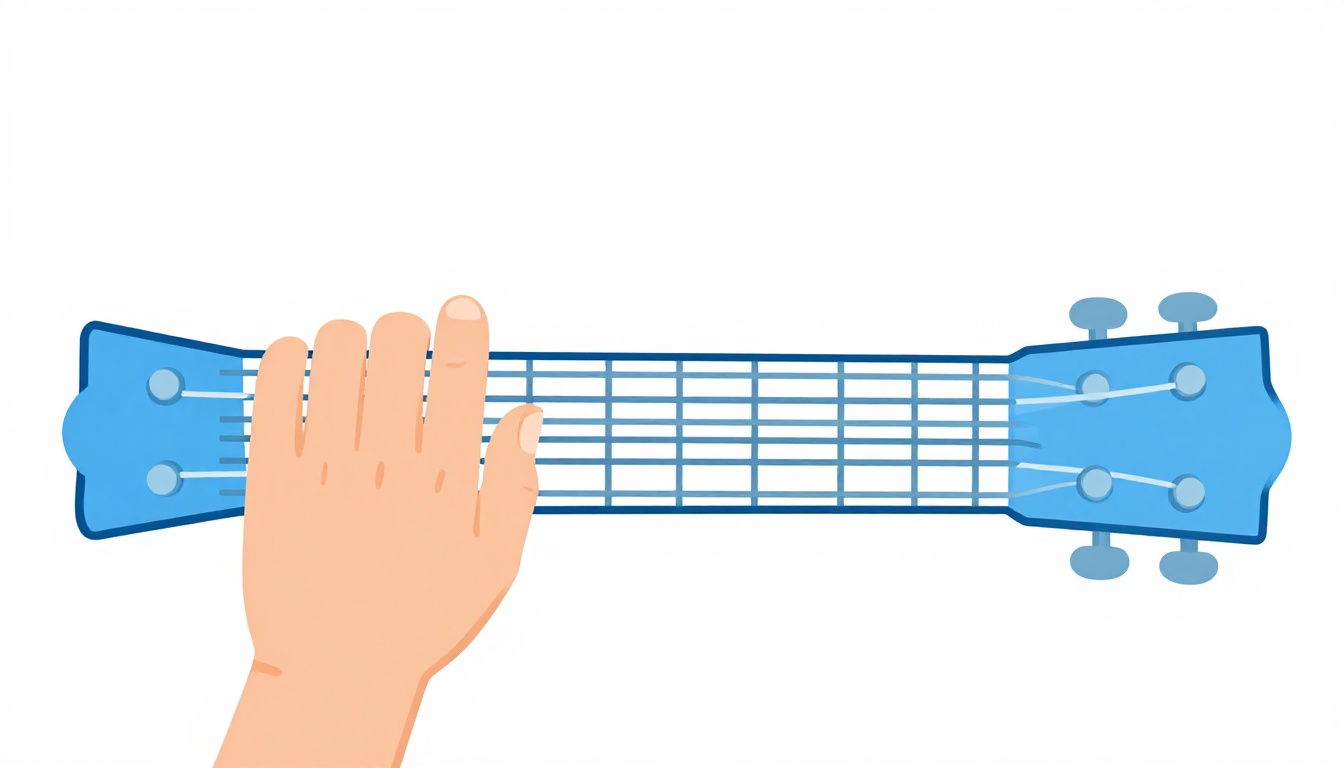
Each finger gets its own string here rather than sharing a barre, even though the frets alternate 1, 2, 1, 2 rather than climbing steadily. Index finger on the D string's 1st fret gives Eb, the b3. Middle finger on the G string's 2nd fret gives A, the diminished 7th. Ring finger on the B string's 1st fret gives C, the root. Pinky on the high E string's 2nd fret gives Gb, the b5. All four chord tones, all four fingers, no muted string in the middle of the strum. Mute only the low E and A strings.
This shape is small, low on the neck, and, once your fingers learn the alternating pattern, quicker to grab than the open triad covered earlier, which is part of why it is the version most guitarists default to when a chart just says "dim" or "dim7."
A second Cdim7 shape, and why it repeats every 3 frets
A second common Cdim7 voicing sits a little higher, closer to where the open triad shape lives, and skips the low E and high E strings instead.
| String | Fret | Finger |
|---|---|---|
| 6 (low E) | Muted, do not play | - |
| 5 (A) | 3 | 1 (index) |
| 4 (D) | 4 | 3 (ring) |
| 3 (G) | 2 | 2 (middle) |
| 2 (B) | 4 | 4 (pinky) |
| 1 (high E) | Muted, do not play | - |
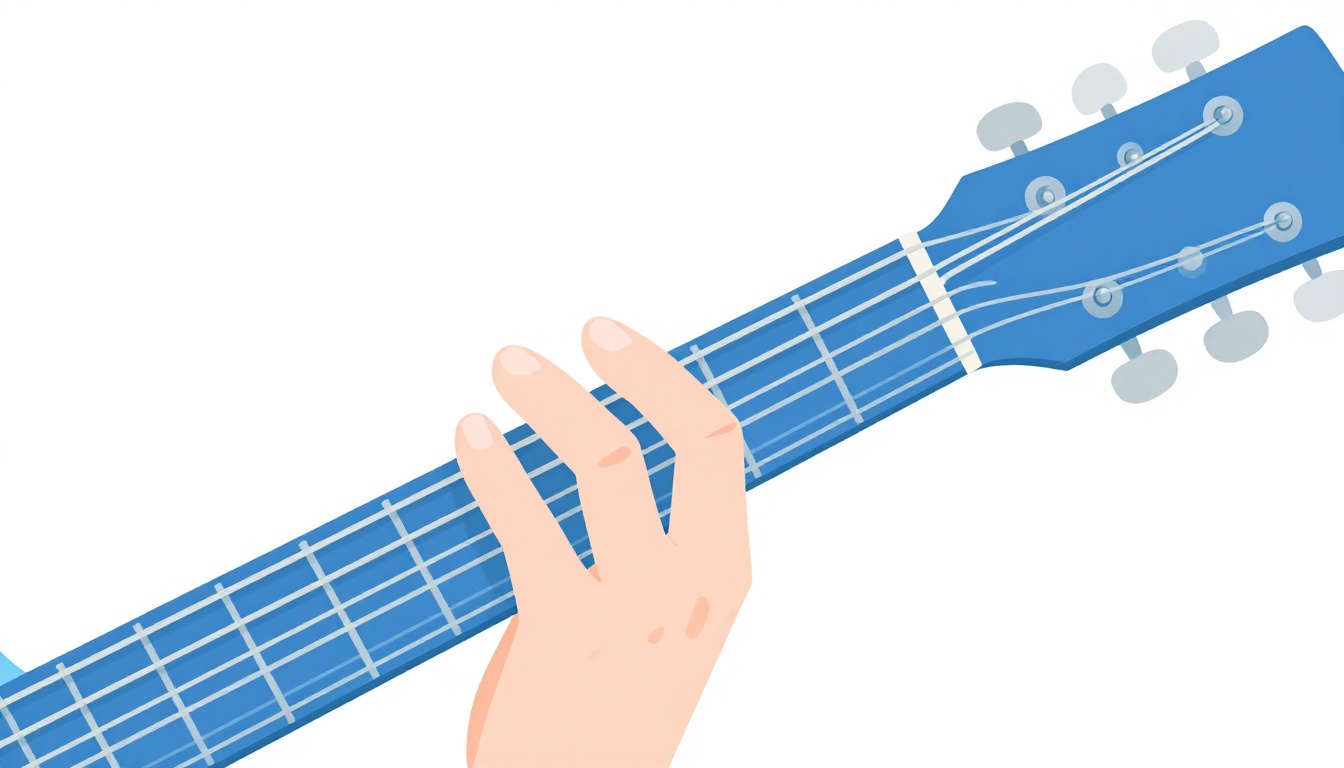
Index finger on the A string's 3rd fret gives C, the root. Middle finger on the G string's 2nd fret gives A, the diminished 7th. Ring finger on the D string's 4th fret gives Gb, the b5. Pinky on the B string's 4th fret gives Eb, the b3. Same four notes as the shape above, rearranged onto different strings and frets.
Here is the useful part: because a fully diminished seventh chord stacks four notes an equal distance apart, minor 3rds, three frets each, the exact same shape moved up or down by three frets produces the exact same chord, just spelled with a different name. Slide either shape above up three frets and you are playing Ebdim7, which contains the identical four notes as Cdim7, C, Eb, Gb, and A, just thought of with a different note as the "root." Slide it up three more frets and it becomes Gbdim7. Three more, and it is Adim7. All four names describe the same four pitches. This is a property unique to the fully diminished seventh chord among common chord types, and it does not hold for the plain three-note triad covered earlier in this article, which does not repeat that way.
Why your diminished chord is buzzing or sounds dead
Every voicing above packs several fingers into a small stretch of frets, which leaves less room for error than an open chord with fewer moving parts. Work through these one at a time.
Your fingers are too flat across the cluster
With four fingers working in close quarters across only three or four strings, a finger that lies flat instead of arching up near-vertical is far more likely to brush a neighboring string than it would be in a more spread-out chord. On the open triad shape, a flattened ring finger on the B string often leans into the G string next to it, deadening the pinky's note there.
Curl each finger so it meets its string close to the tip rather than the pad, and check that your thumb sits roughly behind your middle finger on the back of the neck rather than creeping over the top, since a high thumb tends to flatten every finger above it at once.
You are pressing in the middle of the fret space
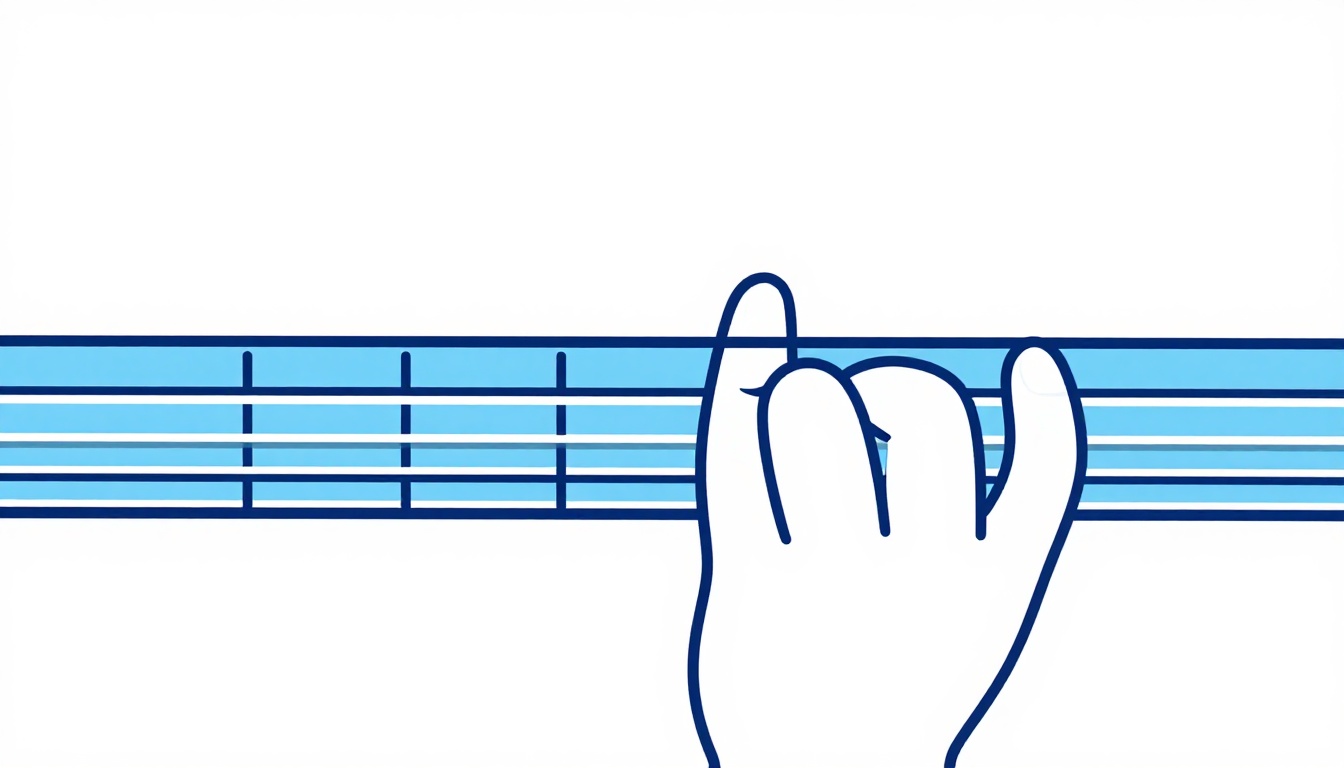
A fret number describes the space between two metal wires, not the wire itself, and pressing close to the wire on the side nearer the guitar's body takes noticeably less force than pressing in the middle of that space. On the compact Cdim7 shape especially, where two fingers sit only one fret apart from each other on neighboring strings, a finger camped in the middle of its fret space is the one most likely to buzz.
Not enough downward pressure from your weaker fingers
Your ring finger and pinky are usually the least independent and the weakest of the four, and every shape in this article asks at least one of them to hold down a note on its own without support from a neighboring finger. Fret just that one note by itself, pick the string alone, and add pressure gradually until the buzz clears, then commit that exact amount of force to memory rather than only memorizing the shape.
Miscounting a fret on the compact shapes
Both Cdim7 shapes above rely on precise, adjacent fret numbers, 1 and 2, or 3 and 4, and it is easy to land a finger one fret off when the frets involved are this close together. Count from the nut, confirm against a known fret marker, most guitars mark the 3rd, 5th, 7th, 9th, and 12th frets with dots, and double-check each finger individually before strumming the full chord.
There's no easy version, and here's why
Unlike many major and add chords, a diminished triad shares none of its notes with any of the guitar's six open strings, E, A, D, G, B, E. C, Eb, and Gb simply do not fall on an open string anywhere, which is why the open triad shape earlier in this article uses zero open strings among the four it plays and needs every one of the fingers assigned to it.
Cdim7 is a partial exception. Its fourth note, A, the diminished 7th, matches the guitar's open A string exactly, which is why some Cdim7 voicings elsewhere on the neck leave that string ringing open rather than fretting it. Neither shape taught above happens to use that trick, since both were chosen for how compactly they sit, but it is worth knowing the option exists if you come across a chord chart that shows the A string left open on a Cdim7 voicing.
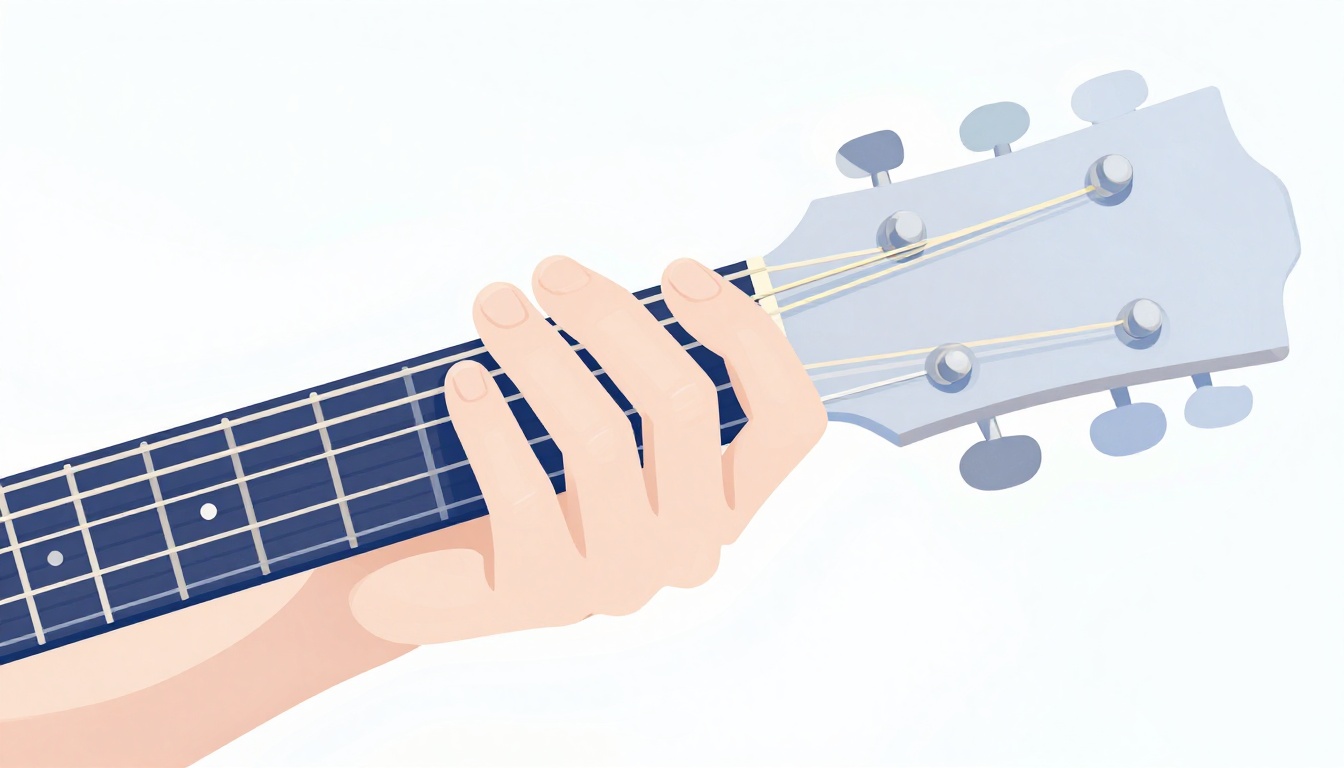
The honest takeaway is that a diminished chord asks more of your fretting hand, finger for finger, than a beginner-friendly open chord like C or G does. That is not a reason to avoid it, since both shapes above are genuinely learnable with practice, but it is worth knowing going in rather than expecting a shortcut that does not exist for this particular chord.
Taking it further up the neck: the movable barre shape
Once either shape above feels comfortable, it is worth knowing a six-string, fully movable version, built the same way an open E chord becomes a barre chord elsewhere on the neck.
| String | Fret | Finger |
|---|---|---|
| 6 (low E) | 8 | 1 (index, barre, root) |
| 5 (A) | 9 | 2 (middle) |
| 4 (D) | 10 | 3 (ring) |
| 3 (G) | 8 | 1 (index, barre) |
| 2 (B) | Muted, do not play | - |
| 1 (high E) | Muted, do not play | - |
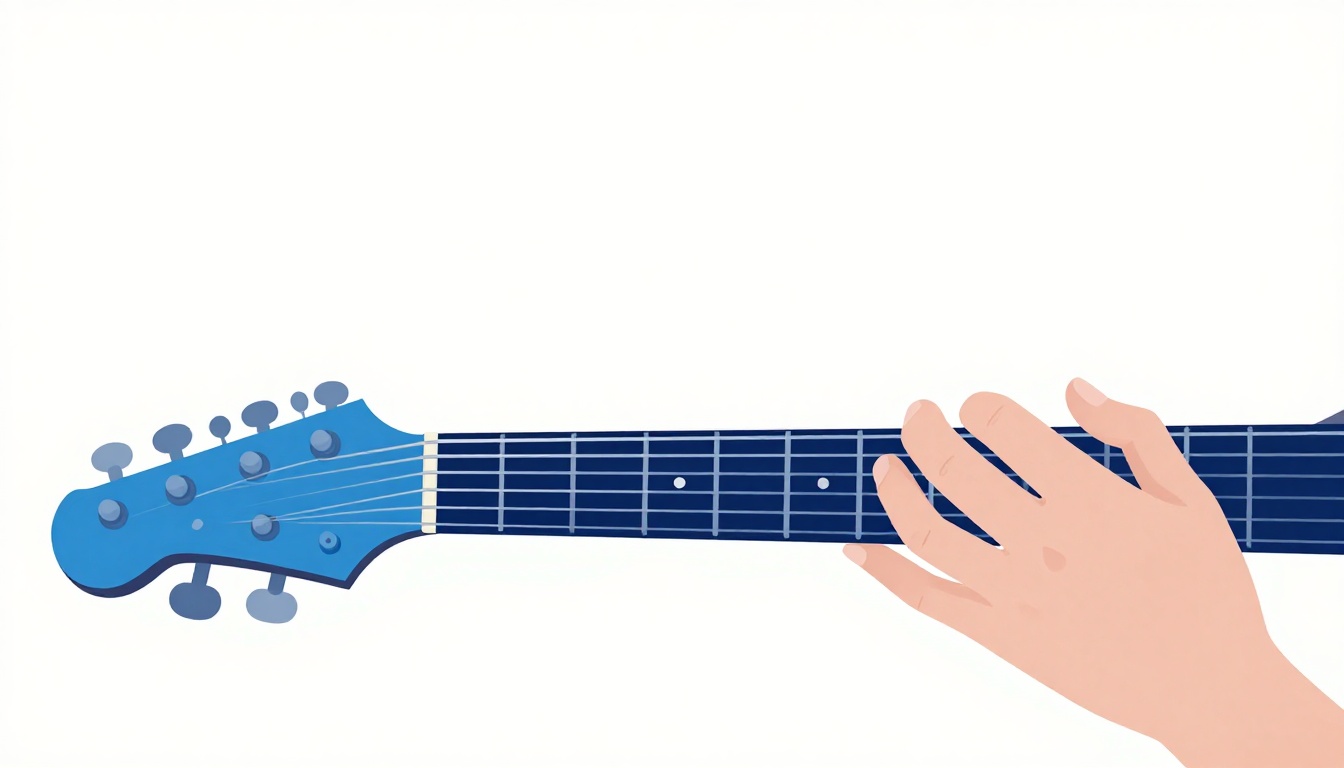
Your index finger lays across the 8th fret, covering the low E and G strings as part of the barre, while your middle finger reaches the A string's 9th fret and your ring finger the D string's 10th fret. Mute the B and high E strings, either by resting the underside of your ring finger against them or simply avoiding them with your strum. The low E string at the 8th fret is C, so wherever your index finger's barre lands becomes the root of whatever diminished triad you are playing. Slide the whole shape down two frets and you get Bbdim. Slide it up one fret and it is C#dim. Because a plain triad does not repeat every three frets the way Cdim7 does, this shape genuinely changes chord identity at every new fret, unlike the two Cdim7 shapes covered earlier.
Does this chord feel different on electric, acoustic, or nylon-string guitar?
The notes and the fingerings above are identical on every kind of guitar, but the physical feel of playing four fingers this close together does shift depending on what you are holding. Electric guitars typically carry lighter string tension and a flatter, thinner neck profile than most acoustics, which makes the tight three-fret cluster in the open triad shape noticeably easier to manage, especially for a smaller hand. Steel-string acoustics sit in the middle, asking a bit more finger strength than an electric but usually less neck width than a classical guitar.
Nylon-string classical guitars are the outlier. Their strings sit under much lower tension, which means less downward force is needed to stop a note from buzzing once a finger is correctly placed, a real advantage while a beginner's fingertips are still building calluses. Their necks, though, also tend to be noticeably wider than a steel-string's, which stretches the distance your ring finger and pinky need to cover on both Cdim7 shapes taught earlier. Lower effort per finger, wider reach between fingers: the trade-off runs in opposite directions, and it is worth expecting a wider neck to feel different under your hand rather than assuming a fretting habit has gone wrong if you switch instruments.
Fingerpicking Cdim7 instead of strumming
The compact Cdim7 shape works just as well picked one note at a time as it does strummed, and doing so is a genuinely useful way to hear all four of its notes individually before asking your hand to fret and strum them together.
| Finger | String | Note |
|---|---|---|
| Index | 4 (D) | Eb |
| Middle | 3 (G) | A |
| Ring | 2 (B) | C |
| - | 1 (high E) | Gb |
A simple pattern: thumb or index plucks the D string, then middle, ring, and pinky pick the G, B, and high E strings in order, slowly enough to hear each note ring on its own before the next one sounds. Because every note in this shape is fretted, unlike Cmaj7's mostly-open version, there is no note here that rings for free, which makes this a good ear-training exercise for what a diminished 7th chord actually sounds like note by note, separate from its usual role rushing past inside a strummed progression.
Warm-ups that make the stretch easier
Both Cdim7 shapes, and especially the movable barre version further up the neck, ask more of your ring finger and pinky's independence than most open chords do. A minute of warm-up before a session focused on this chord pays for itself.
- Finger walk. Rest all four fingertips on the low E string, one fret apart starting at the 1st fret, and press each one down in order, index through pinky, then release them in the same order. Repeat on each string. This wakes up the exact finger independence the compact Cdim7 shape's alternating 1-2-1-2 pattern depends on.
- Ring and pinky isolation. Press your ring finger down alone on any string, release it, then press your pinky down alone, release it, and repeat five times without letting the other fingers join in. Both shapes in this article ask these two fingers to work without leaning on each other, which does not come naturally to most new players at first.
- Open and close. Make a loose fist with your fretting hand, then spread your fingers as wide as comfortable, five times. This general warm-up loosens the tendons that the tighter finger clusters in this article's shapes rely on.
None of this needs more than a minute or two, and it is worth doing before any session focused on the shapes further up the neck specifically, since those are the versions of this chord most likely to feel stiff on a cold hand.
Cdim vs Cm vs Cdim7 vs Cm7b5: the four chords that get confused
Four chords share enough of their name or their notes to blur together for a new player, and mixing any two of them up will sound wrong even when every finger placement felt confident.
| Chord | Notes | Formula | Symbol you might see |
|---|---|---|---|
| Cm | C, Eb, G | 1, b3, 5 | Cm, C- |
| Cdim | C, Eb, Gb | 1, b3, b5 | Cdim, C° |
| Cdim7 | C, Eb, Gb, A | 1, b3, b5, bb7 | Cdim7, C°7 |
| Cm7b5 | C, Eb, Gb, Bb | 1, b3, b5, b7 | Cm7b5, Cø7 |
Cm and Cdim differ by a single note, the 5th, G versus Gb, but that one half step is the entire difference between a settled minor sound and an unsettled, tense one. Cdim7 and Cm7b5, often called half-diminished and written with a slashed circle, ø, differ by a single note too, the 7th, A versus Bb, and the two get confused constantly because both are commonly shortened to "half diminished this" or "diminished that" in casual conversation even though they resolve differently in a progression. If a lead sheet uses the circle-with-slash symbol, ø, it means the half-diminished chord, Cm7b5, not the fully diminished Cdim7, and swapping one for the other changes the chord's actual notes, not just its label.
A fifth chord is worth knowing alongside these four, mostly because its name sits at the opposite end of the same idea: Caug, C augmented, raises the 5th instead of flattening it, giving C, E, and G#. Where Cdim compresses a major triad's 5th down for a tense, unstable sound, Caug stretches that same 5th up for a different, more restless kind of instability. Neither is a substitute for the other, but seeing the two side by side makes it clear that "dim" and "aug" describe opposite directions of the same move, not two names for a similar idea.
Where a diminished chord comes from in a key
A diminished triad occurs naturally as the seventh chord of any major scale, built entirely from that scale's own notes without borrowing anything outside it. In the key of Db major, for instance, stacking thirds on the seventh scale degree, C, produces exactly C, Eb, and Gb, a C diminished triad, using only notes already in the Db major scale.
Diminished seventh chords, the four-note version most players actually use, typically show up differently: as a leading-tone chord built a half step below the chord it is about to resolve into. Because of the every-3-frets symmetry covered earlier, any of Cdim7's four notes, C, Eb, Gb, or A, can act as that leading tone, which means the same four pitches can resolve upward into eight different major or minor chords: C#, C#m, E, Em, G, Gm, Bb, or Bbm, whichever one the surrounding song is actually built around. That flexibility is exactly why the same compact shape shows up in so many different keys rather than being tied to one specific song context.
It helps to see this from the other direction too. A songwriter working in the key of C# major, or its relative minor, needs a diminished seventh chord to lead back into C# or C#m, and the chord that does that job is built a half step below, on C. Play the exact same Cdim7 shape taught earlier in this article, and you are that leading-tone chord, ready to resolve upward. The chord itself never announces which key it belongs to; only the chord that follows it does that.
Using Cdim7 as a passing chord
Diminished seventh chords rarely function as a destination in a song. Far more often, they act as a passing chord, a brief stop that connects two other chords by filling in a chromatic note between them, and they do this job in a few distinct ways.
Ascending passing chord
This is the most common use, and it is the one Patsy Cline's "Crazy" is a well-documented real example of: in the key of C major, a C#dim7 chord appears in the verse turnaround, sliding up from the C chord on its way to Dm, the ii chord of the key, so the bass line climbs C to C# to D in half steps instead of jumping straight from C to Dm. That same trick works with any diminished seventh chord slid a half step above whatever chord you are leaving. Cdim7 itself fills that exact role whenever a song is sitting on a B chord looking to move up into C#m.
This kind of passing chord tends to appear in the same handful of spots in any major key, since it is really the same trick, a diminished 7th built a half step above a scale chord, applied at four different points in that scale.
| Passing chord | Built a half step above | Resolves to | Example in the key of C |
|---|---|---|---|
| #I°7 | I | ii | C#dim7 -> Dm |
| #II°7 | ii | iii | D#dim7 -> Em |
| #IV°7 | IV | V | F#dim7 -> G |
| #V°7 | V | vi | G#dim7 -> Am |
None of these four rows uses Cdim7 itself when the surrounding song is in the key of C, since Cdim7's own leading-tone role, as covered earlier, points toward C#m or C#, not toward any chord native to the key of C. Transpose the whole table into the key of B major, though, and the first row becomes exactly Cdim7 resolving into C#m, which is the shape and the function meeting up in a key you are actually likely to play in.
Descending passing chord
The same idea works in reverse, stepping down rather than up, usually connecting the iii chord of a key down into the ii chord a whole step below it. In the key of Bb major, for instance, a line moving from Dm down to Cm could pass through Dbdim7 in between, so the bass steps down D to Db to C instead of jumping. This direction tends to sound like a held breath letting go rather than the more insistent pull of the ascending version above.
The "gospel lift"
A related trick, common in gospel, soul, and a fair amount of mainstream pop, raises the IV chord of a key a half step into a diminished seventh chord before resolving back to the I chord, often with the 5th of the key sitting in the bass underneath. Ray Charles's "Georgia on My Mind," in the key of G major, is a real, documented example: the IV chord, C, lifts a half step into C#dim7 before settling back onto G. Because this move always sits a half step above the IV chord of whatever key you are in, it does not always land on Cdim7 specifically, but the underlying technique is identical wherever it appears.
Substituting for a dominant 7th
A fully diminished seventh chord is, in practical terms, a dominant 7th chord with a flattened 9th and its root quietly left out. That relationship is why a diminished seventh chord can often stand in for a dominant chord a major 3rd above its root without a song's harmony actually changing underneath it. Maroon 5's "This Love," in the key of C minor, uses Ddim7 this way, functioning as a rootless dominant chord that occupies a full bar of the song's main loop rather than a quick passing moment.
Modulation pivot
Because any one of Cdim7's four notes, C, Eb, Gb, or A, can act as the leading tone resolving up into a different chord, as covered in the section above on where this chord sits in a key, the same four pitches can serve as a pivot point into four unrelated keys. A songwriter or arranger changing key mid-song can use exactly this property to slide from a diminished seventh chord into a fresh key that shares no other chords with the one just left, which is part of why this chord shows up so often at the exact moment a song key-changes.
The shape on the guitar never changes across any of these five uses. Only which two chords, or which two keys, it is stitched between does.
What to play over a Cdim or Cdim7 chord
If you are improvising a melody or a solo over this chord rather than only strumming it, two scales line up with it directly.
| Scale | Notes | Fits over |
|---|---|---|
| C Locrian | C, Db, Eb, F, Gb, Ab, Bb | Cdim (triad) |
| C whole-half diminished | C, D, Eb, F, Gb, Ab, A, B | Cdim7 |
C Locrian is the seventh mode of the Db major scale, built by starting that same set of notes on C instead of Db, and it contains all three of Cdim's chord tones, C, Eb, and Gb, alongside four passing notes. The whole-half diminished scale is a different, eight-note scale built from an alternating pattern of whole steps and half steps, and, like the Cdim7 chord itself, it repeats symmetrically, so the identical scale shape also works over Ebdim7, Gbdim7, and Adim7. Neither scale needs to be memorized in full to get useful mileage out of it: even outlining the chord tones themselves, C, Eb, Gb, and, for the seventh chord, A, played one at a time in the shapes already covered in this article, gets the tense, unresolved color across on its own.
Changing into and out of Cdim7
Because Cdim7 is almost always passed through rather than held for long, quick, clean changes matter more here than with a chord you might hold for a whole verse.
Changing from Cdim7 to Dm
Using the compact Cdim7 shape, D string 1st fret, G string 2nd fret, B string 1st fret, high E string 2nd fret, moving to an open Dm chord is a short, mostly downward shift.
| Chord | 4 (D) | 3 (G) | 2 (B) | 1 (high E) |
|---|---|---|---|---|
| Cdim7 | 1 (index) | 2 (middle) | 1 (ring) | 2 (pinky) |
| Dm | Open | 2 (middle) | 3 (ring) | 1 (index) |
Your middle finger barely moves, staying on the G string but shifting down one fret. Your index finger lifts off the D string entirely, letting it ring open, and slides over to the high E string's 1st fret instead. Your ring finger moves from the B string's 1st fret up to its 3rd fret. Practicing this one change on its own, slowly, is worth doing before dropping it into the full C, Cdim7, Dm sequence described above.
Changing from Cdim7 to C
Since Cdim7 commonly leads back to a plain C chord in the opposite direction from the Dm example above, it is worth knowing this change too, using the second Cdim7 shape, A string 3rd fret, D string 4th fret, G string 2nd fret, B string 4th fret.
| Chord | 5 (A) | 4 (D) | 3 (G) | 2 (B) | 1 (high E) |
|---|---|---|---|---|---|
| Cdim7 | 3 (index) | 4 (ring) | 2 (middle) | 4 (pinky) | Muted |
| C | 3 (ring) | 2 (middle) | Open | 1 (index) | Open |
Your index finger on the A string stays close, sliding from the 3rd fret to landing as the ring finger's job instead, since C needs the ring finger there. Your ring and pinky fingers on the D and B strings both lift off, freeing the G and high E strings to ring open, while a new index finger comes in on the B string's 1st fret. It is a full hand reset rather than a smooth slide, so this one benefits from slow, deliberate practice more than the Dm change does.
Changing from Cdim7 to G7
A G7 chord commonly follows a diminished passing chord too, especially in older popular song and jazz-influenced material, since G7 is the V chord in the key of C and often sits right after this kind of chromatic movement resolves.
| Chord | 6 (low E) | 5 (A) | 4 (D) | 3 (G) | 2 (B) | 1 (high E) |
|---|---|---|---|---|---|---|
| Cdim7 | Muted | Muted | 1 (index) | 2 (middle) | 1 (ring) | 2 (pinky) |
| G7 | 3 (ring) | 2 (middle) | Open | Open | Open | 1 (index) |
Every finger in this change lands somewhere new, which makes it the least smooth of the three transitions covered here. Treat it as its own short drill, four counts on Cdim7, four counts on G7, back and forth, before expecting it to survive inside a full progression at tempo.
Practicing the passing-chord movement on its own
The full sequence, C to Cdim7 to Dm, or Cdim7 resolving into G7, is worth drilling as a short, standalone exercise separate from any specific song.
| Chord | 6 (low E) | 5 (A) | 4 (D) | 3 (G) | 2 (B) | 1 (high E) |
|---|---|---|---|---|---|---|
| C | Muted | 3 (ring) | 2 (middle) | Open | 1 (index) | Open |
| Cdim7 | Muted | 3 (index) | 4 (ring) | 2 (middle) | 4 (pinky) | Muted |
| Dm | Muted | Muted | Open | 2 (middle) | 3 (ring) | 1 (index) |
Play each chord for a full four-count beat, then loop back to C and repeat the cycle. Notice how the middle finger stays on the G string across both Cdim7 and Dm, shifting only one fret, which gives your hand a single anchor to focus on while the other three fingers reposition around it. Once this three-chord loop feels automatic at a slow tempo, the same underlying skill, a short, purposeful diminished passing chord between two more familiar chords, transfers directly to whatever key or song puts one in your path next.
Common mistakes beyond buzzing
A handful of habits show up again and again with this chord specifically, separate from the fretting issues covered earlier.
Treating Cdim and Cdim7 as interchangeable
As covered earlier, these are genuinely different chords, three notes versus four, and while Cdim7 is what most charts mean by "Cdim," a chart that specifically calls for the bare triad will sound different if you substitute the fuller seventh chord in its place. When in doubt, check whether the surrounding chart uses the number 7 anywhere near the diminished symbol.
Holding it too long
Because a diminished seventh chord is built almost entirely around tension, holding it for a long stretch, the way you might hold a C or G chord through a full line of lyrics, tends to sound stuck rather than purposeful. It is written and played as a passing chord for a reason. If a chart shows it lasting only half a beat or one beat before moving on, trust that timing rather than lingering on it because the shape took effort to learn.
Confusing the half-diminished symbol with full diminished
As covered in the comparison section above, a slashed circle, ø, means Cm7b5, not Cdim7, even though both get casually called "diminished" in conversation. Playing the wrong one changes the actual notes in the chord, not just its label, so it is worth training your eye to catch the difference between a plain circle and a slashed one on a chart.
Expecting an open-string shortcut
As covered earlier, this chord's notes simply do not line up with the guitar's open strings the way many major and add chords do, aside from the one partial exception on Cdim7's fourth note. Expecting a one- or two-finger version to exist, the way it does for some other chords, will only lead to frustration. Both shapes taught in this article are the actual, full versions of the chord, not simplified stand-ins.
A practice routine for today
Fifteen focused minutes is enough to make real progress on this chord, in keeping with the idea behind practicing guitar in short daily sessions rather than occasional long ones.
- Two minutes: form the compact Cdim7 shape from nothing, five separate times, resetting your hand fully between each one. Check the shape first, the sound second.
- Three minutes: fret each note of the shape on its own and pick that string individually, listening for buzzing, then use the troubleshooting section above to fix whichever note is unclear.
- Five minutes: practice the Cdim7-to-Dm change on its own, slow and steady, four counts per chord, no strumming in between, just the new shape landing cleanly on the beat.
- Five minutes: play the full C, Cdim7, Dm loop from the practicing section above, four counts per chord, focusing on keeping your middle finger anchored on the G string as the one steady point through the change.
Repeat this most days rather than saving it for one long weekly session. A cluster of fingers this tight is built through frequent, short repetition, since your hand is learning a physical position, not memorizing a fact.
FAQ
What notes are in a Cdim chord? C, Eb, and Gb. C is the root, Eb is the minor 3rd, and Gb is the diminished 5th, the flattened 5th that gives the chord its tense, unresolved character compared to a plain C or Cm chord.
Is Cdim the same as Cdim7? No, though the two get used interchangeably in casual speech. Cdim is the three-note triad, C, Eb, Gb. Cdim7 adds a fourth note, A, on top. Most chord charts labeled "Cdim" actually mean the four-note Cdim7 version, since it is the one that shows up far more often in real songs.
Why does the same shape work for four different diminished 7th chords? Because a fully diminished seventh chord stacks four notes an equal minor 3rd, three frets, apart. Since that spacing divides the octave evenly, sliding the identical shape up or down by three frets lands on the exact same four pitches, just named after a different root: Cdim7, Ebdim7, Gbdim7, and Adim7 are all the same four notes.
Why can't I find an easy, one-finger version of this chord? Because none of Cdim's three notes fall on any of the guitar's open strings, unlike chords such as Cmaj7 or Cadd9. Cdim7's fourth note, A, is a partial exception, since it matches the open A string, but neither shape taught in this article happens to use that option.
What is the difference between Cdim7 and Cm7b5? One note. Cdim7 uses A as its top note, a fully diminished 7th. Cm7b5, the half-diminished chord, uses Bb instead, a regular flat 7th. They are commonly confused because both get casually called "diminished," but a slashed circle symbol, ø, on a chart always means the half-diminished version, Cm7b5.
Why does Cdim7 show up as a passing chord instead of a chord you just play and hold? Because its four notes are built almost entirely around tension, particularly the tritone between its 3rd and 5th, it rarely sounds settled enough to sit still for long. Songs typically slide through it for half a beat or a beat on the way between two other chords, most often as an ascending step between a I chord and a ii chord, the way C#dim7 functions in Patsy Cline's "Crazy."
Do I need to mute both outer strings on every shape in this article? On the open triad and the two Cdim7 shapes, yes, both the low E and high E strings stay silent. The movable barre shape further up the neck is the one exception among the shapes here, and it mutes the B and high E strings instead while letting the barred low E ring as part of the chord.
Can I use Cdim in place of Cm in a song? Not usually, since the two sound noticeably different even though they share two of their three notes. Cm is a settled, resolved minor chord, while Cdim is built for tension and rarely functions as a chord a song simply rests on. If a chart calls for one, substituting the other will sound like a mistake rather than a stylistic choice.
GuitarLowKey
Ready for fifteen focused minutes?
Open the web app and train the change that is blocking your song.