
The Chromatic Scale on Guitar: How to Play and Use It
How to play the chromatic scale on guitar, the finger pattern that keeps every fret clean, and how to turn a warmup into something you actually use.

The chromatic scale on guitar is every note between two octaves played one fret at a time, twelve notes total, with no note skipped. Start on any open string and play every fret in order up to the twelfth, and you have played a full chromatic scale. There is no key signature to memorize and no note left out, which is exactly what makes it different from every other scale on this site.
What the Chromatic Scale Actually Contains
Every other scale you will find here, major, minor, pentatonic, the modes, is a subset. Someone chose which notes to keep and which to leave out, and that choice is what gives a scale its sound and its home key. The chromatic scale skips that step. It is all twelve notes in Western music, each one a half step (one fret) from its neighbor, with nothing removed.
That means the chromatic scale has no key. C major chromatic and A minor chromatic and F# Lydian chromatic are all the same twelve notes in the same order, because there is nothing to transpose around, every note is already in there. The only thing that changes from one "version" to another is which note you decide to start counting from.
The reason there are exactly twelve notes before the pattern repeats comes down to how Western instruments, guitar included, divide the octave. An octave, the distance between one note and the next note with the same letter name, is split into twelve equal half steps, a system called equal temperament. That even split is what lets the same finger pattern you learn on the low E string work identically on any other string or starting fret, since every half step is mathematically the same size as every other half step. A scale built on an unequal division would not transpose this cleanly, which is part of why the chromatic scale, of all the scales you can play, is the one that behaves exactly the same wherever you start it.
Spelling does change depending on direction, and getting this right matters if you ever write the scale out or talk about it with another player.
| Direction | Notes from C |
|---|---|
| Ascending (use sharps) | C, C#, D, D#, E, F, F#, G, G#, A, A#, B, C |
| Descending (use flats) | C, B, Bb, A, Ab, G, Gb, F, E, Eb, D, Db, C |
Ascending lines are written with sharps because you are raising each natural note. Descending lines are written with flats because you are lowering each one. The pitches are identical either way, a C# and a Db are the same fret, only the name on the page changes with direction. If you see a chromatic passage written with flats going up or sharps going down, that is a red flag that something else about the notation is off.
The Fastest Way to Play It: One Finger, One Fret
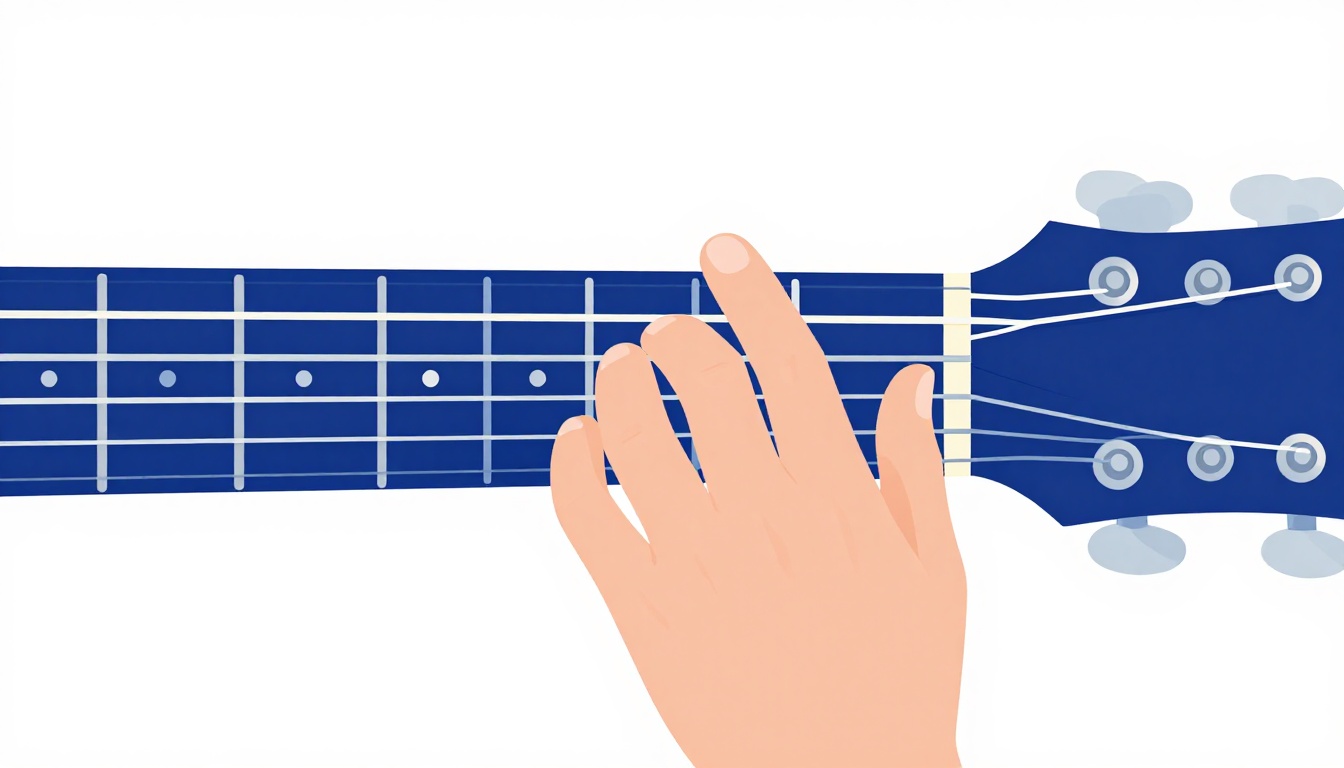
The simplest place to hear the chromatic scale is on a single string, because the pattern is nothing more than "next fret, every time." Play the open 6th string (low E), then frets 1 through 12 in order, one note per fret, and you have played a full one-octave chromatic scale on a single string, ending on the E an octave above where you started.
| Fret | Note |
|---|---|
| Open | E |
| 1 | F |
| 2 | F# |
| 3 | G |
| 4 | G# |
| 5 | A |
| 6 | A# |
| 7 | B |
| 8 | C |
| 9 | C# |
| 10 | D |
| 11 | D# |
| 12 | E |
There is no finger logic to learn beyond "one finger per fret, in order." Most players use index, middle, ring, and pinky for the first four frets, then shift the hand up and repeat, though at slower tempos a single finger sliding fret to fret works just as well while you are only listening for the pitches. This single-string version is the one to play first, before adding any other string, because it is the clearest way to hear that a chromatic scale really is nothing more than every consecutive fret in a row.
Descending the Scale (Same Notes, Different Discipline)
Most players drill the ascending run until it feels automatic and barely touch the descending version, which is exactly why the descending run is usually the shakier of the two under a metronome. Play the same single string in reverse, from the 12th fret back down to the open string, and remember the spelling flips to flats on the way down.
| Fret | Note (descending) |
|---|---|
| 12 | E |
| 11 | Eb |
| 10 | D |
| 9 | Db |
| 8 | C |
| 7 | B |
| 6 | Bb |
| 5 | A |
| 4 | Ab |
| 3 | G |
| 2 | Gb |
| 1 | F |
| Open | E |
Descending asks the fretting hand to release each finger and land on the next one down in a slightly different sequence than ascending does, which is why it is worth its own dedicated practice time rather than assuming it will fall into place automatically once ascending feels solid. A run that sounds clean going up and rushed or uneven coming back down almost always means descending was practiced far less, not that it is somehow a harder pattern.
Moving It Across All Six Strings
Once the single-string version is comfortable, the next step is spreading the same idea across the whole guitar using open strings, which keeps the pattern anchored and easy to check against your ear. Because standard tuning (E-A-D-G-B-E, low to high) moves each open string up by a fixed interval, the same finger pattern repeats on five of the six strings.
| String | Open note | Fretted notes (fingers 1-4) | Next string picks up on |
|---|---|---|---|
| 6 (low E) | E | F, F#, G, G# (frets 1-4) | Open A |
| 5 (A) | A | A#, B, C, C# (frets 1-4) | Open D |
| 4 (D) | D | D#, E, F, F# (frets 1-4) | Open G |
| 3 (G) | G | G#, A, A# (frets 1-3) | Open B |
| 2 (B) | B | C, C#, D, D# (frets 1-4) | Open high E |
| 1 (high E) | E | F, F#, G, G# (frets 1-4) | Octave, fret 12 |
Play that table string by string, open string first, then fingers 1 through 4 (or 1 through 3 on the G string) in order, and you get an unbroken chromatic run from the low E all the way up to the high E, using nothing but open strings and the first four frets. It is the same logic as the single-string version, just spread wide enough to use the whole guitar instead of one string's worth of neck.
The G String Twist: Why the Pattern Shifts
Notice the G string only needed three fretted notes in that table instead of four, and that is not an inconsistency, it is a direct result of how the guitar is tuned. Every pair of adjacent strings in standard tuning is a perfect 4th apart, five half steps, except one pair: the G string to the B string, which is a major 3rd apart, only four half steps.
| String pair | Interval | Half steps |
|---|---|---|
| Low E to A | Perfect 4th | 5 |
| A to D | Perfect 4th | 5 |
| D to G | Perfect 4th | 5 |
| G to B | Major 3rd | 4 |
| B to high E | Perfect 4th | 5 |
That single narrower gap between G and B is the reason the shape you learn on the low E, A, and D strings does not carry over unchanged to the G string. Play open G, then frets 1, 2, and 3 (G#, A, A#), and the very next chromatic note, B, is already sitting on the open B string. Add a fourth fretted note on the G string and you would be repeating a note the open B string already gives you.
This is worth understanding rather than memorizing by rote, because it is the single most common place a chromatic run falls apart for players who learned the pattern as "always four frets per string" without knowing why. Any time a chromatic line crosses from the G string to the B string, expect one less fret than everywhere else on the neck.
The Open-String Version (An Easier Start)
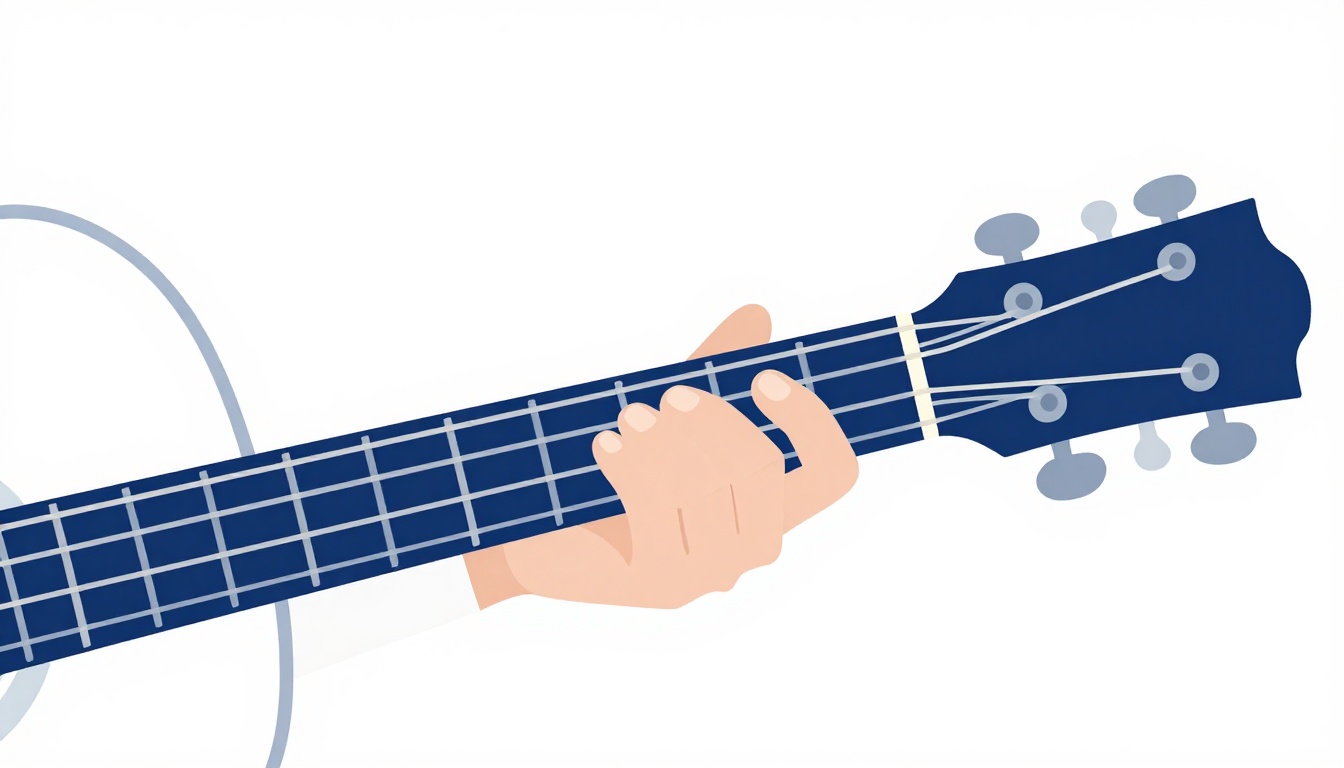
The six-string table above already leans on open strings, and that is deliberate, not just for beginners. Using open strings anywhere the pattern allows means less fretting overall, which is part of why this approach, associated with players like Django Reinhardt, is often taught as the easiest entry point into the chromatic scale rather than a simplified version of it.
The tradeoff is that an open-string chromatic run only works cleanly starting from specific notes, since you need an open string sitting at the right point in the sequence. Starting from low E, as in the table above, lines up perfectly. Starting from an arbitrary note in the middle of the neck usually means giving up the open strings and fretting every note instead, which is covered next.
Taking the Pattern Anywhere on the Neck (The Movable Version)
The open-string version is easy but fixed to the bottom of the neck. A movable version, no open strings at all, lets you start a chromatic run from any fret and carry it anywhere the music needs it, which matters once you are using chromatic notes inside a solo rather than just warming up.
The logic is identical to the open-string table, just shifted off the nut. Pick a starting fret, use one finger per fret climbing up four frets (three on the G-to-B crossing, for the exact reason covered above), then shift your whole hand up and repeat on the next string. Starting at the 5th fret looks like this:
| String | Frets (fingers 1-4) | Notes |
|---|---|---|
| 6 (low E) | 5, 6, 7, 8 | A, A#, B, C |
| 5 (A) | 5, 6, 7, 8 | D, D#, E, F |
| 4 (D) | 5, 6, 7, 8 | G, G#, A, A# |
| 3 (G) | 5, 6, 7 | C, C#, D |
| 2 (B) | 5, 6, 7, 8 | E, F, F#, G |
| 1 (high E) | 5, 6, 7, 8 | A, A#, B, C |
Move the whole shape up or down the neck and the note names change, but the finger pattern and the G-string exception stay exactly the same, because they come from the tuning, not from any particular starting fret. That is what makes this version worth learning even after the open-string one feels comfortable: it is the version that actually transposes.
This is also the version that connects directly to soloing. A scale or a lick you are playing in a particular position on the neck, say, a pentatonic box starting at the 8th fret, is already sitting in fretted, non-open territory, and a chromatic approach note dropped into that same phrase needs a fingering that works from wherever your hand already is, not one that assumes an open string is nearby. Practicing the movable version starting from several different frets, not only the 5th fret used in the table above, is what makes reaching for a chromatic note mid-solo feel like an extension of the shape you are already playing rather than a detour into a different part of the neck.
The Three-Notes-Per-String Version (No Pinky Required)
The four-frets-per-string pattern above asks for a genuine stretch, four frets under one hand position without moving. Players who find that stretch uncomfortable, or who simply prefer not to lean on the pinky, can play the same scale using three notes per string instead, which trades a wider reach for more frequent small shifts.
| String | Frets (fingers 1-2-3) | Notes (starting from 5th fret) |
|---|---|---|
| 6 (low E) | 5, 6, 7 | A, A#, B |
| Shift hand up 2 frets | ||
| 6 (low E) | 8 (finger 1 after shift) | C |
In practice this means playing three notes with fingers 1, 2, and 3, then sliding the whole hand up two frets before continuing rather than reaching the pinky back for the fourth note. It is a completely valid way to play the scale, slightly slower to execute smoothly at first because of the extra shifts, but often more comfortable for a smaller hand or an early-stage player whose pinky is still the weakest, least independent finger.
Neither version is the "real" one. Four notes per string is more common in published fingering charts and asks for less overall hand movement once the stretch itself is comfortable, while three notes per string is friendlier to a hand that is not there yet and doubles as its own kind of practice, since the shifting motion between groups of three is a skill worth having on its own. Many players end up using both depending on where they are on the neck, four notes per string lower down where frets are wider apart, three notes per string higher up where frets sit closer together and a four-fret stretch is less necessary in the first place.
Spider Exercises: Building Independence Beyond 1-2-3-4
Playing frets 1-2-3-4 in strict order, low to high, is the standard starting point, but it is only one of several patterns built on the same one-finger-per-fret idea. These variations are usually called spider exercises, because the fretting hand's fingers moving independently across four frets looks a little like a spider's legs.
| Pattern | Finger order | What it trains |
|---|---|---|
| 1-2-3-4 | Index, middle, ring, pinky | The baseline pattern, ascending |
| 4-3-2-1 | Pinky, ring, middle, index | The same shape in reverse |
| 1-3-2-4 | Index, ring, middle, pinky | Finger independence, broken order |
| 1-4-2-3 | Index, pinky, middle, ring | A harder broken order, more coordination |
Play any of these patterns across all six strings the same way you played the straight 1-2-3-4 version, then try string skipping: play the pattern on the 6th string, skip the 5th string entirely, and land on the 4th string next. None of these produce anything you would call a melody. That is fine. Their entire job is to teach your fretting hand to move any finger independently of the others, on command, which is a physical skill that carries into everything else you play, not just chromatic lines.
Sequencing the Scale (Beyond Straight Up and Down)
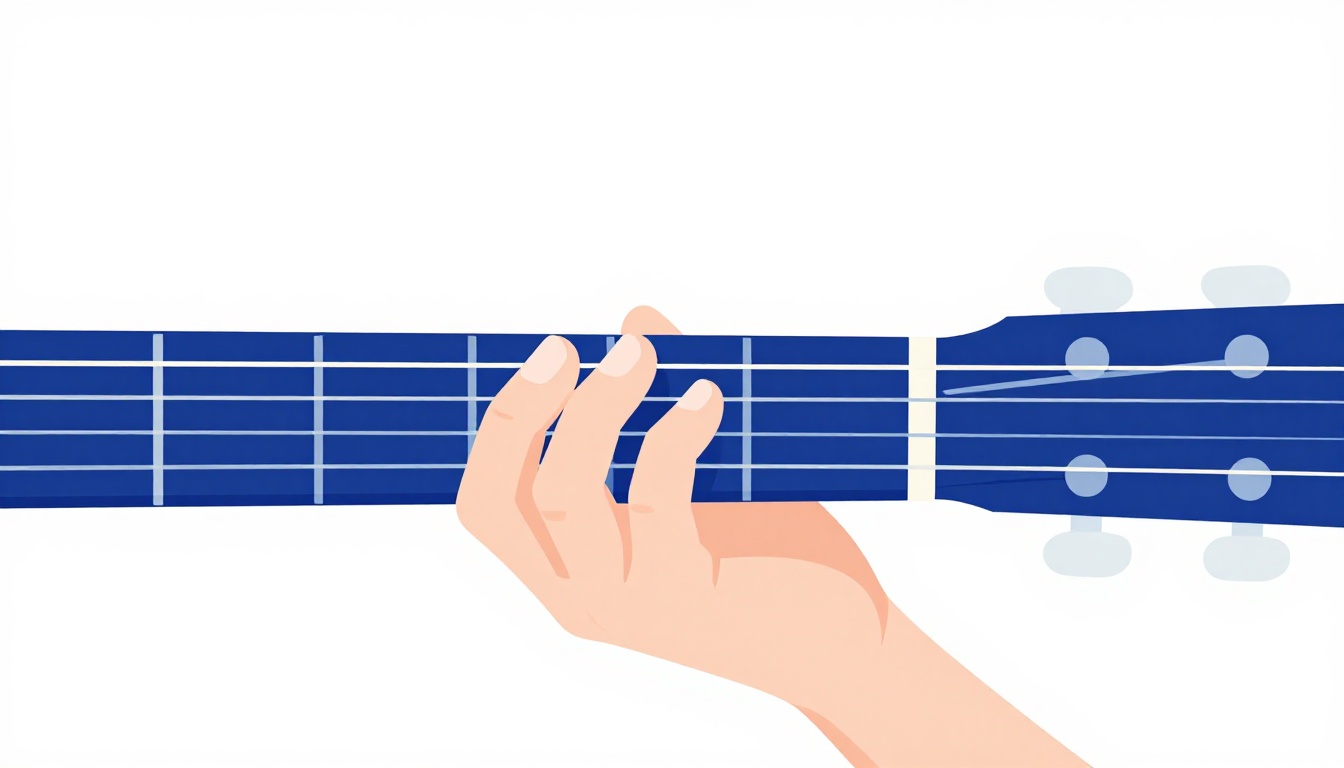
Playing the chromatic scale in a straight line, note 1 to note 12 and back, is the right place to start, but it is also the least demanding way to play it once the basic pattern is comfortable. Sequencing breaks the straight line into overlapping groups, which forces your fretting hand to keep changing direction instead of settling into autopilot.
A common version plays four notes forward, then drops back and repeats from one note higher: notes 1-2-3-4, then 2-3-4-5, then 3-4-5-6, and so on up the string. Every group reuses three of the previous group's notes and adds one new one, which means your hand is constantly doubling back even while the overall motion trends upward. It is a noticeably harder workout than the straight version at the same tempo, and it is closer to how fast, technical lines in metal and shred playing are often built.
A second version plays the scale in pairs skipping one note: 1-3, 2-4, 3-5, 4-6, moving the pair up by one note each time. This one trains a different kind of hand coordination, since consecutive notes are no longer adjacent frets, and it is worth practicing slowly before attempting any speed at all.
Neither sequencing pattern is more "correct" than playing straight up and down. They exist to keep the exercise physically demanding and mentally engaged once the basic pattern stops being a challenge on its own, which for most players happens faster than they expect.
Legato: Playing It With Hammer-Ons and Pull-Offs Only
Every version of the scale covered so far assumes you are picking every note. Legato strips that away: pick the very first note of a phrase, then produce every note after it purely with the fretting hand, hammering on to ascend and pulling off to descend, with no further pick strokes at all.
Ascending, that means picking the open string (or the first fretted note) once, then hammering each finger down in order, index, middle, ring, pinky, letting the impact of the finger itself sound the note. Descending reverses it: starting from the highest fretted note, pull each finger off in order so the next lower fretted (or open) note rings out from the pull rather than a fresh pick stroke.
This is a genuinely different physical skill from picking every note, since the volume and clarity of each note now depends entirely on how forcefully and precisely your fretting hand strikes or releases the string. It also produces a smoother, more slurred sound than the same pattern played with alternate picking, which is part of why legato chromatic runs are a common practice tool for players working on fast, fluid lead lines rather than picked, articulate ones. Practice both techniques on the same pattern back to back and the difference in character becomes obvious immediately, even at a slow tempo.
Practicing With a Metronome
A chromatic run has no melody to lean on for a sense of timing, which makes it one of the easiest exercises to play unevenly without noticing, speeding up on the comfortable frets and dragging on the awkward ones. A metronome is what catches that. For general guidance on building a rock-solid internal clock while you practice, see the guide to practicing guitar with a metronome.
Set the metronome slow enough that every note lands exactly on the click with zero hesitation, somewhere around 60 beats per minute is a reasonable starting point for most players. Play one note per click, ascending through a full six-string pattern, then descending back down. Once that is completely solid, raise the tempo by about 10 beats per minute and repeat. Resist the urge to jump tempo in large steps just because the pattern feels easy at first, since accuracy tends to fall apart well before speed does, and a metronome is the only honest way to catch that before it becomes a habit.
| Stage | Tempo (BPM) | Notes per click | Move on when |
|---|---|---|---|
| 1 | 60 | 1 | Every note is clean at this speed for three passes in a row |
| 2 | 70-80 | 1 | Pinky note is as loud and even as the other three |
| 3 | 90-100 | 1 | No hesitation crossing from the G string to the B string |
| 4 | 100-110 | 2 (eighth notes) | Alternate picking stays even at one note per click |
| 5 | 120+ | 2 (eighth notes) | This is genuinely fast; most players plateau well before here, which is normal |
Notice the jump from stage 3 to stage 4 is not a tempo increase at all, it is a subdivision change, playing two notes per click instead of one. That is usually a more honest way to build real speed than simply cranking the BPM higher, since doubling the notes per click at a moderate tempo often exposes timing problems that a slower, single-note tempo was hiding.
Alternate picking, strictly switching between a downstroke and an upstroke for every note, is the standard picking-hand approach here, since it keeps the picking hand moving no further than necessary between strings and scales naturally to faster tempos later.
Why Your Chromatic Run Sounds Sloppy (and How to Fix It)
The finger pattern itself is simple. What actually separates a clean chromatic run from a muddy one is a short list of habits, each easy to fix once you know which one is causing the problem.
Fret Buzz From Flat Fingers
A finger that presses down flat, using the pad instead of the tip, tends to lean against the fret wire at an angle and produce a buzz instead of a clean tone. Curl each finger so it comes down on its tip, close to the fret wire but just behind it, not on top of it. This one adjustment fixes more buzz than any amount of extra pressure.
Notes Ringing Into Each Other
Because every note in a chromatic run sits right next to the last one, a finger that stays down after the next finger has already fretted the following note will smear the two pitches together. Lift each finger the instant the next one lands, rather than leaving a trail of held-down fingers behind you as you climb the neck.
Rushing Past the Pinky
The pinky is the weakest, least independent finger for almost every player, and the natural response is to rush its note or barely press it down at all, which shows up as a quiet, clipped fourth note in every group of four. Slow the whole pattern down until the pinky's note is exactly as loud, exactly as long, and exactly as clean as the other three. Speed built on top of a weak pinky just makes the weak note happen faster.
Losing the Position (Hand Creeping Up or Down)
It is easy for the fretting hand to drift slightly out of position mid-pattern, especially while shifting between strings, which throws off finger reach for every note after the drift. Anchor your thumb roughly behind the 1st or 2nd finger on the back of the neck and check, every few strings, that it has not crept along with the rest of the hand.
Uneven Volume Between Fingers
Index and middle fingers are usually stronger than ring and pinky for most players, which means a straight 1-2-3-4 run often gets quietly louder and softer within every group of four notes without the player intending it. Practice each finger in isolation, pressing only hard enough to sound clean, not harder, so the natural strength difference between fingers does not translate into an uneven scale.
Only Ever Practicing Ascending
It is easy to run the scale upward a dozen times and call it practiced, while the descending version, and the string-crossing points in reverse, stay noticeably weaker. Split your practice time evenly between both directions rather than assuming descending will take care of itself once ascending feels solid.
Miscounting the G-to-B String Crossing
Forgetting that the G string only needs three fretted notes instead of four is the single most common note-accuracy mistake in this whole exercise, and it produces a repeated or skipped note right at the crossing rather than a technique problem. If a run sounds correct everywhere except one specific spot near the middle strings, this is usually why. Slow down at that exact crossing until it is automatic, rather than assuming the issue is somewhere else in the hand.
Using the Chromatic Scale in Real Licks (Not Just Warmups)
Played straight through as a full scale, a chromatic run rarely sounds like a finished musical idea, it sounds like an exercise, because it has no home key pulling it toward a resolution. Where the chromatic scale actually earns its place in real playing is in short bursts, one to three notes at a time, connecting or decorating notes that do belong to the key you are in.
Approach notes are the simplest version: a chromatic note played one half step below or above a target note, immediately resolving into it. Sliding into a chord tone from a half step below, or hammering onto it from a half step above, adds a small, deliberate push into the landing note that a diatonic (in-key) note next to it usually cannot supply.
Enclosures take that a step further, surrounding a target note from both sides in quick succession, one chromatic note from above and one from below, before resolving onto the target. It is one of the most common devices in jazz improvisation specifically because it draws attention to the target note without ever sitting on an unresolved chromatic pitch for long.
Passing tones use a single chromatic note to smoothly connect two chord tones that are a whole step apart, filling the gap with the half step in between rather than leaving a bare skip. And side-stepping, more advanced and less common outside jazz, briefly shifts an entire phrase up or down by a half step before resolving back, creating a moment of real tension that only works because it resolves quickly.
None of these techniques ask you to play more than a few chromatic notes in a row. That is the actual skill: knowing where a half step, dropped in for one beat, makes a line pull harder toward its resolution, rather than treating the chromatic scale as a full melodic tool on its own.
Where Chromatic Movement Shows Up in Real Music
Short chromatic movement is not a niche technique, it turns up constantly across genres, usually in small doses rather than as an extended run.
Blues Turnarounds
The last two bars of a standard blues form, the turnaround, frequently walks chromatically back down toward the root or up into the V chord, a half step at a time. It is one of the most recognizable chromatic devices in guitar playing precisely because it happens in the same predictable spot in the form, every time.
Jazz ii-V-I Approach Notes
Jazz improvisation leans on chromatic approach notes and enclosures constantly, sliding into the 3rd or the root of the next chord in a ii-V-I progression from a half step away. It is a large part of what gives jazz lines their sense of forward motion from one chord to the next, rather than sitting still inside a single scale for a whole progression.
Sliding Chords Into Position
Chromatic movement is not limited to single notes. Sliding an entire chord shape, most often a barre chord, up into position from one fret below is a common rhythm-guitar device in funk, blues, and rock, giving the chord a brief chromatic lead-in before it lands and rings on the beat.
Fast Chromatic Runs in Metal and Shred
At high tempo, extended chromatic runs, closer to the full scale than a short approach note, show up in metal and shred lead playing as a way to build tension and speed between more melodic, in-key phrases. This is closer to the exception than the rule for most genres, but it is exactly the context where the scale itself, played at real speed, becomes a musical device rather than only a practice tool.
Is the Chromatic Scale Actually Musical?
It is a fair question, and plenty of experienced players raise it: played straight through, up and down, the chromatic scale has no key center, no note that feels like home, and a solo built entirely from it tends to sound abstract or unresolved rather than melodic. That reaction is not wrong. Twelve equally spaced notes with nothing left out genuinely do not create the tension-and-release pull that a seven-note major or minor scale creates, because nothing in a chromatic scale is more "in" or more "out" than anything else.
The useful reframe is to stop treating it as a scale you solo in, the way you might solo in A minor pentatonic for an entire chorus, and start treating it as a small connective tool you reach for inside a phrase built from a real key. A short chromatic run between two chord tones, or a single half-step approach note into a landing pitch, borrows exactly enough tension to make that landing feel earned, without asking the listener's ear to follow a passage with no center at all. Used that way, in doses of one to three notes, it shows up constantly in blues, jazz, and rock lines without ever sounding like the scale exercise it started as.
Try the comparison yourself on one string. Play a straight ascending A minor pentatonic phrase and let it land on the root. Then play a phrase that walks chromatically for three notes before landing on that same root. The pentatonic phrase sounds settled the moment it lands, since every note along the way already belonged to the key. The chromatic phrase sounds like it is pulling itself toward that same landing note from outside the key, which is a different effect, not a worse one, and it is exactly the effect a well-placed approach note is for.
How the Chromatic Scale Differs From the Scales You Solo With
Every scale most guitarists reach for to build a solo, major, natural minor, the pentatonic scale, the modes, is built from a specific pattern of whole steps and half steps that leaves some notes in and some notes out. That selection is what creates a key center: certain notes sound stable and restful, others sound like they are pulling toward a neighbor, and a listener's ear learns to expect resolution toward the stable ones.
The chromatic scale removes that selection entirely. Every note is present, every gap between notes is the same single half step, and nothing is emphasized over anything else by the scale's own structure. That is precisely why it works so well as a technical exercise, there is no key to memorize and the same shape transposes to any starting note without changing, and precisely why it works poorly as a scale to improvise a whole solo in, there is no tonal center for a listener's ear to orient around.
Think of the chromatic scale as the raw material every other scale on this site is carved out of, rather than as a competitor to any of them. A minor scale, a pentatonic box, a mode, each one is a specific, musical choice about which of these twelve notes to keep. The chromatic scale is what is left when no choice has been made yet.
That relationship also runs the other way, which is worth knowing once the shapes above feel automatic: any seven-note scale can be described as the chromatic scale with five specific notes removed, and any five-note pentatonic scale as the chromatic scale with seven notes removed. Seeing scales this way, as different amounts of subtraction from the same twelve-note pool, is often what finally makes the relationship between a mode and its parent major scale click, since the modes all remove the exact same seven notes from the chromatic scale, just starting the count from a different one of them.
From Exercise to Ear: What the Chromatic Scale Teaches You About the Fretboard
Beyond finger dexterity, the chromatic scale's real long-term value is what it teaches about the guitar fretboard itself. Every other scale skips notes, which means practicing only major and minor scales can leave real gaps in knowing what sits between the notes you actually use. The chromatic scale has no gaps by definition, so playing it slowly, note by note, while naming each pitch out loud, is one of the most direct ways to learn every note on every string rather than only the ones a particular key happens to include.
It is also the fastest way to internalize how far apart things really are on the neck. A new player often has a strong sense of up-and-down movement along a single string, since the chromatic scale on one string is exactly that, but a much weaker sense of how a fret on one string relates to a fret on the next string over. Playing the six-string chromatic pattern, and specifically noticing the moment the pattern shifts at the G-to-B crossing, builds that cross-string sense of distance in a way that staying on one string never will.
Because every interval in the scale is the same single half step, it also doubles as a simple ear-training drill for recognizing that specific interval on sight and by sound. Play two adjacent frets on one string, back and forth, and listen closely to the small, tight, slightly tense sound a half step makes, distinct from the more open sound of a whole step (two frets). Once that sound is familiar on its own, try guessing whether a short phrase you hear elsewhere, in a song or a lick, moves by a half step or something wider, then check yourself on the fretboard. That kind of interval recognition, starting from the smallest interval there is, transfers directly into hearing and predicting the larger intervals in every other scale on this site.
Finding the Same Note in Multiple Places (Octave Shapes)
Because the guitar repeats the same twelve notes across six overlapping strings, most notes are reachable in several places on the neck at once, and the chromatic scale is the clearest tool for finding them, since every fret you land on already has a name from the tables earlier in this post. The most useful relationship to know is the octave shape, a fixed number of strings and frets that always lands you on the same note name, one octave higher.
| Starting string | Octave string | Frets to add | Strings crossed |
|---|---|---|---|
| 6 (low E) | 4 (D) | +2 | E to A to D (no G-B crossing) |
| 5 (A) | 3 (G) | +2 | A to D to G (no G-B crossing) |
| 4 (D) | 2 (B) | +3 | D to G to B (crosses G-B) |
| 3 (G) | 1 (high E) | +3 | G to B to E (crosses G-B) |
The pattern is not arbitrary. Jumping two strings normally covers ten half steps (two perfect 4ths), two frets short of a full twelve-half-step octave, which is why adding two frets completes it. But any two-string jump that passes through the G-to-B major 3rd only covers nine half steps instead of ten, one half step narrower, which is why those particular jumps need three extra frets instead of two to land on the same octave.
Practicing this alongside the chromatic scale is a fast way to stop thinking of the fretboard as six separate, unrelated strings. Play a note on the low E string, use the table to jump straight to its octave on the D string, then check your work against the chromatic scale table from earlier to confirm both frets share the same name.
Is the Chromatic Scale Different on Bass Guitar?
Not in note content, the twelve notes and the half-step spacing are identical on any fretted instrument. What changes is the string-crossing pattern, and the reason comes back to tuning. A standard 4-string bass is tuned E-A-D-G, and unlike guitar, every one of those string pairs is a perfect 4th apart, five half steps, with no exception.
| Instrument | String pairs | Interval pattern |
|---|---|---|
| Guitar (6-string, standard) | E-A, A-D, D-G, G-B, B-E | 5, 5, 5, 4, 5 half steps |
| Bass (4-string, standard) | E-A, A-D, D-G | 5, 5, 5 half steps |
That means a bass player never runs into a guitar player's G-to-B shortening. The four-frets-per-string pattern from earlier in this post applies uniformly across every string on a bass, with no exception to remember. For more on how scale shapes translate to the instrument generally, see the guide to bass guitar scales.
A Practice Routine for Today
Something concrete to run in about fifteen minutes, in order:
- Play the single-string version on the low E string, open through the 12th fret, slowly enough that every note rings clean with no buzz.
- Play the six-string open-string pattern from earlier, ascending then descending, paying particular attention to the G-to-B string crossing where the pattern shortens.
- Set a metronome around 60 beats per minute and repeat the same six-string pattern in time, one note per click, focusing on even volume between all four fingers.
- Pick one spider exercise variation (4-3-2-1 or 1-3-2-4) and play it across all six strings at the same slow tempo.
- Take a short chord progression you already know and, once through it, add a single chromatic approach note (a half step below) into the root of the next chord as you move toward it.
- Raise the metronome by 10 beats per minute from where you started and repeat step 3 only if every note from the slower tempo was completely clean.
Fifteen minutes on that routine, done consistently, builds both the physical dexterity and the musical judgment that make the chromatic scale worth the practice time, rather than just a fast pattern with nowhere to go.
Frequently Asked Questions
What is the chromatic scale on guitar? It is all twelve notes within an octave, each one a half step (one fret) apart, with no notes skipped. Play any open string and then every consecutive fret up to the twelfth, and you have played it.
How do you play a chromatic scale on guitar? Use one finger per fret, typically index, middle, ring, then pinky, moving up four frets on most strings before shifting to the next string. The G string is the one exception, needing only three fretted notes before the pattern continues on the B string, because of how standard tuning is intervaled.
Why is the chromatic scale important for guitarists? It builds finger independence and even technique across all four fingers, and it is one of the fastest ways to learn every note on the fretboard, since unlike other scales it does not skip any of them.
Is the chromatic scale the same in every key? Yes. Because it contains all twelve notes with none removed, there is no true "key" to a chromatic scale, only a starting note. Starting from any note produces the same sequence of half steps.
Should you use the chromatic scale in solos? Rarely as a full scale to improvise in, since it has no tonal center and can sound aimless played straight through. It is far more useful in short bursts, one to three notes, as approach notes, enclosures, or passing tones connecting notes that do belong to the key you are playing in.
What is the difference between the chromatic scale and other scales like major or pentatonic? Other scales select a subset of these twelve notes based on a pattern of whole and half steps, which creates a key center that gives the scale its distinct sound. The chromatic scale keeps every note, so it has no key center and no note that sounds more "resolved" than another.
How long does it take to learn the chromatic scale? The pattern itself, one finger per fret with the G-string adjustment, can be learned in a single sitting. Playing it cleanly at a useful tempo, and using short chromatic phrases musically inside real playing, takes ongoing practice over weeks, the same as any other technical exercise.
Can beginners practice the chromatic scale? Yes, and it is a genuinely good early exercise, since it asks for no music theory beyond "next fret" and it works every finger evenly from the first day. Keep the tempo slow and prioritize clean, even notes over speed, the same advice that applies at every skill level.
Why does the chromatic scale skip a fret on the G string? It does not skip a fret so much as need one less of them. Standard tuning puts a major 3rd (four half steps) between the G and B strings, narrower than the perfect 4th (five half steps) between every other adjacent string pair, so the four-note, four-fret pattern used elsewhere only needs three fretted notes on the G string before the next chromatic note is already available as the open B string.
Does practicing the chromatic scale help with finger independence? Yes, more directly than most other exercises, since it forces the index, middle, ring, and pinky to move to the very next fret in strict order with no gaps to hide a weak finger behind. Spider exercise variations like the reversed and broken-order patterns push that independence further once the straight 1-2-3-4 version feels automatic.
GuitarLowKey
Ready for fifteen focused minutes?
Open the web app and train the change that is blocking your song.