
How to Play the Csus2 Guitar Chord (Full Shape and Easy Version)
The Csus2 guitar chord in full: the standard open shape, an easier two-finger version, why the open strings cut out, and how it differs from Cadd9.

To play Csus2 on guitar, mute the low E string, place your index finger on the 3rd fret of the A string, your middle finger on the 3rd fret of the B string, and your ring finger on the 3rd fret of the high E string, leaving the D string and G string open. In tab shorthand that is x30033. Strum from the A string down through the high E string, five strings total.
| String | Fret | Finger |
|---|---|---|
| 6 (low E) | Muted | - |
| 5 (A) | 3 | 1 (index) |
| 4 (D) | Open | - |
| 3 (G) | Open | - |
| 2 (B) | 3 | 2 (middle) |
| 1 (high E) | 3 | 3 (ring) |
That shape is worth looking at twice, because it is doing something unusual: three fingers, all on the 3rd fret, but on strings that are not next to each other, with two open strings sitting untouched in the gap between them. Unlike some suspended chords, Csus2 is not "one finger away" from plain C. It is closer to its own shape that happens to share a root note. The rest of this post covers why that is, an easier version for when the stretch feels awkward, what to do when the open strings go quiet, a moveable version, where this chord sits in a key, and how to change into and out of it without stalling the song.
What Notes Make Up Csus2
Csus2 is built from three notes: C, D, and G. That is the root (C), the major second (D), and the perfect fifth (G). Compare that to plain C major, built from C, E, and G, the root, major third, and perfect fifth. The only difference is that one note: Csus2 swaps the E (major third) for a D (major second), a whole step lower.
| Note | Interval from C | Role |
|---|---|---|
| C | Root | Root |
| D | Major second | Suspended second |
| G | Perfect fifth | Fifth |
"Sus" is short for "suspended," and it means what it says: the third, the note that decides whether a chord sounds happy or sad, has been lifted out and replaced with a neighboring note. Because the third is what makes a chord major or minor, a chord with no third is neither. Csus2 is not major and not minor. It sits in between, open and a little unresolved, which is exactly why songwriters reach for it.
On the fretboard, this theory does not map as cleanly onto C as it does onto some other chords. The open C major shape is x32010: A string 3rd fret (C), D string 2nd fret (E), G string open (G), B string 1st fret (C), high E string open (E). The major third, E, shows up twice in that shape, once on the D string and once on the high E string. To remove it, you cannot just lift a single finger, since one of those two E notes is an open string with nothing to lift. That is the whole reason Csus2 ends up as a different shape rather than a stripped-down version of C, and it is worth knowing going in so you are not hunting for a shortcut that does not exist.
String Names, Numbers, and Standard Tuning
Every fret number in this post refers to strings by both name and number, worth having straight before anything else, since some sources count in one direction and some in the other.
| String Number | Name | Standard Tuning |
|---|---|---|
| 6 | Low E | E |
| 5 | A | A |
| 4 | D | D |
| 3 | G | G |
| 2 | B | B |
| 1 | High E | E |
The 6th string is the thickest string and sits closest to your face when the guitar is in playing position. The 1st string is the thinnest and sits closest to the floor. Fret numbers count from the nut outward, so the "3rd fret" is the third gap in the fretboard, not the third metal wire. Finger numbers follow the standard convention: 1 is the index finger, 2 is the middle finger, 3 is the ring finger, 4 is the pinky, and the thumb is written as T. All of this only matters if your guitar is actually in standard tuning. If two strings sound off from each other, tune before judging whether your Csus2 sounds right, since a chord fretted perfectly on an out-of-tune guitar will still sound wrong.
Tuning Up Before You Play This Chord
Csus2 rings two full strings open, the D string and the G string, right in the middle of the chord. If either one is even slightly flat or sharp, the whole chord sounds sour in a way that is easy to blame on your fingers when the real problem is the tuning peg. Because both open strings sit between the fretted notes rather than at the edges of the chord, a tuning problem here is harder to isolate by ear than it would be on a chord where the open strings are on the outside.
Tune the D and G strings first, then check the A and high E strings, since all four are doing real work in this chord. A clip-on tuner on the headstock is the most reliable option while you are still building your ear. If you do not have one, tune the open A string to the 5th fret of the low E string, the open D string to the 5th fret of the A string, the open G string to the 5th fret of the D string, and the open B string to the 4th fret of the G string, checking each pair rings as one steady pitch with no wavering.
Csus2 vs C, Csus4, and Cadd9
Four chords share the root note C and get confused constantly: C major, Csus2, Csus4, and Cadd9. Knowing what separates them stops you from reaching for the wrong one mid-song.
| Chord | Notes | Open Fingering | Character |
|---|---|---|---|
| C | C, E, G | x32010 | Bright, resolved, major |
| Csus2 | C, D, G | x30033 | Open, floating, neither major nor minor |
| Csus4 | C, F, G | x33011 | Tense, pulling toward C |
| Cadd9 | C, E, G, D | x32033 | Major, but colored |
C and Csus2 differ by a single note, the E dropping to a D, but because that E appears in two places in the open C shape, the two chords do not share a simple one-finger relationship the way some sus2 chords do with their major parent. Csus4 replaces the same E with an F instead, the note a half step above the third rather than a whole step below it, which gives Csus4 a much stronger pull back toward C major. Cadd9 is the one most often confused with Csus2, since both involve a D note colouring the chord. The difference is the third: Cadd9 keeps the full C major triad (C, E, G) and adds the D on top, so it still sounds unmistakably major, just brighter. Csus2 removes the E entirely. If you play Csus2 and it sounds like it is missing something compared to a chord you have heard called "C add nine," that missing piece is the E.
The fastest way to tell all four apart by ear, without checking tab or theory, is to listen for how settled the chord feels. C and Cadd9 both resolve, they sound like a sentence that has ended, because both keep the major third. Csus2 and Csus4 both hang, they sound like a sentence with no full stop, because both drop the third. Once you can sort a chord into "resolved" or "hanging" by ear, narrowing it down to the specific chord is a matter of which extra note is colouring it.
The Easiest Way to Play Csus2
If the standard shape feels like a stretch, there is a genuinely simpler version that drops the A string entirely and only asks for two fingers. Mute the low E and A strings, place your index finger on the 1st fret of the B string, and your ring finger on the 3rd fret of the high E string, leaving the D string and G string open. Strum only the top four strings.
| String | Fret | Finger |
|---|---|---|
| 6 (low E) | Muted | - |
| 5 (A) | Muted | - |
| 4 (D) | Open | - |
| 3 (G) | Open | - |
| 2 (B) | 1 | 1 (index) |
| 1 (high E) | 3 | 3 (ring) |
Check the notes and it still works out to C, D, and G: the open D string, the open G string, C on the B string, and G again on the high E string. It loses the low C that the A string provides in the standard voicing, so it sounds a touch lighter, but for a first pass at the chord, or for a hand that finds three fingers spread across three non-adjacent strings uncomfortable, this is the version to start on.
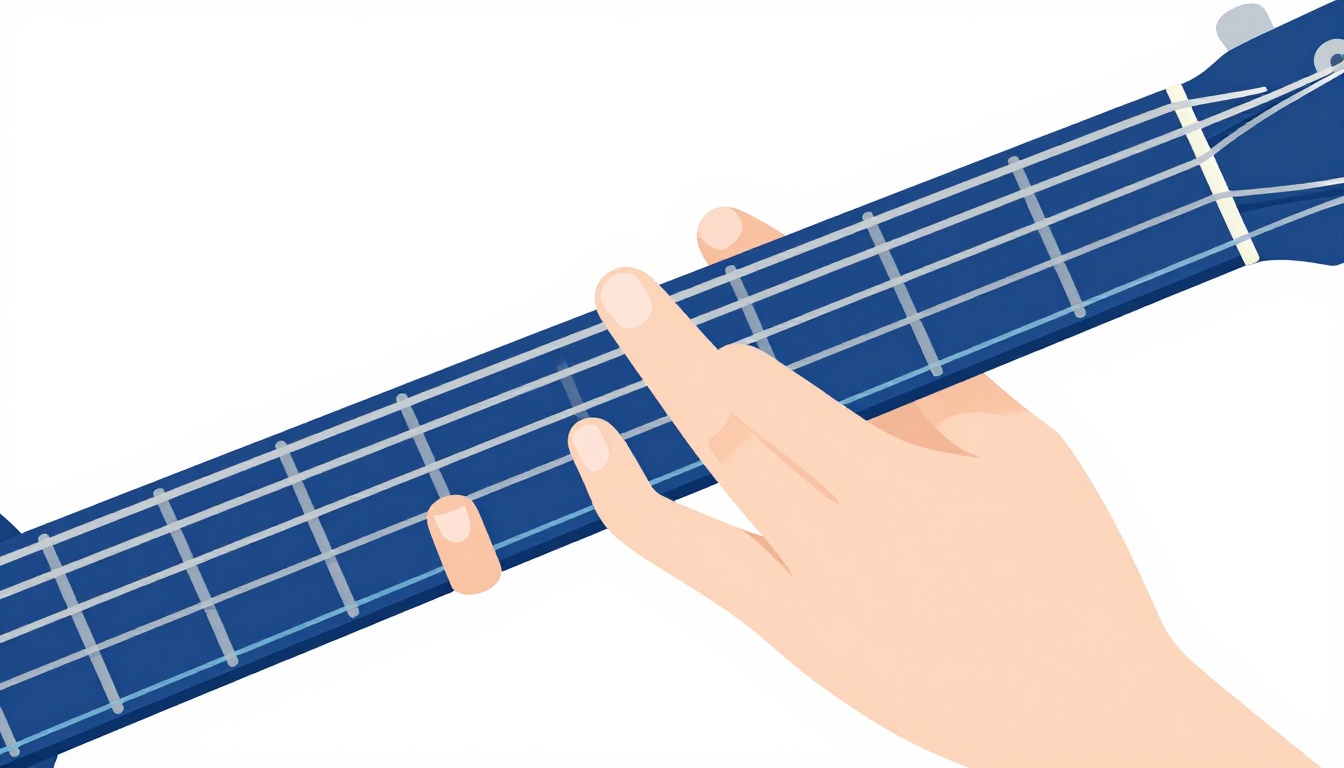
Step by Step: Placing Your Fingers for the Standard Shape
Once the two-finger version feels solid, build up to the full standard voicing string by string.
- Rest your thumb behind the neck, roughly across from your first finger, low enough that your fingers can reach the strings at an angle rather than flat.
- Mute the low E string (6th) by letting the side of your index finger brush against it, or simply skip it when you strum.
- Place your index finger on the 3rd fret of the A string (5th), pressing just behind the fret wire.
- Let the D string (4th) ring completely open. Do not rest any part of your hand against it.
- Let the G string (3rd) ring completely open as well.
- Place your middle finger on the 3rd fret of the B string (2nd).
- Place your ring finger on the 3rd fret of the high E string (1st).
- Strum from the A string down through the high E string, five strings total, and listen for every note ringing clearly, including the two open strings in the middle.
The hardest part of this shape is not any single finger, it is keeping your middle and ring fingers arched enough that they do not lean back and touch the open D and G strings sitting right next to them. Because those two open strings sit between your fretted notes rather than off to one side, this chord punishes a flat hand position more than most open chords do.
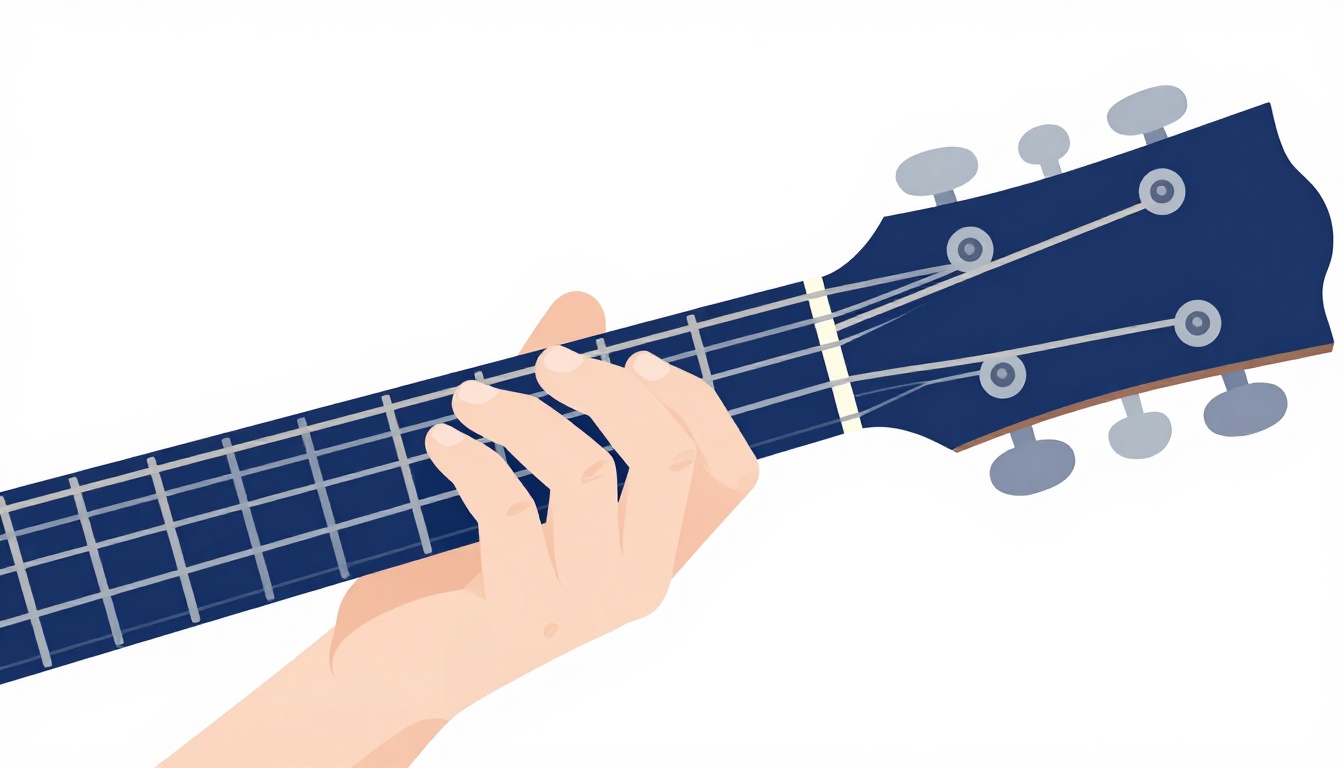
An Alternate Fingering
Some players find it easier to fret the B string at the 1st fret instead of the 3rd, using the shape x30013: A string 3rd fret, D and G open, B string 1st fret, high E string 3rd fret. It contains the same three notes, C, D, and G, just with the B string voiced an octave differently.
| String | Fret | Finger |
|---|---|---|
| 6 (low E) | Muted | - |
| 5 (A) | 3 | 2 (middle) |
| 4 (D) | Open | - |
| 3 (G) | Open | - |
| 2 (B) | 1 | 1 (index) |
| 1 (high E) | 3 | 3 (ring) |
This spreads the fingers out a little more evenly across the fretboard rather than bunching two of them onto the same fret, which some players find easier to land accurately, especially coming from a chord where the index finger is already sitting near the 1st fret. There is no correct choice between this and the standard x30033 shape. Try both for a week and keep whichever one your hand finds without having to think about it.
A third option worth knowing rather than necessarily using: because the middle and ring fingers in the standard shape both land on the 3rd fret, on the B and high E strings, which sit right next to each other, you can fret both of those notes with a single finger laid flat across just those two strings, a small two-string barre, instead of using two separate fingers. This frees up a finger for whatever comes next in a progression, but it demands precise placement, since that same finger must stop just short of the open G string beside it.
Why Csus2 Is Not Working
Csus2 has more moving parts than it looks like at first glance, mostly because of the two open strings sitting in the middle of it. Work through these one at a time rather than guessing at the whole chord.
The D string or G string is muted instead of ringing open
This is the single most common problem with Csus2, and it comes from the fingers on either side, the index finger on the A string or the middle finger on the B string, leaning back and brushing the open string next to it. Arch both fingers more so only the fingertip contacts the neck, keeping the rest of the finger clear of the strings on either side.
The high E string buzzes or does not ring
Check that your ring finger is pressing close to the 3rd fret wire and straight down rather than at an angle. A ring finger that has to reach across from a middle finger already placed on the adjacent string often ends up flatter than it should, which causes exactly this kind of buzz.
The chord still sounds like plain C
If you can hear the bright major third even though your fingers feel correctly placed, double check that the D string and G string are genuinely open, with nothing from your fretting hand resting against them, and that your middle and ring fingers have landed on the 3rd fret rather than drifting toward the 2nd fret, which would pull the chord back toward familiar C-shape territory.
One of the fretted notes sounds dead
A dead or thudding note on the A, B, or high E string almost always means the finger is not far enough forward, too close to the middle of the fret space rather than right behind the fret wire. Move the finger closer to the fret itself and check you are pressing with the pad of the finger, not the flat of it.
The chord sounds thin compared to a full C chord
Csus2 only uses five strings, and the simplified two-finger version only uses four, so it will always sound a little lighter than a full six-string C chord. That is the character of the chord, not a mistake. If you want a fuller low end without changing the harmony, that is exactly what the Csus2/G voicing below is for.
Your fingers cramp trying to hold the shape
Three fingers spread across non-adjacent strings, all reaching for the same fret, asks your hand to open wider than a compact shape like Cadd9 does. If your hand aches, check that your thumb is not gripping too hard behind the neck and that you are not pressing any of the three fingers harder than the minimum needed to stop the buzz. Play the shape alone, without strumming, and see whether you can still wiggle a finger that is not in use. If you cannot, you are squeezing more than the chord needs.
It sounds fine alone but disappears in a full strum with other instruments
A five-string chord with two open strings in the middle sits at a lower volume than a full six-string chord almost by definition, since fewer strings are ringing and two of the notes are unfretted rather than driven by a firm fingertip. Alone in a quiet room this rarely matters. Next to a bass player, a second guitarist, and a drummer, it can vanish. Dig in slightly harder with your strumming hand on this chord specifically, or lean on the fuller Csus2/G voicing when the chord needs to hold its own in a full band mix.
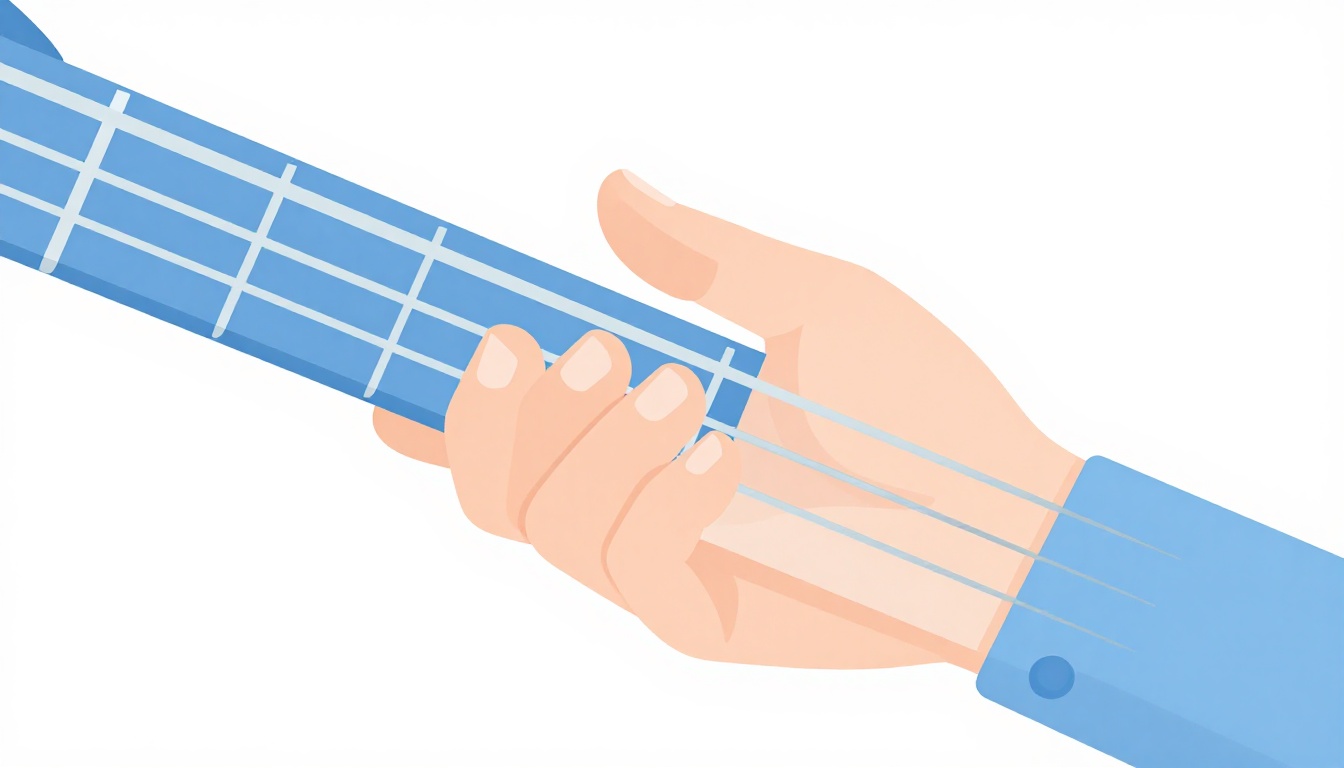
Left-Hand Position: Getting the Arch Right
Because the whole difficulty of Csus2 comes down to two open strings surrounded by fretted ones, it is worth slowing down on hand position specifically, rather than just repeating the shape until it happens to work.
Start with your thumb. It should sit roughly behind your index finger, low enough on the back of the neck that your fingers approach the strings from above at a steep angle rather than lying flat against them. A thumb that creeps up over the top of the neck, a habit many players bring from other instruments or from gripping the neck like a baseball bat, flattens the whole hand and makes it almost impossible to keep a finger arched over an open string next to it.
Next, check your wrist. A wrist that is bent sharply inward, toward the body of the guitar, tends to drag the fingers down flat as a side effect, even when the player is actively trying to arch them. Straightening the wrist slightly, so the back of the hand is closer to level with the forearm, gives the fingers more room to curl without extra effort. This is the same adjustment that helps with barre chords and full six-string shapes generally, but Csus2 exposes a poor wrist angle faster than most chords because the penalty, a muted open string, is so immediate and so audible.
Finally, look at the fingertips themselves, not the whole finger. Each fretted note in Csus2 only needs the very tip of the finger touching the string, right behind the fret wire. If you can see daylight between the middle joint of a fretting finger and the neighboring open string, you have enough clearance. If the finger is pressed flat enough that the pad rather than the tip is doing the work, it is very likely resting against the string beside it as well, even if you cannot feel the contact.
If You Already Know Dsus2 or Gsus2
If you have already learned Dsus2 or Gsus2, it is tempting to assume Csus2 will behave the same way, and it is worth being explicit about where that assumption holds and where it does not.
Dsus2 is a genuine one-finger-off-D chord: lift the finger on the high E string out of an open D chord and the D becomes Dsus2 automatically, because the note being removed happens to live on an open string in the plain major shape. Gsus2 works similarly, built by leaving a single finger off the standard G major shape rather than rebuilding the hand. Csus2 does not offer that shortcut. The major third in open C shows up on the D string, an interior string with a fretted note rather than an open one, so there is no single finger to simply lift. That is why this post has spent more time than usual on hand shape and finger arch rather than on a quick subtraction trick: for this particular chord, that trick does not exist.
The payoff is that once you understand why Csus2 behaves differently, you stop expecting a shortcut that was never going to appear, and you can put that practice time into the hand position work above instead, which is what actually fixes this chord.
Csus2/G and Other Bass Notes
The Csus2 shape can sit over a different bass note without changing your fretting hand much. Add the low E string, fretted at the 3rd fret (G), instead of muting it, and the chord becomes Csus2/G, with the fifth in the bass rather than the root: 3-3-0-0-1-3.
| Voicing | Tab | Bass Note | Feel |
|---|---|---|---|
| Csus2 | x30033 | C (root) | Standard, balanced |
| Csus2/G | 3-3-0-0-1-3 | G (fifth) | Fuller low end, second inversion |
You will not need this often as a beginner, but it explains why some recordings of a song built on Csus2 sound slightly fuller or more grounded than the plain open version. The fingers in your left hand barely change, you are simply choosing to include or mute one extra string.
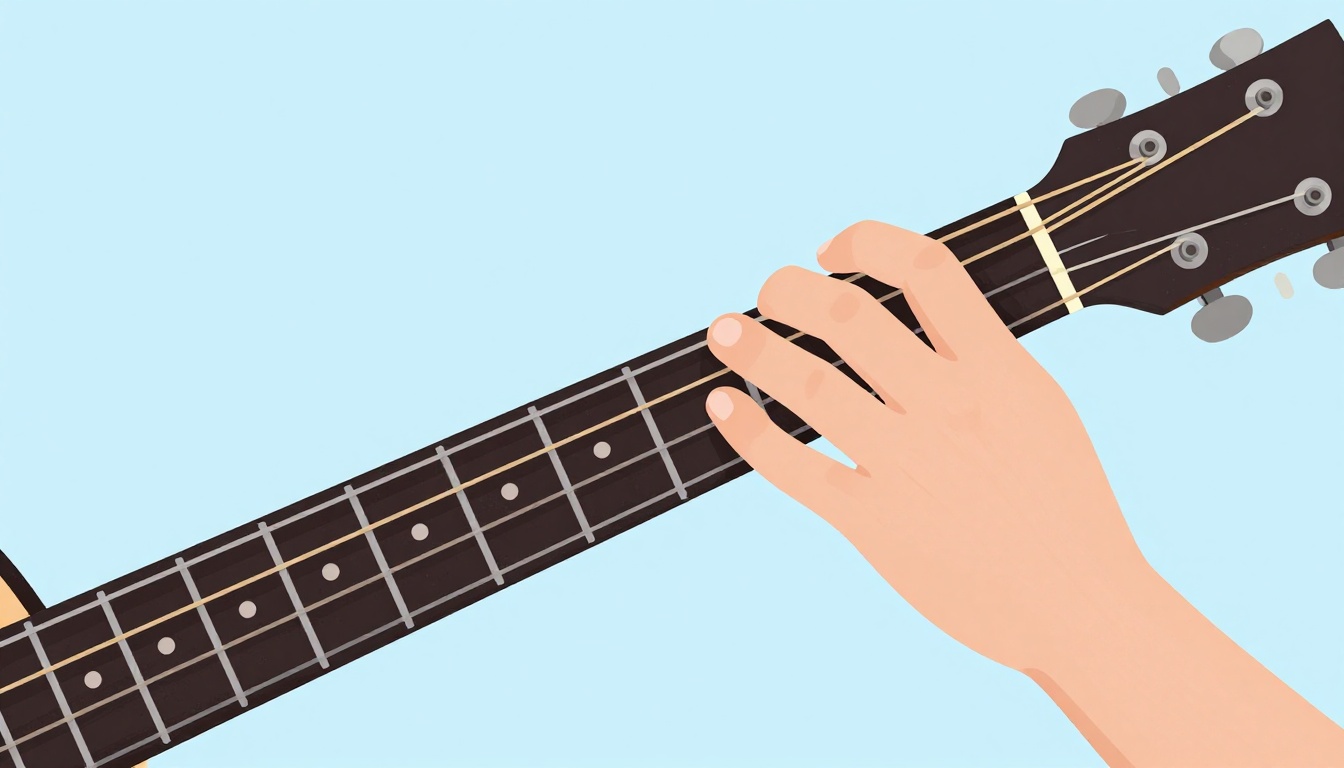
Moving the Shape Up the Neck: The A-Shape Barre Version
Open Csus2 is tied to the key of C because it uses open strings. Once you can also play it as a barre chord, you can move the same shape to any root note on the neck, useful the moment a song needs, say, a Dsus2 or an Esus2 and you would rather move one shape than learn a new fingering.
The moveable version is based on the open A suspended second shape. Barre your index finger across the A, B, and high E strings at the 3rd fret, keeping the D and G strings clear of the barre, then place your ring finger on the 5th fret of the D string and your pinky on the 5th fret of the G string. Mute the low E string with the underside of your index finger.
| String | Fret | Finger |
|---|---|---|
| 6 (low E) | Muted | - |
| 5 (A) | 3 | 1 (barre) |
| 4 (D) | 5 | 3 (ring) |
| 3 (G) | 5 | 4 (pinky) |
| 2 (B) | 3 | 1 (barre) |
| 1 (high E) | 3 | 1 (barre) |
The 3rd fret of the A string is C, which is why this shape lands on Csus2 even though it is built on an A-shape template. Slide the entire shape up or down the neck and the barre's root note on the A string tells you which sus2 chord you are playing: two frets down at the 1st fret gives you Bsus2, two frets up at the 5th fret gives you Dsus2, and so on.
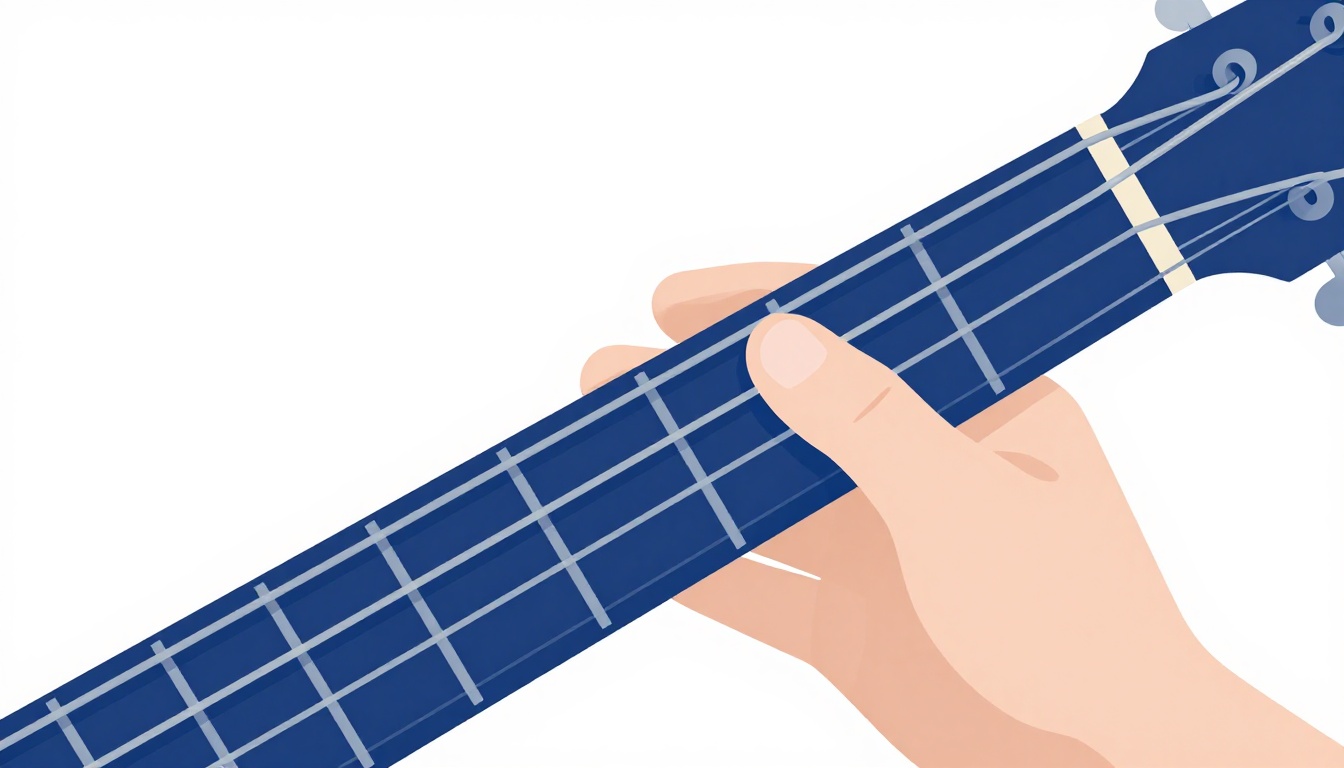
This version is genuinely harder than the open one. The barre needs to hold three strings evenly while leaving the two in the middle completely untouched, and the ring and pinky fingers are working two frets above it, stretching the hand more than most beginner chords ask for. Treat it as a stretch goal once the open version, in either its two-finger or three-finger form, is solid, not a required stop on the way there.
What "Sus" Means and Why the Chord Sounds Unresolved
Every major or minor chord gets its identity from the third: a major third makes it sound settled and bright, a minor third makes it sound settled and dark. Take the third out entirely, as Csus2 does, and the chord loses that settled quality. Your ear keeps waiting for it to land somewhere, either up into a major chord or down into a minor one, and that waiting feeling is the entire appeal of a suspended chord.
You can hear this directly. Play C major, then Csus2, then C major again, slowly, letting each chord ring. The Csus2 in the middle will feel like a held breath between two chords that both feel finished. Songwriters use that held-breath quality deliberately, often right before a chorus or right at the start of a verse, to create a small amount of tension that the next chord then resolves.
The Sound of Suspended Chords and When to Reach for One
Suspended chords show up across a wide range of styles precisely because they do not commit to a mood. A major chord sounds settled and often bright. A minor chord sounds settled and often dark. A sus chord sounds open, unfinished, and a little weightless, which makes it useful anywhere a songwriter wants forward motion without yet deciding where the emotional weight of a section is going to land.
Folk, singer-songwriter, and open-chord pop use Csus2 constantly as connective tissue between plain chords, usually as a passing chord strummed for a beat or two on the way somewhere else rather than a chord you sit on for a whole verse. Heavier styles use suspended chords differently, often as a droning, atmospheric texture under a riff, since a chord with no third avoids clashing against a vocal or lead line that has not yet decided whether it wants to sit in major or minor territory. In both cases the reason is the same: leaving the third out keeps the harmony from making a decision the rest of the arrangement has not made yet.
Reach for Csus2 specifically, rather than Csus4 or Cadd9, when you want that open quality without any pull. Csus4 wants to resolve, it has real tension pointing back at C major. Csus2 is calmer, closer to a held, floating chord than a chord that is straining toward the next one.
Training Your Ear to Recognize Csus2
Once you can play the chord cleanly, it is worth spending time being able to hear it by name in a recording, since that is what lets you figure out a song by ear instead of hunting for a tab online. Play C major and Csus2 back to back a dozen times, paying attention specifically to which notes changed. Say the words "third" when you play C and "second" when you play Csus2 out loud as you go, connecting the sound to the name rather than just the shape.
The giveaway in a recording is usually the absence of tension rather than the presence of anything obvious. A song that sounds settled and warm on its C chord is probably playing plain C. A song where the same chord feels like it is floating, open, and not quite finished, especially right before the vocal comes back in or a chorus lands, is a strong candidate for Csus2. This kind of ear training pays off well beyond this one chord, since the same listening habit, comparing a chord against its plain major version and noticing exactly which note moved, works for every suspended and added-note chord you will meet later.
Where Csus2 Fits in a Key
Csus2 shows up constantly as a decorated version of whichever C chord already belongs in the key you are playing in, rather than as a chord you go looking for on its own.
As the I Chord in the Key of C Major
In the key of C major, C is the tonic, the "home" chord. Swapping it for Csus2 at the start or end of a phrase adds movement without leaving the key, since every note in Csus2 (C, D, G) is also in the C major scale.
As the IV Chord in the Key of G Major
In the key of G major, C is the IV chord. Csus2 works the same way here as a decorated substitute, softening the IV chord's usual brightness for a bar or two before it resolves.
As the V Chord in the Key of F Major
In the key of F major, C is the V chord, the one with the strongest pull back to the tonic. A Csus2 to C move right before returning to F is a common suspension pattern in folk and pop guitar, because it delays that pull just long enough to be noticed.
Notice that in all three cases the underlying chord function does not change. C is still the tonic in C major, still the IV in G major, still the V in F major, whether you play it plain or suspended. Csus2 decorates a chord that already belongs where it is, it does not introduce a new chord into the progression. That is a useful distinction when working out a song by ear: if a Csus2 shows up somewhere unexpected, it is worth checking whether the underlying chord is actually C, or whether your ear has been fooled by the open, ambiguous sound of the suspension itself.
Chord Progressions That Use Csus2
Csus2 rarely stands alone in a progression. It almost always sits next to the plain C chord it is built from, or moves through a small cluster of open chords near it on the neck.
C, Csus2, F: a common open-chord move, and a good one to practice because it keeps the hand in roughly the same area of the neck rather than jumping around.
C, Csus4, Csus2, C: a suspension move that hits the note above the third, then the note below it, then resolves back, all over the same root. This reads less like a progression between different chords than a single C chord being decorated on either side, which is why it works so naturally as a rhythm part.
G, Csus2, Am: puts Csus2 in the middle of a progression rather than the start, good practice for changing into the shape rather than just holding it.
F, Csus2, G: a slower, more contemplative sequence, useful for verses that need to breathe.
Try each of these slowly with a metronome before worrying about speed. The point at this stage is landing every finger in the right spot on the first attempt, not playing fast.
Changing Between Csus2 and Other Chords
The shape itself is not the hard part of this chord. Getting into and out of it without stopping the song is, and because Csus2 is not one finger away from plain C the way some suspended chords are from their major parent, this deserves real attention.
Csus2 to C: the one anchor point worth knowing is the A string, fretted at the 3rd fret in both chords, just with a different finger, index for Csus2 and ring for C. Keep that string fretted as you rebuild the rest of the shape around it rather than lifting your whole hand and starting from nothing.
Csus2 to F: if you are using an easier, non-barre version of F, both chords already keep a finger anchored on the D string area, so treat the change as a small shift rather than a full reset, moving one finger at a time rather than lifting the whole hand.
Csus2 to G: this is closer to a full hand reset, since G's standard open shape uses the low E and A strings in a way Csus2 does not. Lift out of Csus2 and rebuild G from the bottom string up, ring finger first, rather than hunting for a pivot finger that is not really there.
Csus2 to Am: your middle finger, on the B string in Csus2, only has to move down two frets to land on the same string for Am, which makes it a useful anchor point even though the rest of the hand rebuilds.
Csus2 to Em: both chords lean on the middle strings rather than the low ones, so this change is more about relaxing your hand and letting the fingers find new frets than about forcing any single finger to stay in place.
Practice each of these as a two-chord loop, back and forth slowly with a metronome, before dropping them into a full progression. Because this chord genuinely does not share the fast one-finger shortcuts that some sus2 chords offer, it rewards deliberate practice more than most.
Using Csus2 as a Suspension Inside a Strum
Beyond using it as a chord in a progression, Csus2 is also used as a decoration inside a held C chord, without ever fully changing chords in the usual sense. Because the two shapes do not share fingers as directly as some sus2 pairs, this move works best as a full hand shift executed quickly and cleanly, rather than a single-finger lift: strum C, shift into Csus2 for a beat, then shift back to C, all while your strumming hand keeps the same rhythm going.
Practice this slowly with just your fretting hand first, moving between the two full shapes in time with a metronome, before adding the strum. Rushing straight to full speed is the most common reason this figure ends up sounding sloppy rather than deliberate, and because the shift is bigger here than it is for some other sus2 chords, giving it dedicated slow practice matters more, not less.
Playing Csus2 Fingerstyle
Csus2 works well fingerpicked, arguably better than strummed, because picking each string separately lets the open D and G strings ring out fully rather than getting buried in the attack of a strum. A simple pattern to start with: thumb on the A string, then index finger on the D string, middle finger on the G string, ring finger on the B string, played one note after another rather than all at once, adding the high E string with your ring or pinky once the four-note pattern feels even.
Because two of the five notes are open strings sitting in the middle of the pattern rather than at the edges, this arrangement rings in an unusually layered way for a beginner fingerpicking exercise, which is part of why Csus2 is a satisfying chord to introduce fingerstyle playing on. Keep your thumb anchored on the A string throughout rather than letting it wander onto the muted low E string, since an accidental low note will stand out far more in a picked pattern than in a strummed one.
Csus2 in Open and Alternate Tunings
Everything in this post assumes standard tuning, E-A-D-G-B-E low to high, which is what almost every guitarist means by "Csus2" without qualification. It is worth knowing that some alternate tunings make sus2-type chords fall under fewer fingers, or under no fingers at all, because the open strings themselves are already tuned to notes of the chord.
If you ever see "Csus2" written in tab for a song in an alternate tuning, check the tuning note at the top of that tab first, since the same chord name can map to a completely different set of frets once the open strings themselves have changed pitch. Everything taught in this post is for standard tuning only.
Common Beginner Mistakes With Csus2
- Letting the middle or ring finger lean back and touch the open D or G string, silencing exactly the notes that are supposed to be ringing freely.
- Trying to find a one-finger shortcut from plain C, the way some sus2 chords offer, when Csus2 genuinely asks for a different hand shape.
- Pressing harder than the chord needs on all three fretted notes. Csus2 only needs enough pressure to stop the buzz, and squeezing harder than that tires your hand for no gain in tone.
- Strumming all six strings instead of five, or four on the simplified version, picking up the low E string and muddying the sound.
- Confusing Csus2 with Cadd9 because both involve a D note and a similar open feel. Check for the E specifically if you are ever unsure which one you are hearing.
- Rushing the chord change instead of the chord itself. The shape is genuinely learnable once memorized. Most remaining problems beginners run into with Csus2 are really problems with the change into or out of it, not with the fingers once they have landed.
A Practice Routine for Csus2
Spend five minutes on this the first time you learn the chord, then fold it into whatever else you are practicing.
- Fret the simplified two-finger version and strum. Check each of the four strings individually by picking it alone: D, G, B, and high E should all ring clean.
- Move up to the full three-finger shape and repeat the same check, this time across five strings, listening especially for the D and G strings staying open and clear.
- Play C major, then shift into Csus2, then back to C, four times in a row, slowly.
- Loop the progression C, Csus4, Csus2, C with a metronome at a slow tempo, focusing on landing each chord cleanly rather than on speed.
- Practice the single hardest change from the list above, in isolation, ten times before putting it back into a full progression.
Five focused minutes a day on a single chord and its most common changes will get you further than an hour of unfocused strumming once a week. Consistency beats duration here. If you want a longer arc to work through rather than repeating the same five minutes every day, spread the work out over a week:
Days one and two: nothing but the shape itself, starting with the two-finger version and moving to the three-finger version once it feels stable. Check every string individually each time.
Days three and four: the C, Csus4, Csus2, C suspension figure from earlier, first with just your fretting hand and no strum, then with a slow, even strum added once the fingering feels automatic.
Day five: the two hardest chord changes into and out of Csus2 from your own playing, whichever two you noticed yourself hesitating on this week, practiced in isolation, ten repetitions each.
Day six: one full progression, C to Csus2 to F or whichever of the progressions above fits a song you are actually working on, at a slow, deliberate tempo with a metronome.
Day seven: play through anything from the week at whatever tempo feels natural, without a metronome, just to hear how it sounds as music rather than as an exercise. This is the day the chord stops being a shape you are studying and starts being a sound you reach for.
Every Csus2 Voicing at a Glance
| Voicing | Tab | Difficulty | Best For |
|---|---|---|---|
| Simplified (two finger) | xx0013 | Beginner | The lightest version, no A string needed |
| Standard open Csus2 | x30033 | Beginner to intermediate | The default, and the one most tabs mean |
| Alternate open fingering | x30013 | Beginner to intermediate | Same notes, more evenly spread fingers |
| Csus2/G | 3-3-0-0-1-3 | Intermediate | Fuller low end, fifth in the bass |
| A-shape barre | 3-5-5-3-3, muted low E | Intermediate to advanced | Moving the same shape to any root note |
FAQ
Is Csus2 hard to play? The simplified two-finger version is easy, comparable to many beginner open chords. The standard three-finger version is a little harder than it looks, mainly because the fingers have to arch over two open strings sitting between them rather than because any single stretch is large.
Is Csus2 major or minor? Neither. It has no third, the note that decides major or minor, so it sits in a neutral, unresolved space between the two.
What is the difference between Csus2 and Cadd9? Csus2 replaces the major third with the second, so it has no third at all (C, D, G). Cadd9 keeps the major third and adds the second as an extra color note (C, E, G, D). Cadd9 still sounds clearly major. Csus2 does not.
Why does Csus2 sound unfinished? Because the note that normally settles a chord into major or minor territory has been removed. Your ear expects that resolution and does not get it until the next chord arrives, which is the effect songwriters are usually going for.
Can I strum all six strings for Csus2? Not for the standard voicing. The low E string is not part of the chord and will muddy it. If you want a fuller sound with a low bass note, use the Csus2/G voicing instead, which deliberately includes the low E string.
Is Csus2 the same shape as Dsus2, just moved down? No. Dsus2 is a genuine one-finger-off-D shape because the note it removes happens to sit on the outer string of the D chord. Csus2 removes a note that appears twice in the C shape, once on an inner string, so it ends up as its own shape rather than a simple subtraction from C.
Do I need the barre version? Not as a beginner. The open shape, in either its two-finger or three-finger form, is the one used in almost every song built around a C-rooted suspended chord. The barre version only matters once you need the same suspended sound over a different root note.
How is Csus2 different from Csus4? Csus2 replaces the third with the note a whole step below it (D). Csus4 replaces the third with the note a half step above it (F). Csus4 has a stronger pull back toward C major, and the two are often played as a pair moving into and out of C.
Is there an easier version for small hands? Yes, the simplified two-finger version covered earlier in this post, which drops the A string entirely and only asks for an index finger on the 1st fret of the B string and a ring finger on the 3rd fret of the high E string.
Can I play Csus2 with a capo? Yes. A capo shortens the whole neck but does not change the relationships between strings, so every fingering and fix in this post works exactly the same with a capo on. Only the pitch the open strings actually sound at changes, which matters for singing along but not for how your hand plays the shape.
What does the "2" in sus2 actually mean? It refers to the scale degree that replaces the third. Count up the C major scale: C is the first degree, D is the second, E is the third, and so on. Sus2 takes the second degree, D, and puts it where the third normally sits. Sus4 does the same thing with the fourth degree, F, instead.
Can Csus2 replace a plain C chord anywhere in a song? Not safely as a blanket rule. It works well anywhere C is meant to feel light or in motion, especially right before a chord change. It works badly anywhere the song needs C to feel fully resolved, such as the last chord of a chorus, since Csus2 will leave that moment sounding unfinished instead of landing.
If plain C major is still settling into your hand, or you keep reaching for Cadd9 and want to know exactly how it differs from this one, both are worth working through alongside Csus2, since all three share the same root and the same open strings.
GuitarLowKey
Ready for fifteen focused minutes?
Open the web app and train the change that is blocking your song.