
The Harmonic Minor Scale on Guitar: Every Position, Explained
The harmonic minor scale on guitar: every note, the open and movable box shapes, the raised 7th that makes it sound exotic, and where to use it.

The harmonic minor scale is the natural minor scale with one note changed: the 7th degree is raised a half step. In A minor that turns the note G into G#. That single change is what gives the scale its dramatic, "exotic" sound, and it's the reason the scale shows up in flamenco, classical music, metal, and jazz far more often than plain natural minor does.
What Makes a Scale "Harmonic" Minor
Every minor scale starts the same way: a root, a whole step, a half step, and so on, built from the natural minor pattern. Harmonic minor takes that natural minor scale and sharpens the 7th note by a half step. Nothing else moves.
Compare the two directly, using A as the root:
| Scale | Notes |
|---|---|
| A natural minor | A, B, C, D, E, F, G |
| A harmonic minor | A, B, C, D, E, F, G# |
Six notes are identical. Only the last one changes, from G to G#. That G# sits a half step below the root, which makes it a leading tone, a note that pulls hard toward resolving up to A. Natural minor's flat 7th (G) doesn't have that pull; it sits a whole step below the root and resolves much more gently, or not at all. That half-step tension is the entire personality of the scale.
If you haven't worked through the plain minor scale yet, it's worth doing first: the shapes below build directly on the A minor scale, with one note moved.
Why Is It Called "Harmonic" Minor?
The name doesn't describe the scale's sound, it describes what the scale is for. "Harmonic" here means harmony, the chords built from the scale, as opposed to "melodic," which is about how a scale flows in a melodic line. Composers raised the 7th degree specifically so the V chord in a minor key would become major and behave like a proper dominant chord, the same way it does in major keys. That's a harmony problem being solved, not a melody problem.
The trade-off is that raising only the 7th creates the awkward three-fret jump between the 6th and 7th degrees, which can sound clumsy in a smooth melodic line. Composers who wanted the strong dominant chord but a smoother melody invented a second fix: raise the 6th degree too, when ascending. That's the melodic minor scale, covered in more detail further down. Harmonic minor accepts the awkward gap in exchange for simplicity, one altered note instead of two.
The Interval Formula, and the Gap Everyone Notices
In whole steps (W) and half steps (H), harmonic minor runs:
W - H - W - W - H - W+H - H
Six of those steps are ordinary. The odd one is "W+H," a step and a half, sitting between the 6th and 7th degrees. In A harmonic minor that's the jump from F up to G#, three semitones, which on a guitar means three frets on a single string. Music theory calls this an augmented 2nd. It's the widest gap in the scale by a full step, and it's what makes harmonic minor sound instantly different from major or natural minor, even to someone who's never studied theory. It's also the main physical challenge in playing the scale, which the fingering sections below deal with directly.
The Notes of A Harmonic Minor, Degree by Degree
Naming each note by its function in the scale makes the raised 7th easier to keep track of once you're moving fast:
| Degree | Name | Note (A harmonic minor) |
|---|---|---|
| 1 | Tonic | A |
| 2 | Supertonic | B |
| b3 | Mediant | C |
| 4 | Subdominant | D |
| 5 | Dominant | E |
| b6 | Submediant | F |
| 7 | Leading tone | G# |
Notice the pattern of flats: the 3rd and 6th are flat, same as any minor scale. The 7th is not flatted, which is the whole point. If you see a scale written as "1, 2, b3, 4, 5, b6, 7" in a chord chart or a scale book, that's harmonic minor, and the un-flatted 7 is the tell.
Hearing the Scale One String at a Time
Before tackling a full box shape, it helps to hear the augmented 2nd in isolation, on a single string, where there's no fingering to think about yet. Here is A harmonic minor played entirely on the low E string (6th string, thickest string), starting from the root at the 5th fret:
e|-----------------------------------------------|
B|-----------------------------------------------|
G|-----------------------------------------------|
D|-----------------------------------------------|
A|-----------------------------------------------|
E|--5--7--8--10--12--13--16--17-------------------|
That's A (5th fret), B (7th), C (8th), D (10th), E (12th), F (13th), G# (16th), A (17th). Play it slowly with a metronome and listen for the jump from the 13th fret to the 16th fret. Every other step in that run is one or two frets. That one is three, and your ear will catch it as a stretch in the sound itself, not just under your fingers. That's the augmented 2nd, live.
Two Octaves on One String
Once the first octave feels natural, the same single-string approach keeps working past the 17th fret. Continuing up the low E string past the octave you just played:
E|--17--19--20--22--24--25--28--29-----------------|
That's the same seven notes, one octave higher: A, B, C, D, E, F, G#, A. Playing two full octaves on one string before ever touching a box shape does two things at once: it removes any doubt about which notes belong to the scale, since there's no string-crossing to confuse the picture, and it gives your ear a much longer stretch of the scale's actual sound than a single octave provides. Most guitars run out of usable frets before the second octave finishes on the low E string, so if your neck stops short, drop the last note or two rather than forcing it.
Open Position: E Harmonic Minor
A harmonic minor's open-position shape is cramped, because the root note A sits open on the 5th string with very little room below it. E harmonic minor doesn't have that problem: the root is the open low E string, so the whole scale sits comfortably in the first four frets using several open strings. It's also the version that gets used the most in real playing, because E minor is such a common key on guitar.
E harmonic minor: E, F#, G, A, B, C, D#.
| String | Open | Fret 1 | Fret 2 | Fret 3 | Fret 4 |
|---|---|---|---|---|---|
| 6 (low E) | E | F# | G | ||
| 5 (A) | A | B | C | ||
| 4 (D) | D# | E | F# | ||
| 3 (G) | G | A | B | ||
| 2 (B) | B | C | D# | ||
| 1 (high E) | E | F# | G |
Read as fingering, using the standard one-fret-per-finger open-position rule (index on fret 1, middle on fret 2, ring on fret 3, pinky on fret 4): open strings need no finger, fret 1 notes take your index, fret 2 notes take your middle finger, fret 3 notes take your ring finger, and fret 4 notes take your pinky. The D string's jump from fret 1 to fret 4 is the augmented 2nd again, this time under your index and pinky with nothing in between.
Fingering the Open Position Cleanly
Two things trip people up in this shape. First, the D string requires an index-to-pinky jump with your ring and middle fingers doing nothing, which feels unnatural the first few times; resist the urge to slide your ring finger in to "help," it just gets in the way. Second, the open strings (E, A, G, B) ring differently in volume and sustain than the fretted notes next to them, so the scale can sound uneven until you deliberately match your pick attack across open and fretted notes.
Play it slowly, one note at a time, and check that no adjacent string is buzzing against your fretting fingers. With this many open strings involved, a finger that curls too flat will mute its neighbor without you noticing until you listen closely.
A Harmonic Minor: The Same Shape, Moved
A harmonic minor uses the identical fingering pattern as E harmonic minor above, just moved up the neck so the root lands on A instead of open E. Because A isn't an open string on the 6th string (it's the 5th fret), the shape stops being an "open position" shape and becomes what guitarists call a box position: a self-contained fingering pattern you can pick up and move to any root note.
Position 1: The Moveable Box (Root on the 6th String)
This is the shape most players learn first, because the root sits on the low E string where it's easy to find and easy to keep track of. For A harmonic minor, the box sits around frets 4 to 8:
| String | Frets played | Notes |
|---|---|---|
| 6 (low E) | 4, 5, 7, 8 | G#, A, B, C |
| 5 (A) | 5, 7, 8 | D, E, F |
| 4 (D) | 6, 7 | G#, A |
| 3 (G) | 4, 5, 7 | B, C, D |
| 2 (B) | 5, 6 | E, F |
| 1 (high E) | 4, 5, 7, 8 | G#, A, B, C |
Notice this box doesn't give you a tidy three notes per string the way a major scale pattern does. The low E and high E strings carry four notes each; the D and B strings carry only two. That unevenness is the augmented 2nd again, reshuffling how the notes fall across the neck. Anchor your index finger at the lowest fret you're using on each string and walk up from there; where a string asks for a three-fret reach (low E and high E, from fret 5 to fret 8), either stretch your pinky or shift your whole hand up two frets and re-set with your index and middle fingers. Both are standard solutions, and which one feels better depends on your hand size, so try both before deciding.
This shape is fully movable. Slide the whole pattern so your index finger sits on any other root note on the 6th string, and you're playing the harmonic minor scale in that key. Root on the 8th fret gives you C harmonic minor; root on the 10th fret gives you D harmonic minor, and so on.
Legato vs. Picking Across the Augmented 2nd
The three-fret stretch between the 6th and 7th degrees can be played two very different ways, and it's worth trying both before settling on one. Picking every note (strict alternate picking, down-up-down-up) keeps the sound even and articulate, which suits classical or flamenco-style playing where every note is meant to speak clearly. A legato approach, sliding from the 6th degree up to the 7th instead of picking it separately, smooths the jump out and is closer to how the interval gets used in metal leads, where the goal is momentum rather than precision on every note.
Neither is more "correct." Picking makes the augmented 2nd sound like a deliberate, dramatic leap. Sliding makes it sound like a single connected gesture. Try the single-string pattern above both ways and notice how differently the same seven notes can land depending on which one you choose.
Finding the Root Anywhere on the Neck
Rather than memorizing a second full box shape, it's more useful to know how to find your root note anywhere, then apply Position 1's shape from there. The 6th and 5th strings share a simple relationship: the same note two strings over sits two frets higher. The A on the 6th string's 5th fret is the same pitch as the open A on the 5th string. Move that up: the C on the 6th string's 8th fret matches the C on the 5th string's 10th fret; the note two strings up and two frets over is always the same pitch.
Learning the natural notes on the 6th and 5th strings (E, F, G, A, B, C, D, repeating) up to the 12th fret is the single most useful piece of fretboard knowledge for finding any harmonic minor root fast, in any key, without counting up from the nut every time.
Connecting the Box to the Rest of the Fretboard
Position 1 covers roughly five frets of the neck. The scale, of course, continues in both directions. Once the box feels comfortable, the next useful step isn't a second full box shape, it's connecting single notes from Position 1 to the same scale tones just above or below it on the same strings.
For example, the high E string in Position 1 plays G#, A, B, and C at frets 4, 5, 7, and 8. The very next scale tone above that, D, sits at fret 10 on the same string, just two frets past the top of the box. Reaching two frets past a familiar shape to grab the next note, rather than jumping to an entirely new pattern, is how players gradually stop thinking in boxes altogether and start seeing the whole neck as one connected instrument. Do this one string at a time rather than trying to redraw the whole fretboard at once.
Why the V Chord Turns Major
Here's the payoff for learning harmonic minor instead of sticking with natural minor: the chords built from it work differently, and one chord in particular becomes far more useful.
Stack the scale in thirds and you get the diatonic chords of A harmonic minor:
| Degree | Chord | Quality |
|---|---|---|
| i | Am | minor |
| ii° | Bdim | diminished |
| III+ | Caug | augmented |
| iv | Dm | minor |
| V | E | major |
| VI | F | major |
| vii° | G#dim | diminished |
In natural minor, the 5th-degree chord (built on E) is minor, Em. It has almost no pull back to the tonic; it just sits there. In harmonic minor, that same chord becomes E major, because the raised 7th (G#) is the major 3rd of an E chord. Extend it to a dominant 7th, E7, and it now has both the strong pull of a dominant chord and the leading tone doing double duty. That E7-to-Am motion is the harmonic minor scale's entire reason for existing: composers wanted a minor key with the same strong "pull home" that major keys get for free from their major V chord.
If chord function and Roman numerals are new territory, the jazz chords on guitar post covers how dominant 7th chords behave in more depth.
Harmonic Minor and Its Relative Major
Every minor key has a relative major, a major key that shares the same key signature and the same seven letter names before any accidentals are added. A minor's relative major is C major; they share no sharps and no flats. Harmonic minor doesn't change that relationship, since the raised 7th is treated as a borrowed accidental rather than a permanent change to the key signature, as covered earlier. What does change is how the two keys relate melodically: C major's own 7th degree (B) is already a half step below its root, so C major's leading tone comes for free. A minor has to borrow it by raising its own 7th, which is exactly what harmonic minor does. In a sense, harmonic minor is natural minor reaching for the same half-step pull that its relative major already has built in.
The Augmented III Chord
The III chord in the diatonic table above, Caug in the key of A, tends to get skipped by players who don't recognize it, since augmented chords are rare almost everywhere else in guitar music. It's built by stacking two major 3rds on top of C (C, E, G#), which means it shares two notes with the tonic Am chord (C and E) and borrows its top note from the same leading tone that makes the V chord major. It has a restless, unresolved quality, useful as a brief passing chord between the tonic and something else, but not a chord that a progression usually settles on. If you see an augmented chord in a minor-key chart and aren't sure what it's doing there, it's very often built on the III degree of harmonic minor, doing exactly this job.
How This Scale Connects to the Open Am and E7 Chords
If you already know the open Am chord (x-0-2-2-1-0) and the open E7 chord (0-2-0-1-0-0), you're already holding several notes of this scale. Am contains A, C, and E, all three the root, flat 3rd, and 5th of A harmonic minor. E7 contains E, G#, B, and D, which is the dominant, leading tone, supertonic, and subdominant of the same scale. Strum between those two chords slowly and you're hearing the V7-to-i motion that makes harmonic minor musically useful, before you've played a single note of the scale itself.
This is also a fast way to check your ear: if a scale run you're playing over an Am chord sounds like it belongs, and a run over an E7 chord resolving to Am sounds even stronger, you're using the raised 7th the way it's meant to be used.
Phrygian Dominant: The Mode Hiding Inside the Scale
Every scale contains modes, seven-note patterns built by starting on a different degree of the parent scale. The most useful one inside harmonic minor is the 5th mode, built starting on the dominant. In A harmonic minor, that's E, and the resulting scale, E F G# A B C D, is called Phrygian dominant.
Phrygian dominant has a distinctive flavor of its own: a major 3rd and flat 7th like a dominant chord, plus a flat 2nd sitting only a half step above the root, which is the same tight, exotic interval flamenco and Middle Eastern music are known for. It's built from the exact same notes as A harmonic minor, just reordered around a different root, which means you don't need to learn new fingerings, only a new starting point and a new note to treat as "home." Play E Phrygian dominant over an E7 chord that's resolving to Am and you're using harmonic minor's most common practical application without having to think about the parent scale at all. For a deeper look at how modes relate to their parent scales generally, see the guide to guitar modes.
Which Chords and Progressions Harmonic Minor Fits
Harmonic minor works cleanly over:
- The i chord (Am), especially minor and minor/major 7th voicings, where the natural 7 in the chord matches the scale exactly.
- The V or V7 chord (E or E7) resolving to the i chord, which is the scale's signature move.
- The iv chord (Dm), where the scale's notes still fit without clashing.
It does not sit well over a plain dominant 7th chord that isn't resolving to the i chord, or over major key progressions in general; the raised 7th is only "correct" when the ear is expecting a pull back to a minor tonic. Played over the wrong chord, the G# just sounds like a wrong note, not an exotic one. Context is what makes the scale work, not the notes alone.
The ii°-V-i Progression
Jazz and classical minor-key writing both lean on a specific three-chord move: ii°-V-i. In A harmonic minor that's Bdim, E7, Am. The diminished ii chord leans hard into the dominant, the dominant resolves to the tonic, and the whole progression is built entirely from notes inside the scale you already know. Play it slowly on a looper or with a friend on chords, and solo over it using only Position 1. You'll notice the scale sits naturally under all three chords without needing to change anything, because all three are diatonic to the same seven notes.
This progression is worth learning even if you never play jazz. It's the harmonic skeleton underneath a huge amount of minor-key film scoring, flamenco, and metal, usually dressed up with different rhythms and voicings but built on the same three chords.
A i-iv-V7-i Chord Progression to Practice Over
A simpler, more common progression for practicing the scale in a band or singer-songwriter context:
| Bar | Chord | Function |
|---|---|---|
| 1 | Am | i |
| 2 | Dm | iv |
| 3 | E7 | V7 |
| 4 | Am | i |
Loop those four bars and solo over them using Position 1. The iv chord (Dm) is the one place harmonic minor and natural minor sound almost identical, since neither the b6 nor the 7 is emphasized by that chord; the difference becomes obvious again the moment the E7 bar arrives. Listening for that shift, quiet under the iv chord, sharp under the V7, is one of the fastest ways to internalize what the raised 7th is actually doing musically rather than just theoretically.
The Diminished vii Chord and Why It's Useful
The vii° chord, G#dim in A harmonic minor, gets skipped over by a lot of players because diminished chords sound unstable and hard to use. It's worth a second look: a diminished chord built on the leading tone shares two notes with an E7 chord (G# and B), which means it can substitute for E7 in a pinch, or link smoothly between the iv chord and the V chord in a progression. It's a color chord, not a chord you'll build a whole song around, but recognizing it as "the other dominant-function chord" in the key makes minor-key chord charts far less mysterious when it shows up.
Where You'll Hear This Scale
Harmonic minor rarely carries an entire song from start to finish; its flavor is strong enough that most music uses it in passages, cadences, or short runs rather than as the constant backdrop.
Flamenco and Spanish guitar
Flamenco leans on Phrygian dominant, harmonic minor's 5th mode, more than almost any other style, which is where the scale's "exotic" reputation largely comes from. The tight half-step between the root and the flat 2nd, and the major 3rd sitting right above it, give flamenco its unmistakable character, and both intervals come directly from harmonic minor's note set.
Classical cadences
Classical music has used the raised 7th since the Baroque era specifically to strengthen the pull of a V chord to i; it's baked into centuries of minor-key cadences. Composers writing in minor keys routinely borrowed the raised 7th at exactly the moment the music needed to resolve, then dropped back to the natural 7th everywhere else, which is the same selective use this post recommends for guitar.
Metal and neoclassical shred
Metal and neoclassical guitarists use harmonic minor runs constantly, often at speed, because the augmented 2nd creates a dramatic, cascading sound that plain minor scales don't have. Fast alternate-picked or sweep-picked runs through the scale, especially outlining the V and i arpeggios, are a signature sound of neoclassical shred playing.
Jazz's V7-to-i moment
Jazz uses it narrowly and precisely: over the V7 chord in a minor ii-V-i progression, then back to natural minor or the Aeolian mode for everything else. Soloing straight through harmonic minor across an entire minor blues or standard tends to sound heavy-handed; using it only across the V7 bar is the more common, more musical approach.
"Paint It Black" and pop crossovers
The main riff of "Paint It Black" by The Rolling Stones is built from the E harmonic minor scale, which is a useful reference if you want to hear the sound outside of a scale exercise; that dark, driving character is the scale doing exactly what it's built to do, in a context far removed from flamenco or classical music.
Why It Isn't Working
The augmented 2nd trips your fretting hand
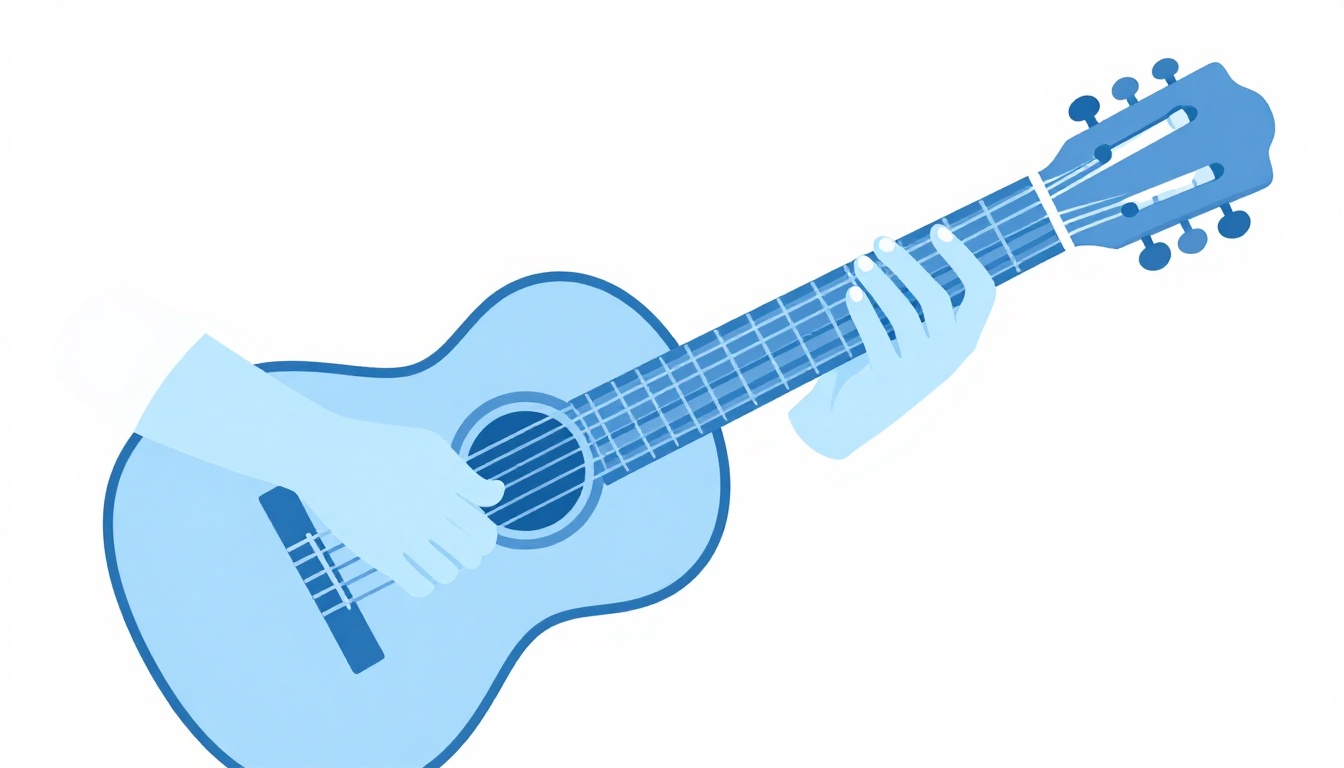
If your run stumbles at the same spot every time, check whether that spot is the jump from the 6th to the 7th degree (F to G# in the key of A). That three-fret stretch is genuinely wider than the rest of the scale, and rushing it is the most common cause of a dropped note. Slow the whole run down until that one jump stops being a surprise to your fingers.
You're losing the leading tone
The raised 7th is the entire point of the scale. If you're bending it flat, muting it, or rushing past it without letting it ring, you're playing natural minor with extra effort. Land on the G# deliberately and let it breathe, especially right before you resolve up to the root.
It sounds like an exercise, not music
Playing the scale straight up and down, evenly, at a fixed tempo, will always sound like practice rather than playing. Once the shape is under your fingers, break the order: skip notes, repeat some, land on the leading tone and hold it. The scale is raw material, not a piece of music by itself.
You're using it over the wrong chord
If the scale sounds "off" rather than "exotic," check what's underneath it. Harmonic minor needs a minor tonic to resolve to, or a dominant chord that's actively pulling toward one. Play it over a plain major progression and the raised 7th just sounds like a mistake.
Your hand cramps in the box position
The uneven note distribution in Position 1 (four notes on some strings, two on others) means your hand has to open and close by different amounts as you cross strings. Cramping usually means you're holding tension in your thumb or squeezing the neck harder than the fretting actually requires. Loosen your grip and let your thumb float rather than anchoring hard behind the neck.
Your timing drifts on the wide stretch
It's common to unconsciously rush toward the augmented 2nd (anticipating the stretch) or slow down right after it (recovering from it). Practice with a metronome specifically targeting that one interval in isolation until it takes the same amount of time as every other step in the scale.
Harmonic Minor Arpeggios
An arpeggio plays a chord's notes one at a time instead of together, and it's a fast way to make a scale run sound intentional rather than mechanical. The i chord arpeggio in A harmonic minor is A, C, E, the same three notes as an open Am chord, just spread across the neck instead of stacked. The V chord arpeggio is E, G#, B, the notes of an E major chord, and outlining it right before resolving to an A note is one of the clearest ways to make the leading tone's pull audible in a solo rather than just in a scale run.
Practice both arpeggios inside the Position 1 box you already know before trying to connect them; they use notes you're already fretting, just in a different order.
Sweep Picking the Arpeggios
Once the E major and A minor arpeggios are comfortable played one note at a time, they're also the standard vehicle for sweep picking, a technique where the pick brushes across several strings in one continuous motion instead of picking each note separately. It's a staple of neoclassical shred playing specifically because harmonic minor's V and i arpeggios sit close together on the neck and outline that same strong dominant-to-tonic pull the scale is built around. Sweep picking is a technique worth developing on its own before applying it here; trying to learn the motion and the arpeggio shapes at the same time usually slows down both.
A Simple Lick Targeting the Leading Tone
A short phrase, built entirely from notes already inside Position 1, that climbs toward the leading tone and resolves to the root:
e|-----------------------4--5--|
B|--------------5--6-----------|
G|--4--5--7--------------------|
D|------------------------------|
A|------------------------------|
E|------------------------------|
Read left to right: G string, B (4th fret), C (5th fret), D (7th fret); B string, E (5th fret), F (6th fret); high E string, G# (4th fret), A (5th fret). The phrase climbs through the middle of the scale and lands on the leading tone right before resolving up to the root, which is the exact motion that makes harmonic minor sound like harmonic minor rather than a random run of seven notes. Play it slowly enough to hear the resolution land, then gradually add speed.
Harmonic Minor Compared to Natural and Melodic Minor
Three minor scales share the same first five notes and differ only in the 6th and 7th degrees:
| Scale | 6th | 7th | Notes from A |
|---|---|---|---|
| Natural minor | Flat | Flat | A, B, C, D, E, F, G |
| Harmonic minor | Flat | Natural | A, B, C, D, E, F, G# |
| Melodic minor (jazz form) | Natural | Natural | A, B, C, D, E, F#, G# |
Natural minor is the default, gentle-sounding minor scale most beginners learn first. Harmonic minor raises only the 7th, creating the augmented 2nd and the strong pull to the tonic. Melodic minor raises both the 6th and 7th, which removes the augmented 2nd gap entirely and gives a smoother, more major-scale-like run while keeping the minor 3rd. Each has its own use: natural minor for the general minor-key sound, harmonic minor for cadences and dramatic runs, melodic minor for smoother jazz lines that still resolve like a minor key.
Harmonic Minor Compared to the Blues Scale
The minor blues scale (root, flat 3rd, 4th, flat 5th, 5th, flat 7th) and harmonic minor share only three notes: the root, the flat 3rd, and the 5th. Everything else is different, and the two scales create almost opposite moods. Blues scale leans on the flat 5th as its color note, a bluesy, unresolved tension that doesn't need to go anywhere. Harmonic minor leans on the raised 7th, a leading tone that actively wants to resolve. If a lick sounds bluesy and unresolved, you're likely hearing blues scale; if it sounds dramatic and like it's pulling toward a landing point, that's harmonic minor's leading tone at work. Players who already know the blues scale sometimes reach for its flat 5th out of habit inside a harmonic minor run; it isn't wrong exactly, but it blurs the two sounds together and undercuts the very tension harmonic minor is built to create.
Harmonic Minor in Other Keys
The formula transposes directly. Take any natural minor scale and raise its 7th degree by a half step:
| Key | Harmonic minor notes |
|---|---|
| A harmonic minor | A, B, C, D, E, F, G# |
| E harmonic minor | E, F#, G, A, B, C, D# |
| D harmonic minor | D, E, F, G, A, Bb, C# |
| G harmonic minor | G, A, Bb, C, D, Eb, F# |
| C harmonic minor | C, D, Eb, F, G, Ab, B |
Because Position 1's box shape is movable, you already have a playable fingering for every key in this table: find the root note on the 6th string and place the same shape on top of it.
What Key Signature Does Harmonic Minor Use?
Harmonic minor doesn't get its own key signature. Written music in A harmonic minor uses the same key signature as A natural minor (no sharps or flats, matching its relative major, C), and the raised 7th is written in as an accidental, a sharp sign placed directly in front of the G, every single time it occurs. That's a deliberate choice: the scale is understood as natural minor with an occasional borrowed note, not as a key in its own right. If you're reading notated music rather than tab, expect to see that sharp reappear throughout the piece rather than sitting in the key signature at the start of the staff.
Combining Harmonic Minor With the Minor Pentatonic Scale You Already Know
Most players learn the minor pentatonic scale (root, flat 3rd, 4th, 5th, flat 7th) long before they touch harmonic minor, and the two share four of five notes: A, C, D, and E are common to both A minor pentatonic and A harmonic minor. The difference is what's missing and what's added. Pentatonic drops the 2nd and 6th degrees entirely and uses a flat 7th (G); harmonic minor keeps the 2nd and 6th and sharpens the 7th (G#) instead.
A practical way to use this overlap: play familiar pentatonic licks and phrases, then substitute the flat 7th for the raised 7th at the exact moment you're resolving to the root. That one substitution, inside a scale shape your hands already know, is often the fastest route into using harmonic minor musically, rather than starting from a blank slate with an unfamiliar box shape.
Common Mistakes When Learning Harmonic Minor
Beginners to this scale tend to make the same handful of errors, mostly about context rather than technique:
- Treating it as a replacement for natural minor. It isn't. Most minor-key music is natural minor with harmonic minor borrowed for specific moments, usually a cadence.
- Skipping natural minor first. Harmonic minor is one note different from natural minor; learning it out of order makes both scales harder to keep straight in your ear.
- Memorizing the shape without memorizing the sound. You can play the box position perfectly and still not recognize the scale by ear. Sing the notes, especially the leading tone resolving to the root, before speeding up your fingers.
- Ignoring the augmented 2nd until it causes a problem. It's the one interval in the scale that needs deliberate, slow practice; everything else in the shape is familiar from natural minor.
- Using it over every chord in a minor-key song. It fits the V chord and the i chord. Forcing it over a iv or a bVII chord usually just sounds wrong.
A Practice Routine for the Harmonic Minor Scale
Days 1 to 3: Play the single-string pattern (5th fret to 17th fret on the low E string) slowly with a metronome at 60 beats per minute, one note per beat, ascending and descending. Focus entirely on hearing the augmented 2nd, not on speed.
Days 4 to 6: Move to the open-position E harmonic minor shape. Play it ascending and descending, checking for buzz on every open string as you fret the notes around it.
Days 7 to 10: Learn Position 1 rooted on A (frets 4 to 8, 6th string). Play it slowly enough that the stretch across the augmented 2nd never rushes. Increase the metronome by 5 beats per minute only once you can play it cleanly twice in a row.
Days 11 to 14: Put on a backing track or drone in A minor. Alternate freely between natural minor and harmonic minor over it, deliberately resolving harmonic minor runs to the root, and notice how differently the two scales feel even though they share six of seven notes.
A Speed Ladder for the Moveable Box
Once Position 1 is clean at a slow tempo, build speed in small, honest increments rather than jumping straight to "fast":
| Stage | Tempo | Goal |
|---|---|---|
| 1 | 60 bpm | Every note even, no buzz, no rushing the augmented 2nd |
| 2 | 80 bpm | Same criteria, no new mistakes appearing |
| 3 | 100 bpm | Alternate picking stays strict, no notes dropped |
| 4 | 120 bpm | Try both picking and legato across the augmented 2nd |
| 5 | 140+ bpm | Only attempt once stage 4 is fully clean, not before |
Skipping a stage because "it feels fine" is the most common way speed practice stalls out. If stage 3 introduces a new buzz or a dropped note that wasn't there at stage 2, that's the tempo where your technique is actually breaking down, regardless of how stage 4 or 5 might feel in short bursts.
Recognizing Harmonic Minor by Ear in a Song
The fastest tell, once you know what to listen for, is the V chord. If a song is in a minor key and the chord right before it resolves back to the tonic sounds bright and major rather than dark and minor, harmonic minor (or at least its raised 7th) is very likely involved, even if the melody itself is simpler. Listen specifically for that one chord change, V to i, minor key with a major-sounding V. Once you can pick that out reliably, you'll start hearing it in film scores, flamenco recordings, and metal riffs without needing to see the sheet music.
Practicing With a Drone Note
A drone, a single sustained note or a repeated open string, is one of the fastest ways to hear whether a scale run actually resolves or just stops. Let a low A ring, either an open A string or a looped note from an app, and play slow phrases from the scale over it, always ending on the root or the leading tone. Without a chord changing underneath you, your ear has nothing to lean on except the scale itself, which makes it much easier to notice when a phrase sounds finished versus when it just trails off.
Ear Training Before You Fret
Before running the shape at speed, sing or hum the scale slowly, paying special attention to the leading tone. Most people can hear the difference between harmonic and natural minor immediately once they've sung both versions of the 7th degree back to back; internalizing that difference by ear makes the scale far easier to use musically instead of just mechanically, and it's the fastest way to stop "playing an exercise" and start playing something that sounds like it belongs in a song.
Vibrato on the Leading Tone
Vibrato, a slight, repeated bending and releasing of a fretted note, adds expression to any held note, but it matters most on the leading tone in this scale. Because the G# is already doing the work of pulling toward the root, a controlled vibrato on that note before it resolves makes the pull more dramatic rather than less precise. Keep the vibrato narrow and even rather than wide and wobbly; the goal is to intensify the note's pull, not to obscure the pitch it's supposed to be.
Frequently Asked Questions
What's the easiest way to remember harmonic minor? Play the natural minor scale you already know and raise the last note (the 7th) by one fret. That's the entire difference. Everything else about the shape and the sound stays the same.
Why does harmonic minor sound "exotic" or "Spanish"? The augmented 2nd, the wide gap between the 6th and 7th degrees, is an interval that's uncommon in most Western pop and folk music, so ears trained on major and natural minor scales register it as unusual or dramatic. It's also the backbone of Phrygian dominant, which is central to flamenco.
Can I use harmonic minor over an entire song? You can, but it will sound unusual and heavy-handed if it's the only scale you use throughout, since most minor-key songs mix it with natural minor. It's most effective used selectively, especially around the V chord and cadences.
Is harmonic minor the same as Phrygian dominant? No, but they're closely related. Phrygian dominant is a mode of harmonic minor, built from the same seven notes but starting on the 5th degree instead of the 1st. Learning one gives you the fingerings for the other.
Do I need to learn all five box positions to use this scale? No. One movable box position, plus the ability to find your root note anywhere on the 6th string, covers most real playing situations. Additional positions are useful later for smoother playing across the whole neck, not required to start using the scale musically.
What chords should I practice this scale over? Start with a static Am chord or drone, then move to an E7-to-Am vamp, which is the scale's most natural and common home. That single change teaches your ear exactly what the raised 7th is for.
Why do some sources spell the scale with different sharp or flat names for the same notes? Spelling depends on the key and the chord underneath. The pitch is identical either way; theory convention typically spells scale degrees to avoid repeating a letter name, so a G harmonic minor scale is spelled with an Eb rather than a D#, for instance, even though they're the same note on the guitar.
Is harmonic minor harder to play than natural minor? Only slightly, and only because of the single wider stretch at the augmented 2nd. Once that one interval is comfortable, the rest of the scale uses the same technique as any other minor scale.
GuitarLowKey
Ready for fifteen focused minutes?
Open the web app and train the change that is blocking your song.