
The Complete Hunger Games Songbook for Guitar
Real chords and capo positions for every major Hunger Games song, from The Hanging Tree to Atlas to the new Ballad of Songbirds and Snakes tracks, easiest to hardest.

Here are eight Hunger Games songs you can actually play on guitar, in order from easiest to hardest, each with the real chords, the capo position if the recorded version calls for one, and the specific thing that trips people up in that song. Start with Deep in the Meadow at the top of the list and work down toward Atlas as the chord counts grow and the capo positions move further from open position.
This list pulls from across the whole franchise on purpose, not just one film. The original 2012 soundtrack, "The Hunger Games: Songs From District 12 and Beyond," leaned on folk and Americana artists and gave us Safe & Sound and Deep in the Meadow. The Hanging Tree and Yellow Flicker Beat came out of the two Mockingjay films a couple of years later. Atlas is Coldplay's contribution to Catching Fire. And the 2023 prequel, The Ballad of Songbirds and Snakes, added a whole new set of in-world folk songs performed on screen by Rachel Zegler as Lucy Gray Baird, three of which are on this list. Almost everything here is written in a minor key or leans on one somewhere in the progression, which is not a coincidence, and the section on that further down is worth reading even if you only came for one song.
Quick Reference: All Eight Songs
| Song | From | Chords | Capo |
|---|---|---|---|
| Deep in the Meadow (Rue's Lullaby) | The Hunger Games (2012) | C, F, G | 2nd fret |
| The Hanging Tree | Mockingjay Part 1 | Am, Dm, E | None |
| The Ballad of Lucy Gray Baird | The Ballad of Songbirds and Snakes | C, F, G, Am | 1st fret |
| Safe & Sound | The Hunger Games (2012) | G, D, Em, C | None |
| Nothing You Can Take From Me | The Ballad of Songbirds and Snakes | Em, Am, B7, G, D | 6th fret |
| Pure As the Driven Snow | The Ballad of Songbirds and Snakes | G, C, D, Am, B7, Em, A, G7 | 4th fret |
| Yellow Flicker Beat | Mockingjay Part 1 | G#m, C#m, D#m, F#, B | None (easier with capo 1) |
| Atlas | Catching Fire | Dm, Em, Gm, D, Am, E, E7sus4, C | 4th fret |
The order runs roughly easiest to hardest, based on how many chords each song asks for, whether any of them are barre shapes, and how far the capo sits from open position. Deep in the Meadow at the top uses three chords in a slow lullaby tempo that gives your hand plenty of time between changes. Atlas at the bottom strings together eight different chords across a genuinely long verse, including a barre shape, which is why it sits at the end of the list rather than the start.
One honest note before you dig in: none of these are official sheet music transcriptions. What follows is the version most commonly taught and cross-checked across multiple independent chord sites, which is the same way most guitarists actually learn a film or soundtrack song that was never released as a simple three-chord single. Where sources genuinely disagreed on a chord, that disagreement is called out rather than papered over.
Where Each Song Comes From
These eight songs were not written together, or even close to together, so it helps to know which project each one belongs to before you start treating this as one continuous songbook.
| Year | Film | Songs |
|---|---|---|
| 2012 | The Hunger Games | Safe & Sound, Deep in the Meadow |
| 2013 | Catching Fire | Atlas |
| 2014 | Mockingjay Part 1 | The Hanging Tree, Yellow Flicker Beat |
| 2023 | The Ballad of Songbirds and Snakes | The Ballad of Lucy Gray Baird, Nothing You Can Take From Me, Pure As the Driven Snow |
The first film's soundtrack, "The Hunger Games: Songs From District 12 and Beyond," was produced by T Bone Burnett and pulled together sixteen tracks from folk and Americana artists, including Taylor Swift and The Civil Wars, who recorded Safe & Sound for it. Deep in the Meadow comes from a different place entirely: the lyrics are a lullaby written into the books themselves, sung on screen without any outside artist attached to it.
The Hanging Tree has a similarly layered history. Suzanne Collins wrote the lyrics as part of the actual text of her novel Mockingjay, where Katniss learns the song from her father. For the film, Jeremiah Fraites and Wesley Schultz of the folk band The Lumineers composed the melody, and James Newton Howard, the franchise's regular film composer, produced the final recording with Jennifer Lawrence singing. Yellow Flicker Beat, released as the Mockingjay Part 1 promotional single the same year, is a Lorde original written specifically for the film rather than adapted from the books.
Atlas stands alone as Coldplay's contribution to Catching Fire, written and recorded specifically for that film with no direct tie to the novels' text.
The three prequel songs are the newest and the most different in character from everything else on this list, because unlike the others, they are not soundtrack singles recorded by outside artists, they are performed in-story, in character, by Rachel Zegler as Lucy Gray Baird alongside her band The Covey. That is part of why their chord progressions lean so heavily on traditional folk and Appalachian-style patterns, simple, repeating, built to sound like something a character in the story would actually have written and sung, rather than a radio single built around a chorus hook.
What You Need Before You Start
Every song on this list is built from a small pool of chords that keep reappearing, so it is worth having them solid before you start working through the songs themselves.
| Chord | Where it shows up |
|---|---|
| C, G, D | Deep in the Meadow, Lucy Gray Baird, Safe & Sound, Pure As the Driven Snow |
| F | Deep in the Meadow, Lucy Gray Baird |
| Am, Em | The Hanging Tree, Lucy Gray Baird, Safe & Sound, Nothing You Can Take From Me, Pure As the Driven Snow, Atlas |
| Dm | The Hanging Tree, Atlas |
| E | The Hanging Tree, Atlas |
| B7, G7 | Nothing You Can Take From Me, Pure As the Driven Snow |
If any of the open chords in that table, C, G, D, F, Am, Em, Dm, E, are still shaky, spend ten minutes on them before starting a song. Every song here assumes standard tuning, E-A-D-G-B-E from the 6th string (low E) to the 1st string (high E). The capo positions below all describe where to clamp relative to that standard-tuned starting point, they do not change which shapes you are fretting, only what pitch comes out.
B7 and G7 are the two chords on this list that are not already common knowledge for most beginners, so here are both shapes in full before they show up mid-song.
| String | B7 fret | Finger |
|---|---|---|
| 6 (low E) | Muted | - |
| 5 (A) | 2 | 2 |
| 4 (D) | 1 | 1 |
| 3 (G) | 2 | 3 |
| 2 (B) | Open | - |
| 1 (high E) | 2 | 4 |
| String | G7 fret | Finger |
|---|---|---|
| 6 (low E) | 3 | 3 |
| 5 (A) | 2 | 2 |
| 4 (D) | Open | - |
| 3 (G) | Open | - |
| 2 (B) | Open | - |
| 1 (high E) | 1 | 1 |
Both are four-finger open shapes, no barre required, and both resolve strongly toward a chord a fourth below them, which is exactly the job they do in the songs that use them.
Deep in the Meadow (Rue's Lullaby)
The version most guitarists learn is capo 2, playing C, F and G in a simple verse pattern: C, F, G, F, repeating through most of the lullaby, and resolving the final line on C, F, G, C. With the capo on the 2nd fret, those open shapes come out sounding a whole step higher, matching the way the melody is sung on screen. If you would rather skip the capo entirely, a G, C, D progression in open position lands close to the same feel without needing to clamp anything to the neck first, just a step higher again in pitch than the capo 2 version.
This is the gentlest song on the list by a wide margin, and that is the whole point of including it first. Three chords, no barres, no fast changes, and a tempo slow enough that you have a full measure or more to get your fingers into position before the next chord arrives. If you are newer to guitar and everything else on this list looks intimidating, this is where to start.
Getting the Fingerpicked Feel
Strummed, this song sounds more like a campfire singalong than a lullaby, which is not wrong exactly, but a simple fingerpicked pattern gets closer to how it plays in the film. Pick the bass note of each chord with your thumb, the root note on the low strings, then follow it with your first, second and third fingers picking the top three strings in order, low to high. Keep the pattern soft and let each note ring into the next rather than damping it. Because the chord changes are slow and infrequent here, this is a genuinely good song to learn your first fingerpicking pattern on, before trying it on something with faster changes.
The Hanging Tree
Three chords carry the entire song: Am, Dm and E, no capo, standard tuning. The verse moves between Am and E in a hypnotic loop, "Are you, are you, coming to the tree," and Dm shows up as the progression opens up into the fuller sections of the song. It is in the key of A minor, which is why Am is the chord you keep landing back on no matter which section of the song you are in.
What makes this song harder than its three-chord count suggests is that it is meant to be sung solo, unaccompanied, the way it is first heard in the film. There is no drum keeping time and no second instrument to hide a wobbly change behind, so your strumming hand has to hold a completely steady pulse on its own from the first chord to the last. Practice it with a metronome even after the chords themselves feel comfortable, since the chords are genuinely the easy part of this one.
Singing It Solo, No Band to Hide Behind
Play the Am to E change on a loop by itself, four steady beats on each chord, until it happens without you glancing down at your fretting hand. That single change is the backbone of the whole song, and it is worth more practice time than the Dm sections, which appear less often and move more slowly when they do show up. Once Am to E is automatic, add a light, even strum, a single downstroke per beat is enough, and resist the urge to rush the tempo as the song builds in intensity in your head. The recording stays remarkably steady from start to finish, and that restraint is a bigger part of the performance than any chord voicing.
The Ballad of Lucy Gray Baird
Capo on the 1st fret, playing C, F, G and Am. The verses cycle through C, F, C, G, repeating that four-chord shape for most of the song, with Am appearing later in the progression before it resolves back through F, G and C. With the capo up one fret, those shapes come out a half step higher than open position, matching Rachel Zegler's vocal on the soundtrack.
If you already have C, F, G and Am comfortable from other songs on this list, this one is mostly a matter of getting the specific order right rather than learning anything new. It is a folk ballad in the most literal sense, a simple, repeating chord cycle built to carry a long, narrative lyric, which is exactly the role it plays in the film.
Moving Between C, F and Am
C and Am share almost the same hand shape, your ring finger sits close to the same spot on the 3rd fret of the A string for both, so that particular change should feel close to automatic once you have played it a few times. F is the one shape in this group that needs a small barre, your first finger flattened across the top two strings, and it is worth isolating C to F on its own, back and forth for a minute, before trying to run the full four-chord verse at tempo. Once that specific change stops slowing you down, the rest of the progression tends to fall into place around it.
Safe & Sound
The most commonly taught version sits on four open chords: G, D, Em and C, no capo required. A typical verse runs Em, C, G, D, fingerpicked rather than strummed on the original recording, and the chorus leans harder on G and D, the two chords the melody keeps resolving back to on "just close your eyes." Some versions of this song swap in Bm and A for a brighter-sounding chorus lift, which is a legitimate alternate voicing rather than a wrong one, but the G, D, Em, C version is the one most beginners land on first and the one used here.
If that four-chord set looks familiar, it should. It is the same G, D, Em, C shape used elsewhere on this site for songs like Walking on Sunshine and Livin' on a Prayer, just fingerpicked instead of strummed and slowed down to a hush. Once your hand knows the physical motion of that loop from any other song, this one is mostly a matter of applying it gently instead of driving it.
The Em to Bm Change
If you choose to learn the alternate chorus with Bm instead of sticking with the simpler Em, C, G, D loop throughout, be aware that Bm is a barre chord, fretted at the 2nd fret with the same shape as an open Am moved up two frets. It is genuinely harder than everything else in this song, so treat it as an optional upgrade once the plain version feels secure, not something you need on day one to play Safe & Sound convincingly.
Nothing You Can Take From Me
Capo on the 6th fret, playing Em, Am, B7, G and D. The verse alternates Em and Am, the chorus resolves through B7 back to Em, and G and D show up in the bridge before the song returns to its central Em, B7 pull. With the capo that high up the neck, the open shapes ring out at a noticeably brighter, tighter pitch than the same shapes would at capo zero, which suits the character of the scene the song plays in.
Capo 6 looks like an unusual choice on paper, and it is worth explaining why rather than just handing you the number. The song is genuinely written in a high key, and rather than ask you to learn a set of unfamiliar barre chords up the neck to match it, the capo lets you keep playing the same open Em, Am, B7, G and D shapes you already know while it does the work of raising the pitch for you.
Why the Capo Sits So High
A capo at the 6th fret is on the high end of normal, most songs sit somewhere between capo 0 and capo 4, but it is not unusual, and the mechanics are identical to a capo at the 2nd fret, just further up a neck that gets physically shorter as you go. The main practical difference is that your fretting hand has less room to work with up there, the frets themselves are closer together, so take a moment to reposition your thumb behind the neck before you start rather than assuming your normal open-position grip will carry over unchanged.
Pure As the Driven Snow
Capo on the 4th fret, playing G, C, D, Am, B7, Em and A, with G7 appearing as a transitional chord that pulls the progression back toward C. The verses lean on G, C and D, the turn into the chorus brings in Em and Am for a darker color, and B7 and G7 show up at the points in the song where the harmony needs to pull strongly back toward home rather than just sit still.
This is the largest chord pool of any song on this list except Atlas, eight chords in total, and that is worth knowing going in rather than discovering mid-song. The good news is that none of them are barre shapes, every one of the eight is a full open-position chord, so the challenge here is memorizing which chord comes next rather than any single shape being physically hard to play.
The Minor Turn in the Chorus
The song's verses sit in a fairly bright, major key space, G, C and D, and then the chorus dips into Em and Am before B7 pulls it back. That shift from major to minor and back is the emotional hinge of the song, and it is worth practicing the C to Em to Am sequence on its own, slowly, before trying to run the full chorus at tempo, since it is the one place in the progression where your ear as well as your hand has to know what is coming.
Yellow Flicker Beat
Played exactly as recorded, the song sits in G# minor and uses G#m, C#m, D#m, F# and B, none of which are common beginner shapes, and several of which require at least a small barre. If that key looks intimidating on paper, it is, and there is a genuinely easier path in: put a capo on the 1st fret and play the same progression shifted down a half step, using Gm, Cm, Dm and F instead. The capo raises the pitch back up to match the recording while letting your hand play in a friendlier, lower position on the neck.
Even with the capo trick, this is the hardest song on the list before Atlas, because Gm, Cm and Dm are still minor barre or partial-barre shapes rather than fully open chords. If you already know the full barre version of Gm or Cm from elsewhere on this site, this song is a direct, useful place to apply that shape in a real progression rather than an isolated drill.
Playing It With a Capo Instead of Sharps
Sharp keys like G# minor are common in recorded music, since they often reflect a singer's most comfortable vocal range rather than anything to do with guitar fingerings, but they are genuinely awkward to play as written because almost nothing in that key is an open shape. A capo does not remove the awkwardness of the barre chords themselves, Gm and Cm are still barres wherever you play them, but it does let you use more familiar chord names and finger patterns while still landing on the correct recorded pitch. If the barre versions are still out of reach, revisit the no-barre alternatives further down this post before attempting this song at full speed.
Atlas
Capo on the 4th fret. The verse is the longest single progression on this list: Dm, Em, Gm, D, Am, E, E7sus4, resolving through Am, C, Dm, C, E and back to Dm before the chorus arrives. The chorus itself is more compact, cycling through D, Am, C and G on a loop. Eight distinct chords across the two sections, more than any other song here, and one genuine barre shape, Gm, sitting in the middle of the verse.
The reason this song closes the list rather than sitting in the middle is not any single hard chord, it is the sheer length of that verse progression. Nothing in it individually is harder than what you already played in Pure As the Driven Snow or the capo version of Yellow Flicker Beat, but stringing seven or eight changes together in one continuous verse without repeating a shorter loop asks more of your memory and your hand's ability to anticipate the next shape than anything else on this list.
Getting Through the Long Verse Progression
Break the verse into two halves rather than trying to learn all seven chords as one block. Practice Dm, Em, Gm, D on its own until it is solid, then Am, E, E7sus4, Am on its own, and only join the two halves together once each half is separately comfortable. E7sus4 is a small variation on E, lift your first finger off the 3rd string and the chord opens up into the suspended sound before resolving back to plain E, and it is worth practicing that lift and release in isolation since it happens quickly in context. Once both halves of the verse are secure, the chorus's four-chord loop, D, Am, C, G, will feel like a rest by comparison.
Why Minor Keys Run Through This Whole Franchise
Look back across this list and a pattern shows up again and again. The Hanging Tree sits in A minor. Nothing You Can Take From Me leans on Em and Am before resolving through B7. Yellow Flicker Beat is written in G# minor. Atlas opens its verse on Dm and keeps returning to it. Even Pure As the Driven Snow, built mostly from major chords, dips into Em and Am for its emotional chorus turn.
This is not a coincidence, and it is worth understanding because it explains why so many of these songs feel connected even when they are written by different artists for different films. A minor key naturally centers on three chords: the minor tonic itself (i), the minor chord a fourth above it (iv), and either a minor or dominant seventh chord a fifth above it (v or V7). In A minor that gives you Am, Dm and E, exactly The Hanging Tree's chord set. In E minor it gives you Em, Am and B7, close to what carries Nothing You Can Take From Me. The franchise's folk and orchestral songs keep returning to this same minor-key shape because it is the harmonic language of ballads, laments and work songs the world over, and Panem's music was written to sound like exactly that.
| Key | i | iv | v or V7 | Song using this shape |
|---|---|---|---|---|
| A minor | Am | Dm | E | The Hanging Tree |
| E minor | Em | Am | B7 | Nothing You Can Take From Me |
The practical payoff is the same one that shows up in every songbook post on this site: once your hand knows the physical motion of i-iv-v in one minor key, moving that same motion to a different minor key is a smaller jump than learning three entirely new chords from nothing, because the relationship between the shapes, not just the shapes themselves, is what you are actually memorizing.
It is also worth noticing which songs on this list break that minor-key pattern, because the break is not random. The three Ballad of Songbirds and Snakes songs sit mostly in major keys, C major for Lucy Gray Baird's ballad, G major for Pure As the Driven Snow, and only turn to their relative minor briefly for color. That fits the story these three songs are telling within the film: simple, major-key, front-porch folk music performed by a character, rather than the more cinematic, minor-key underscore built to carry a franchise's tension across an entire film. You can hear that same major-versus-minor split even without knowing any of the story, just by comparing how The Ballad of Lucy Gray Baird and The Hanging Tree each make you feel within their first few chords.
Why the Chords Are Right But the Song Still Sounds Wrong
Every song above can be fingered correctly and still come out sounding flat or lifeless. Here is why, one cause at a time.
Strumming a Lullaby Like a Rock Song
Deep in the Meadow and The Hanging Tree are both meant to sound sparse and intimate, and a hard, even strum across all six strings buries that entirely. Play both of these with a light touch, favoring fingerpicking or a soft brushed strum over your full-arm strumming motion, and let the natural quiet of the chords do the emotional work instead of fighting it with volume.
Not Letting Minor Chords Ring Long Enough
Minor chords carry more of the emotional weight in this list than major chords do, and cutting them short, lifting your fretting hand the instant the next chord is due, flattens exactly the quality that makes them sound mournful rather than just different from a major chord. Let each minor chord ring for its full duration before you move, even if that means your hand has to move faster in the fraction of a second before the next chord actually arrives.
Rushing the Capo Change Between Songs
Five of the eight songs on this list use a capo, and each one sits at a different fret, 2nd, 1st, 6th, 4th and optionally 1st again for Yellow Flicker Beat. If you are working through this songbook in one sitting, take the extra few seconds to actually move the capo and retune your ear to the new pitch before starting the next song, rather than trying to play a capo 6 song's shapes with the capo still sitting at the 2nd fret from the song before it.
Treating B7 and E7sus4 Like Plain Major Chords
B7 and E7sus4 are not simplified versions of B and E, they are their own distinct sound, and skipping the extra finger that makes them a seventh or a suspended chord removes the exact tension those chords are placed there to create. In Nothing You Can Take From Me and Pure As the Driven Snow, B7's pull back toward Em or C is a big part of what makes those changes feel resolved. In Atlas, the brief lift into E7sus4 and back to E is a deliberate, small moment of tension and release inside a much longer progression, easy to miss if you play straight through it as if it were just E.
Playing a Barre Chord Like It's Open
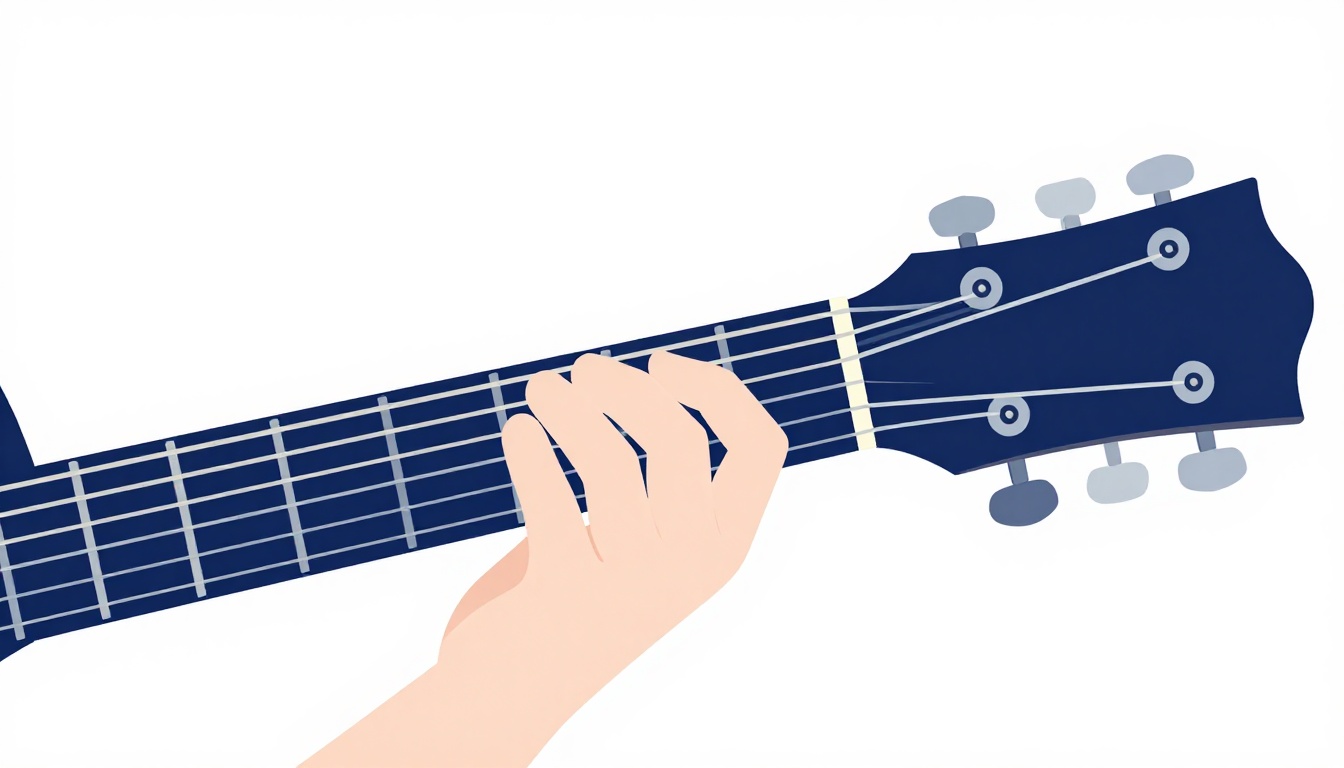
Gm shows up in both the capo version of Yellow Flicker Beat and in Atlas, and it fails the same way both times when a beginner presses it like an open chord, pushing hard with the fingertip instead of laying the index finger flat and rolling it slightly onto its side to barre evenly across all six strings. If one specific string buzzes on a Gm barre, it is almost always that string sitting in a small gap where your index finger is not pressing evenly, not a sign that you need to press the whole shape harder.
Easier, No-Barre Versions of the Trickier Chords
Gm and Cm both show up on this list as full barre shapes, and a full barre is genuinely one of the harder physical skills in guitar to build. Each has a smaller, no-barre version that uses only the top three strings, which is not a lesser copy of the real chord, it is a different, valid voicing of it, and a legitimate way to play these songs while your barre strength catches up.
Easier Gm (for Atlas and the capo version of Yellow Flicker Beat)
| String | Fret | Finger |
|---|---|---|
| 3 (G) | 3 | 1 |
| 2 (B) | 3 | 2 |
| 1 (high E) | 3 | 3 |
Strum only strings 3, 2 and 1, muting or simply skipping the lower three strings. It is a smaller, brighter sound than the full six-string barre, and every note stays clean while you build toward the full version.
Easier Cm (for the capo version of Yellow Flicker Beat)
| String | Fret | Finger |
|---|---|---|
| 3 (G) | 5 | 3 |
| 2 (B) | 4 | 2 |
| 1 (high E) | 3 | 1 |
Play only the top three strings here as well. This voicing leaves out the bass note entirely, which gives it a thinner sound than the full barre Cm, but it is genuinely in tune and genuinely Cm, just a smaller version of it.
Using a Capo to Match Every Film Version
A capo clamps across every string at one fret and effectively shortens the neck, raising the pitch of every open chord shape by however many frets you place it. It does not change which shapes you play, a G shape with a capo on is still fingered exactly like an open G, it only changes what pitch comes out when you strum it.
That is exactly how five of the eight songs on this list get playable without learning a fresh set of barre or up-the-neck shapes for each one.
| Song | Shapes you play | Capo | What it actually sounds like |
|---|---|---|---|
| Deep in the Meadow | C, F, G | 2nd fret | D, G, A |
| The Ballad of Lucy Gray Baird | C, F, G, Am | 1st fret | C#, F#, G#, Bbm |
| Nothing You Can Take From Me | Em, Am, B7, G, D | 6th fret | Bbm, Ebm, F7, C#, G# |
| Pure As the Driven Snow | G, C, D, Am, B7, Em, A, G7 | 4th fret | B, E, F#, C#m, D#7, G#m, C#, B7 |
| Yellow Flicker Beat (easy version) | Gm, Cm, Dm, F | 1st fret | G#m, C#m, D#m, F# |
The trade you make with a capo is real: you keep the easier, more familiar fingering, but you give up the ability to fret anything below the capo, which none of the songs on this list ask you to do. For every song here, a capo is a straightforward way to trade unfamiliar sharp-key or up-the-neck shapes for the open-position chords you already know, at the correct recorded pitch.
Getting From One Song to the Next Without Stopping
The shape you learn for one song on this list usually shows up again in the next one, and that overlap is the fastest way through this songbook as a whole. Am and Em carry The Hanging Tree, Safe & Sound, Nothing You Can Take From Me, Pure As the Driven Snow and Atlas between them. C, F and G carry both Deep in the Meadow and The Ballad of Lucy Gray Baird almost entirely. Once your hand has practiced the physical motion of changing between two chords cleanly, that same motion is available to you in every other song on this list that shares the pair, even if the songs sound nothing alike on the surface.
| Chord pair | Where you will use it again |
|---|---|
| Am to Em | The Hanging Tree, Safe & Sound, Nothing You Can Take From Me, Pure As the Driven Snow, Atlas |
| C to F | Deep in the Meadow, The Ballad of Lucy Gray Baird |
| G to D | Safe & Sound, Pure As the Driven Snow |
| Dm to E | The Hanging Tree, Atlas |
If one of these pairs already feels automatic from an earlier song on the list, you can generally skip the slow practice stage for it in whatever song you tackle next and move straight to playing at tempo.
A Two-Week Practice Plan for This Songbook
This plan moves through the list in the order given above, spending more days on songs that introduce a genuinely new difficulty and fewer on songs that mostly reuse shapes you already have.
| Days | Focus |
|---|---|
| 1 to 2 | Deep in the Meadow. Lock in C, F, G with the capo, and try the fingerpicked pattern. |
| 3 to 4 | The Hanging Tree. Get Am to E completely steady with a metronome before adding Dm. |
| 5 to 6 | The Ballad of Lucy Gray Baird. Add Am to the C, F, G pool you already have. |
| 7 | Safe & Sound. Same core chords, new fingerpicked pattern, softer dynamics. |
| 8 to 9 | Nothing You Can Take From Me. New high capo position, introduce B7. |
| 10 to 11 | Pure As the Driven Snow. Largest open-chord pool, focus on the major-to-minor turn. |
| 12 to 13 | Yellow Flicker Beat. Introduce the Gm and Cm barre shapes, using the no-barre versions if needed. |
| 14 | Atlas. Break the long verse into two halves before joining them. |
Fifteen minutes a day is enough for each block above. Spend the first five minutes on the chord pair that gave you the most trouble the day before, then the rest of the time on the song itself, and let the song stay slower than the recording for as long as it takes to play it without a buzzed or muted string.
How to Know You Are Ready to Move On
Move to the next block once you can play the current song's full progression at tempo without looking down at your fretting hand and without a buzzed or muted string on any chord. If you are still checking your finger placement visually, stay on the current song for another day rather than moving on, since a shaky change compounds into every later song that reuses the same chord pair.
Fingerpicking Versus Strumming These Songs
Strumming is the faster way to learn any song on this list and a legitimate way to play every one of them, but more of this songbook leans toward fingerpicking than a typical pop or rock chord chart, because most of these songs are written to sound intimate rather than driving. Deep in the Meadow, Safe & Sound and The Ballad of Lucy Gray Baird are all fingerpicked or lightly arpeggiated on their original recordings, and each one loses some of its character if you strum it hard from the first chord.
A simple approach that works across all three: pick the bass note of the chord with your thumb, then follow with your first, second and third fingers picking the top three strings in ascending order, one per beat. You do not need a different pattern for every song, the same basic thumb-then-fingers motion adapts to each chord progression here once it is comfortable under your hand. Learn it slowly on Deep in the Meadow first, since its chord changes are the least frequent on the list, and it will already feel familiar by the time you reach Safe & Sound.
The Hanging Tree, Nothing You Can Take From Me, Pure As the Driven Snow, Yellow Flicker Beat and Atlas all work fine strummed, using a light, mostly downstroke pattern rather than an aggressive full-arm strum, since none of them are meant to sound percussive or loud even where the chords themselves get more complex.
Singing While You Play These Songs
Nearly every song on this list is one people want to sing, not just strum through, and singing while you play adds a genuinely separate layer of difficulty on top of the chords themselves. Your strumming or picking hand wants to lock onto the rhythm of the words, and until that connection is automatic, singing tends to drag your playing off tempo, or your playing tends to rush the words.
Solve it in the order most players actually solve it: get the chord progression fully automatic first, with no singing at all, until you could hold a conversation while playing it. Only then add the words, starting by speaking the lyrics in rhythm over the chords rather than singing them, since rhythm is the part that clashes with your playing hand, not pitch. Once the words sit naturally in time against the chords, singing the actual melody on top is a much smaller step than most beginners expect.
Songs with a slow, steady pulse and few chord changes per line, Deep in the Meadow and The Hanging Tree especially, are the easiest ones on this list to sing over first, because your hand has one simple, repeating job and can mostly run on autopilot while you focus on the words. Save Atlas and Pure As the Driven Snow, both of which pack more chord changes into a shorter span of lyric, for once singing-while-playing feels natural on the simpler songs.
If a song sits outside your comfortable vocal range even with the capo position given earlier in this post, moving the capo up or down a fret or two shifts the whole song into a different key without changing which chord shapes you play, which is the fastest way to find a key that actually sits well in your voice rather than fighting the recorded key out of a sense of obligation to match it exactly.
Frequently Asked Questions
Do I need a capo for all of these songs? No. The Hanging Tree and Yellow Flicker Beat, in its original key, are the only two on this list played with no capo at all. The other six all use one, ranging from the 1st fret up to the 6th.
Which song on this list is easiest for a total beginner? Deep in the Meadow. It uses only three chords, none of them barres, and moves slowly enough to give your hand plenty of time between changes.
Do I have to learn barre chords to get through this songbook? Not for the first six songs. Gm and Cm barre shapes only show up in the capo version of Yellow Flicker Beat and in Atlas, the two hardest songs on the list, and both have genuine no-barre alternatives given above.
Why do different chord sites show different chords for the same song? None of these songs were released as official simplified guitar sheet music with a single authorized chord chart, so what circulates online is transcribed by ear by different guitarists, and reasonable people transcribing the same recording sometimes land on different, equally valid voicings. Where sources disagreed here, this post used the version most consistently repeated across independent sites.
Why is Yellow Flicker Beat in such an awkward key? G# minor almost certainly reflects Lorde's comfortable vocal range on the original recording rather than any guitar-specific choice, which is common for songs written on piano or produced electronically first. The capo 1 version in this post gets you the same pitch using friendlier shapes.
Should I strum or fingerpick these songs? Strumming is the faster way to learn any of them. Deep in the Meadow, Safe & Sound and The Ballad of Lucy Gray Baird are fingerpicked on the original recordings, so once the chord changes are solid, moving to a picked pattern gets you closer to the recorded sound.
What is the difference between the original trilogy songs and the Ballad of Songbirds and Snakes songs on this list? The Ballad of Lucy Gray Baird, Nothing You Can Take From Me and Pure As the Driven Snow all come from the 2023 prequel film and are performed on screen by Rachel Zegler as Lucy Gray Baird, written as in-world folk songs from the district she comes from. The Hanging Tree, Safe & Sound, Yellow Flicker Beat and Atlas come from the original trilogy of films and were written by outside artists for the soundtrack rather than performed by a character within the story.
Do these songs work on electric guitar, or only acoustic? Every chord and progression here works identically on electric guitar. Almost all of the original recordings use acoustic instrumentation, so an acoustic guitar gets you closer to the recorded sound, but nothing about the chords themselves requires it.
What if a chord still buzzes after I have checked my finger position? Check that your fretting fingers are pressing just behind the fret wire rather than in the middle of the fret, since even a well-formed chord shape buzzes if your fingers land too far back. On a barre chord like Gm or Cm, isolate the single string that buzzes and press only it while adjusting your index finger, then rebuild the full chord around that fixed point.
GuitarLowKey
Ready for fifteen focused minutes?
Open the web app and train the change that is blocking your song.