
Jolene Guitar Chords: The Full Song, Riff and Capo Explained
The Am, C, G and Em chords for Dolly Parton's 'Jolene,' the capo 4 setup, the fingerpicked intro riff, and why the loop feels so hypnotic.
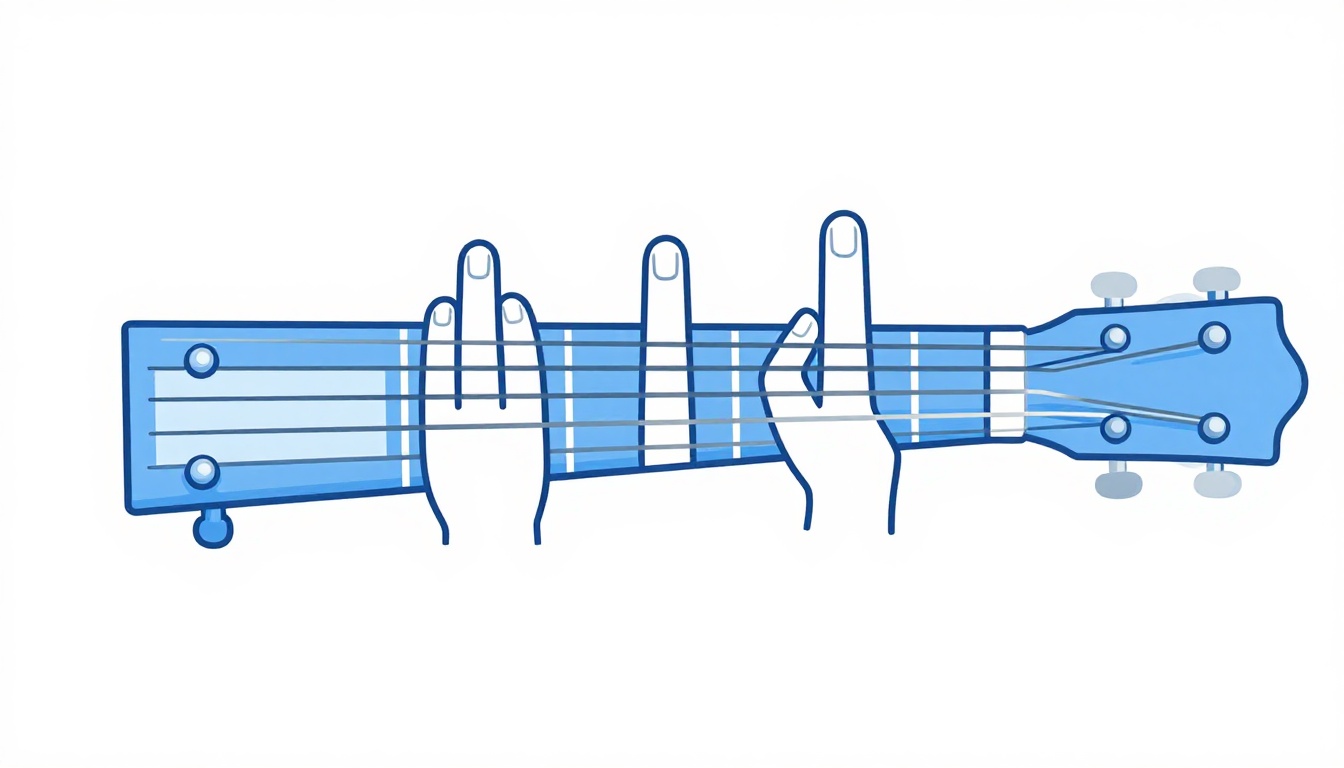
"Jolene" by Dolly Parton is played with a capo on the 4th fret using just four open chords: Am, C, G and Em. The core loop is Am - C - G - Am, repeated through both the verse and the chorus, with the famous fingerpicked riff built entirely inside the Am shape. Without the capo, everything below still works, you are simply playing in true A minor instead of the recording's C# minor. That is the whole shape of the song. Everything below covers each chord in detail, the riff that makes the intro instantly recognizable, why the progression pulls at you the way it does, and where players usually get stuck.
"Jolene" at a Glance
| Detail | Value |
|---|---|
| Written and recorded by | Dolly Parton |
| Recorded | May 22, 1973, RCA Studio B, Nashville |
| Released | January 1974 |
| Album | Jolene |
| Key (as recorded, with capo) | C# minor |
| Key (chord shapes, no capo) | A minor |
| Capo | 4th fret |
| Chords | Am, C, G, Em |
| Technique | Fingerpicked intro riff, strummed or picked verse and chorus |
| Tempo | Around 110 to 111 BPM |
Everything in that table gets its own section below.
Why the Capo Sits on the 4th Fret
Every chord shape in this post is an open Am, C, G or Em, the same shapes most players learn in their first month. With a capo clamped on the 4th fret, though, those shapes no longer sound like Am, C, G and Em. A capo shortens the strings and raises every open chord's actual pitch by one semitone per fret, so a capo on fret 4 raises everything by four semitones. Play what your hands read as Am, and what comes out of the guitar is C# minor, four semitones up from A. That is why the recording sits in C# minor even though every shape in this post, and every chord chart you will find for this song, is written in the friendlier language of A minor, C major and G major.
You do not need the capo. If you clip one on, you will match the record's pitch and its bright, slightly tighter tone, which is part of why session players use capos so often on recordings like this one, a full-size open chord rings out fuller than the same interval played higher up a bare neck. Play without a capo and every chord shape below is identical, you will just be singing in true A minor, a full step lower than Dolly Parton's recorded key. Neither choice is wrong. Match the capo to whichever key suits your voice.
Placing the Capo So It Doesn't Buzz or Pull You Out of Tune
A capo that is clamped in the wrong spot can undo the benefit of using one in the first place. Position it close to the fret wire itself, the same rule that applies to your fretting fingers, rather than in the middle of the fret's space. A capo sitting too far from the fret wire needs more clamping pressure to stop the strings cleanly, which increases the odds of a slight pitch bend as you apply it, since more pressure means more chance of stretching the string sharp in the moment you clamp down.
After placing the capo, check your tuning again before playing. Capos, especially ones without a curved rubber pad matched to your fretboard's radius, can pull the middle strings slightly sharp even when placed correctly, and a guitar that was in tune before the capo went on is not guaranteed to still be in tune after. This is a normal, quick check, not a sign anything is wrong with your guitar or your capo.
The Am Chord
Am is the chord the whole song orbits around, the one the intro riff lives inside and the one both the verse and chorus keep returning to.
| String | Fret | Finger |
|---|---|---|
| 6 (low E) | Muted | - |
| 5 (A) | Open | - |
| 4 (D) | 2 | 2 (middle) |
| 3 (G) | 2 | 3 (ring) |
| 2 (B) | 1 | 1 (index) |
| 1 (high E) | Open | - |
Index finger on the 2nd string (B) at the 1st fret, middle finger on the 4th string (D) at the 2nd fret, ring finger on the 3rd string (G) at the 2nd fret. The 5th string (A) rings open as the root and the 1st string (high E) rings open on top. Mute or avoid the 6th string entirely, it is not part of the chord and adds a low note that does not belong in it.
Because Am opens the song and reappears constantly through both the verse and chorus, it is worth getting this shape completely automatic before worrying about anything else in this post. Every other chord change in "Jolene" is a brief detour away from Am and back.
The C Chord
C major is the first chord the progression moves to, one string change away from Am's basic hand position.
| String | Fret | Finger |
|---|---|---|
| 6 (low E) | Muted | - |
| 5 (A) | 3 | 3 (ring) |
| 4 (D) | 2 | 2 (middle) |
| 3 (G) | Open | - |
| 2 (B) | 1 | 1 (index) |
| 1 (high E) | Open | - |
Ring finger on the 5th string (A) at the 3rd fret, middle finger on the 4th string (D) at the 2nd fret, index finger on the 2nd string (B) at the 1st fret. The 3rd string (G) and 1st string (high E) stay open. For a full breakdown of this shape, including the buzzing that trips up a lot of new players, see the full C chord guide.
The G Chord
G major follows C in the loop and is the widest stretch of the four shapes in this song.
| String | Fret | Finger |
|---|---|---|
| 6 (low E) | 3 | 2 (middle) |
| 5 (A) | 2 | 1 (index) |
| 4 (D) | Open | - |
| 3 (G) | Open | - |
| 2 (B) | Open | - |
| 1 (high E) | 3 | 3 (ring) |
Middle finger on the 6th string (low E) at the 3rd fret, index finger on the 5th string (A) at the 2nd fret, ring finger on the 1st string (high E) at the 3rd fret, with the 4th, 3rd and 2nd strings ringing open. This particular fingering, rather than the four-finger version some players learn first, leaves your index finger free and low on the neck, which matters here because G moves straight back to Am a beat or two later, and a lighter G shape gets you there faster.
The Em Chord
Em shows up as a brief passing chord in some versions of the verse and chorus, sitting between G and the return to Am.
| String | Fret | Finger |
|---|---|---|
| 6 (low E) | Open | - |
| 5 (A) | 2 | 2 (middle) |
| 4 (D) | 2 | 3 (ring) |
| 3 (G) | Open | - |
| 2 (B) | Open | - |
| 1 (high E) | Open | - |
Middle finger on the 5th string (A) at the 2nd fret, ring finger on the 4th string (D) at the 2nd fret, with the 6th, 3rd, 2nd and 1st strings all ringing open. It is the easiest shape in the song, and if the chart or recording you are following skips it and goes straight from G back to Am, that is a legitimate variation too. Different transcriptions of this song disagree on exactly where Em appears, and either version is correct.
The Intro Riff
The four bars that open "Jolene" are the most recognizable part of the entire song, and they are built entirely inside the Am shape above, no new chord needed. The guitar part on the original recording was played by session guitarist Chip Young, who adapted the fingerpicking pattern from one he had heard guitarist Joe South play, and it has become one of the most identifiable acoustic guitar openings in country music because of how much movement it packs into a single held chord.
The riff works by fingerpicking through the Am shape while your fretting hand's fingers lift off and land back on their notes mid-pattern, creating hammer-ons and pull-offs rather than a static, unchanging chord. Your picking hand's thumb anchors on the open 5th string (A), the root of the chord, while your fingers roll through the 4th, 3rd, 2nd and 1st strings in a steady, repeating order. As that roll happens, your fretting hand's index, middle and ring fingers lift briefly off their notes and land back on them, so a string that would otherwise just ring as part of the chord instead sounds its open pitch for a split second before hammering onto the fretted note, or the reverse, ringing the fretted note before pulling off to the open string.
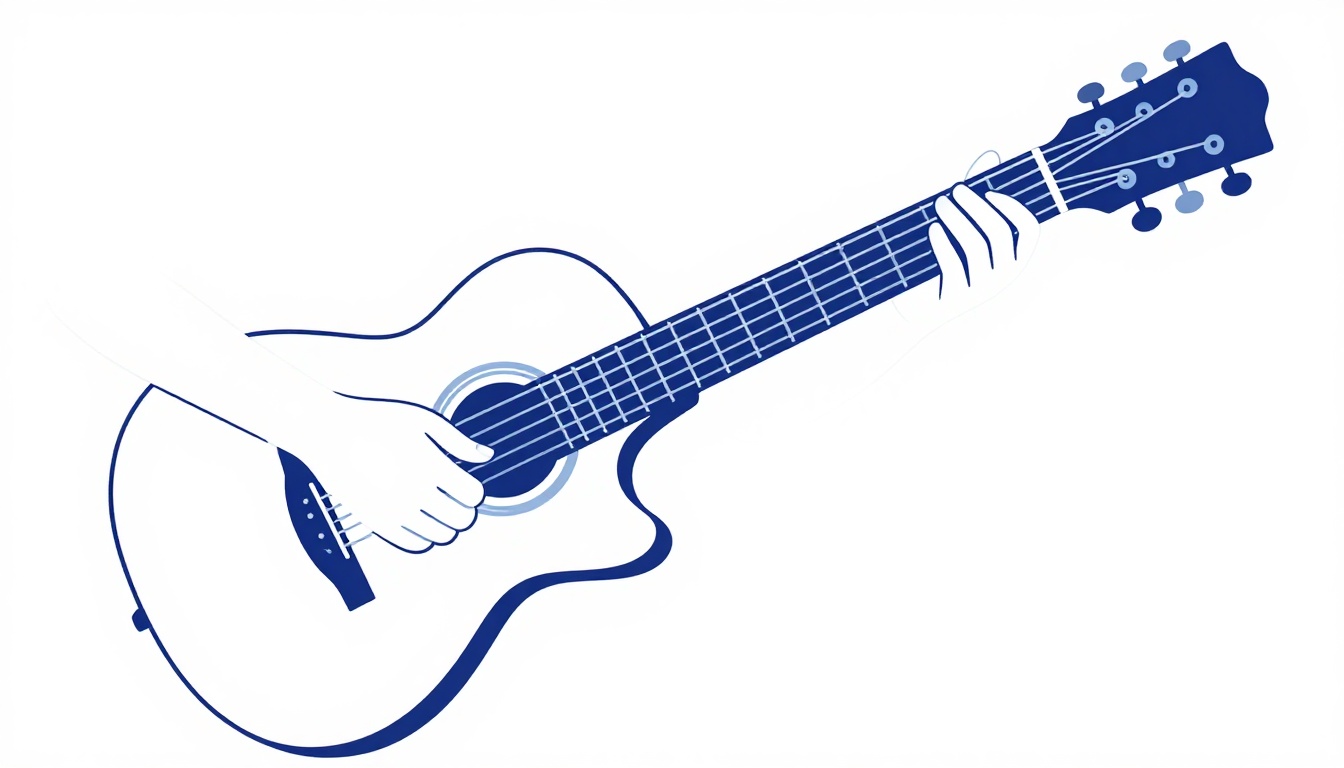
That four-bar phrase repeats exactly four times before the vocal enters, which is long enough that a small timing slip in bar one is very noticeable by bar four. If the full hammer-on and pull-off version is not there yet, a plain, steady Am strum through those same four bars is a completely legitimate way to play the intro while that coordination develops. The song is recognizable from its chord loop alone, and the riff is a detail you can add once the chord changes underneath it are solid.
The Verse, Start to Finish
The verse runs on the same Am-C-G loop the whole song is built from.
Verse Am - C - G - Am G - Em - Am
Each chord in the first line gets roughly one full bar before moving to the next, with the second line's G and Em passing more quickly on the way back to Am, which becomes the chord you land on and hold at the end of each verse line. Some transcriptions notate that final G-to-Am move as a single beat on G followed by Am held for the rest of the phrase, without an Em in between at all. Both versions land in the same place and neither is more correct than the other, they reflect slightly different ways of hearing the same brief passing harmony.
The Chorus, Start to Finish
The chorus uses the identical Am-C-G-Am chord vocabulary as the verse. What changes is timing, not harmony.
Chorus Am - C - G (short) - Am G - Am (held)
The main difference most transcriptions agree on is that the G chord in the chorus gets a shorter beat than the G in the verse, a half-measure rather than a full one, which is part of why the chorus feels like it is pushing forward slightly compared to the verse's steadier pace. If you are playing along with the recording and a chord change feels early, check whether you are holding G for a full bar out of habit when the chorus calls for half of one.
Why the Progression Feels So Hypnotic
Three chords repeating for an entire song risks feeling static, but "Jolene" does not, and the reason is where those three chords sit relative to each other. In the key of C major, Am is the vi chord (the sixth degree), C is the I chord (the tonic) and G is the V chord (the fifth degree, the strongest chord for pulling back toward home). The progression never actually resolves onto C, the technical tonic of the key. It keeps circling back to Am instead, the relative minor, which is why the song feels unresolved and minor in character even though its chords, taken together, spell out C major on paper.
That constant return to Am rather than C is also why the song supports Dolly Parton's lyric so well. A chord loop that kept resolving brightly onto C would fight against a song about pleading with someone not to take your partner. Landing on Am instead keeps the harmony feeling unsettled for the entire three minutes, matching the lyric's tension rather than releasing it.
| Chord you play | Roman numeral in C major | Function |
|---|---|---|
| Am | vi | Relative minor, the song's true home |
| C | I | The technical tonic, never lingered on |
| G | V | The strongest pull back toward Am |
| Em | iii | Brief passing chord in some versions |
Seeing the chords laid out this way also explains why G moves so naturally back to Am instead of forward to C, where you might expect a V chord to resolve. G is the V chord of C major, but it is also positioned a whole step below Am, close enough that the ear accepts either destination. This song consistently chooses the minor one.
Why It's Not Working
If the chord shapes are right but the song still is not sitting the way it should, the cause is almost always one of these.
The Am Chord Sounds Thin or Buzzy
Am's index finger sits on the 2nd string at the 1st fret, right next to the nut, where less string tension makes buzzing more likely if your finger is not pressing close enough to the fret wire. Move that fingertip until it is hugging the 1st fret's wire rather than sitting in the middle of the fret space, and check the 2nd string alone before strumming the full chord.
The G Chord Sounds Muted on the Low E
The G shape above puts your middle finger on the 6th string at the 3rd fret, and if that finger lies flat rather than arched, its pad can lean into the neighboring 5th string and choke the index finger's note there. Curl your middle finger so it contacts the low E string only at the tip, coming down close to vertical.
The Riff's Hammer-Ons Are Inaudible
A hammer-on only sounds clearly if the finger comes down with real speed and lands squarely on its fret, not gently or at an angle. If the hammered note is quieter than the picked note before it, the fix is almost always more speed and more direct downward force in that specific finger motion, practiced on its own, away from the full pattern, until it rings out as loud as a normal picked note.
G to Am Feels Like a Full Hand Reset
G and Am share no common finger position, which makes that change feel like starting over each time rather than a small adjustment. Practice just that one change in isolation, G to Am and back, slowly and repeatedly, until your hand has learned the specific path between the two shapes rather than treating each one as an independent starting point.
The Chorus's Short G Gets Held Too Long
Because the verse's G is a full bar and the chorus's G is a half bar, muscle memory built on the verse can bleed into the chorus and make every chorus G run long. Count out loud through the chorus the first several times you play it, so your hand has an external cue for exactly when to leave G rather than relying on a feel trained by the longer verse version.
Changing Between the Chords Fast Enough
Every shape in "Jolene" is, on its own, something most players with a few weeks of open-chord experience can already form. What actually determines whether the song sounds right at tempo is whether your fretting hand can move through Am, C, G and back to Am inside a couple of beats each, without a pause between chords to reposition. At roughly 110 beats per minute, there is genuinely very little time between changes, less than half a second in the fastest spots.
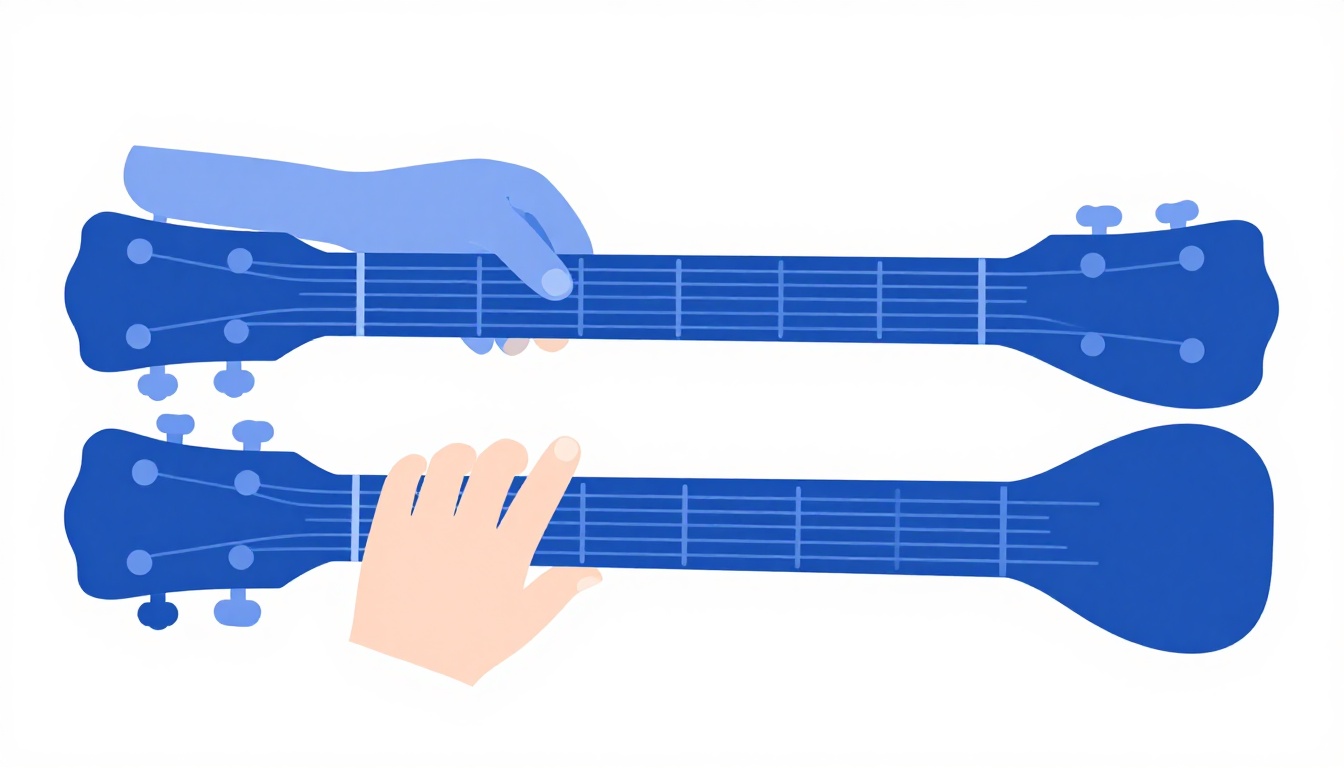
The fix is the same one that works for every song built on quick, repeating chord changes: isolate the two chords giving you the most trouble, usually G and Am here, and practice switching between just those two, back and forth, slowly, with a metronome, long before trying the whole progression at speed. Once that single change is fast and automatic, the full loop tends to fall into place far quicker than practicing the entire verse from the top every time.
Extending the Fingerpicking Pattern Through the Whole Song
The riff covered above is written specifically for the four-bar intro, but nothing stops you from carrying a similar picking approach through the verse and chorus instead of switching to a strum. A simpler right-hand pattern works well here: thumb on the root of whichever chord you are holding, the 5th string for Am and C, the 6th string for G, followed by your index, middle and ring fingers picking the 3rd, 2nd and 1st strings in a steady rolling order, without the hammer-ons and pull-offs that make the intro riff itself demanding.
This gives you a fuller, more continuous sound through the verse and chorus than a strum provides, closer in spirit to the fingerpicked intro, without asking your fretting hand to add any new technique on top of chord changes it is already managing. It is a reasonable middle ground between the full intro riff and a plain strum, and a natural next step once the intro riff itself is comfortable and you want the rest of the song to feel like it grew out of the same right-hand approach rather than switching techniques abruptly at the first verse.
Strumming Pattern for Jolene
If you are playing the verse and chorus with a strum rather than a fingerpicked pattern, a steady eighth-note pattern of down, down-up, down, down-up works over the whole progression: "D DU D DU," repeated for each chord. Keep your strumming hand moving in a constant down-up motion even on the beats where you are not actually striking the strings, brushing the air on the "up" strokes that fall between chord changes. That constant hand motion is what keeps the strum sounding even rather than hesitant, and it is also what makes the transition into the fingerpicked intro riff, if you choose to add it, feel like a natural extension of the same rhythm rather than a completely different technique bolted on.
Time Feel: Why the Chorus Feels Like It's Pushing
Several chord charts for this song mark one beat in the chorus as a "2/4" measure, a shorthand for a bar that is only half the length of the surrounding 4/4 bars. In practice, that means the G chord in the chorus gets held for two beats instead of the usual four, before the progression moves on to Am a beat earlier than your ear might expect from the verse. This is sometimes called a borrowed or truncated measure, and songwriters use it, deliberately or not, to keep a repeating progression from feeling too predictable.
You do not need to think in time signatures to play this correctly. What matters practically is that the chorus's G chord is shorter than the verse's G chord, full stop, and that shortness is part of what gives the chorus its slightly more urgent, forward-leaning feel compared to the verse. If you count along out loud, "1-2-3-4" for the verse's G and "1-2" for the chorus's G, the difference becomes far easier to feel than to explain, and it stops being something you have to consciously track once your hand has played through it a few dozen times.
Learning the Intro Riff Without Full Speed
The four-bar intro is the hardest single passage in the song, and trying to learn it at the recording's tempo from the start is the most common reason players give up on it. Set a metronome to roughly half the recording's speed, somewhere around 55 beats per minute, and play through the Am shape's hammer-ons and pull-offs slowly enough that every note, picked or hammered, rings out clearly and at an even volume.
Once one pass through the four-bar phrase is clean at that slow tempo, repeat it several times in a row rather than moving on after a single clean attempt. A pattern you can play once by luck is different from a pattern your hands have actually learned. Raise the metronome in small steps, five beats per minute at a time, and only move up once the current tempo has been clean across several repeats, not just the most recent one.
Playing It Without a Capo
Every chord shape and every note in the intro riff in this post works exactly the same with no capo at all. The only thing that changes is the key: without a capo, you are playing in true A minor, a minor third lower than the C# minor of Dolly Parton's recording. If you are playing along with the original track and singing, you will likely find the true A minor version sits noticeably lower in your voice, which is worth trying before assuming the capo is mandatory. Plenty of players find the uncapoed version more comfortable to sing, especially those with a lower vocal range than the recording's key demands.
Choosing a Different Capo Position
Capo 4 matches Dolly Parton's original recording, but nothing about the chord shapes in this post requires that exact fret. Because every chord here is a movable, open shape, moving the capo changes only the key you sing in, not a single finger placement.
| Capo fret | Resulting key (Am shape sounds as) | Compared to the recording |
|---|---|---|
| No capo | A minor | A minor third lower |
| 2nd fret | B minor | A whole step lower |
| 4th fret | C# minor | Matches the original recording |
| 5th fret | D minor | A half step higher |
| 7th fret | E minor | A perfect fourth higher |
If C# minor sits awkwardly in your vocal range, moving the capo up or down a couple of frets is a normal, common adjustment, not a compromise. A lower capo position, or none at all, tends to suit lower voices, while a slightly higher position can suit a voice that feels strained at the recording's original pitch. Try singing the first line of the verse at two or three different capo positions before settling on one, since the right key for your voice is something you can hear far more reliably than you can predict.
An Easier Version for Total Beginners
If Am, C, G and the intro riff together feel like a lot to take on at once, start with just the verse and chorus loop, Am-C-G-Am, played as a plain, steady down-strum with no up-strokes and no fingerpicking at all. Skip Em entirely and let G resolve straight back to Am, and skip the intro riff, opening instead on four bars of a simple strummed Am. None of that changes the song's harmony or its structure, it only simplifies the right hand's job, and it is a completely legitimate way to play through the whole song while the chord changes themselves become automatic.
Playing on Electric or Nylon-String Guitar
The recording is a fingerpicked acoustic part, but every chord shape and every note in the riff transfers directly to an electric guitar or a nylon-string classical guitar. Nothing about the fret positions changes based on what you are holding.
What changes is feel. A nylon-string guitar's wider neck spacing can make the intro riff's string-to-string movement feel a little more spread out under your picking hand at first, though the shapes themselves are identical. An electric guitar played clean captures a reasonable amount of the song's character, but electric strings respond more sensitively to picking-hand dynamics than acoustic strings, so hammer-ons and pull-offs that sound even on acoustic can sound uneven on electric until your touch develops. Either instrument is a legitimate way to learn this song.
Singing and Playing at the Same Time
Once the chords and the riff are solid on their own, singing while playing is usually the next hurdle, mostly because the vocal melody in the verse does not land squarely on the beat the way the chord changes do. Two things make this easier. First, get the guitar part running close to automatically, so your fretting and picking hands keep moving even if your attention shifts to the words for a moment. Second, learn the vocal melody entirely on its own first, without the guitar, until you know exactly where each line falls against a steady beat you can tap out loud. Combining both halves becomes far more manageable once each one is separately solid, rather than trying to build both at the same time.
The Story Behind the Song
Dolly Parton has said the song drew on two real moments. Early in her marriage to Carl Dean, a red-haired bank clerk began flirting with him whenever he came in, openly enough that Parton noticed and, by her own account, decided to write about the feeling rather than confront it directly. Separately, a young fan approached Parton at a show asking for an autograph, and Parton liked the sound of her name enough to borrow it for the song. The two moments combined into one character, and the name Jolene became attached to both a real flirtation and a fan's name that had caught Parton's ear. The real fan's name has sometimes been reported as Juline Whelan, though accounts of exactly who inspired the name have varied over the years, and Parton herself has told the story slightly differently in different interviews.
None of that ambiguity changes the song itself. What is consistent across every account is that the song was not written about a stranger or an invented threat in the abstract, it came from a specific, real feeling of jealousy that Parton chose to write through rather than around, which is a large part of why the lyric still reads as raw and direct rather than melodramatic, decades after it was written.
The Recording Session
"Jolene" was recorded on May 22, 1973, at RCA Studio B in Nashville, produced by Bob Ferguson, and released as a single in January 1974 on the album of the same name. The now-famous fingerpicked guitar part was played by session guitarist Chip Young, who based his pattern on one he had heard Joe South play, while guitarist Wayne Moss added a complementary steel-string part alongside it. The song became Dolly Parton's second solo number-one country single and marked her first appearance on the Billboard Hot 100, later reaching number seven on the UK Singles Chart in 1976.
Notable Cover Versions
The song has been recorded by a wide range of artists since 1974, each finding a different way into the same three-chord loop. Olivia Newton-John released a version in 1976. The White Stripes covered it live throughout the 2000s and released a studio version in 2004, stripped down to guitar, drums and Jack White's vocal, closer in spirit to the original's sparseness than most covers manage. Dolly Parton and Pentatonix recorded a joint a cappella version in 2016 that won a Grammy, replacing every instrument, including the guitar riff, with vocal parts. Beyoncé recorded her own version for the 2024 album Cowboy Carter, which reached number seven on the Billboard Hot 100, and notably reworked the lyric itself, singing "I'm warning you, don't come for my man" in place of Parton's original "I'm begging of you, please don't take my man," turning the song from a plea into more of a warning. Parton has since said she found the reinterpretation bold.
None of these versions change the underlying chord shapes covered in this post. What varies between them is arrangement, tempo, instrumentation and, in Beyoncé's case, even the lyric's tone, not the underlying Am-C-G-Am harmony itself. That harmony has proven durable enough to carry radically different arrangements, from a solo a cappella group to a full country-pop production, without needing to change.
The Song's Structure, Start to Finish
"Jolene" follows a compact, repeating structure: a four-bar intro built on the fingerpicked Am riff, a verse, a chorus, a second verse, a second chorus, a short instrumental break that reuses the intro's riff, a third verse, and a final chorus that repeats before the song ends. There is no bridge in the sense of a section built on new chords, the entire song stays inside the same four-chord vocabulary covered in this post from the first bar to the last.
That repetition is not a limitation, it is close to the whole design of the song. Because the chord loop never leaves Am, C, G and Em, a listener's attention stays on the vocal melody and the lyric rather than being pulled toward harmonic surprises, and a guitarist's job stays similarly focused: get the same handful of shapes and the same riff to sit cleanly under every verse and chorus, rather than learning new material as the song progresses.
Common Mistakes That Aren't About the Chords
Some of what makes this song sound off has nothing to do with fretting any individual shape correctly and everything to do with habits around the picking hand and the overall arrangement.
Picking Too Close to the Bridge
Where your picking hand sits along the strings changes the tone noticeably on a fingerpicked part like the intro riff. Picking too close to the bridge produces a thin, brittle sound that works against the riff's warmth. Picking closer to the sound hole, roughly where a strumming hand would naturally rest, gives a fuller, rounder tone that suits the riff better and is closer to what the original recording captures.
Rushing the Intro to Get to the Vocal
Because the four-bar intro repeats the same riff before the vocal enters, it is tempting to treat it as a warm-up and rush through it to get to the "real" song. The intro is the part of this song most listeners recognize first, and it holds up better played at a steady, unhurried tempo than played faster than the rest of the song out of impatience to get past it.
Stopping Completely When a Change Goes Wrong
A missed chord change during practice is normal, especially at this song's tempo. Stopping entirely to fix a mistake, rather than continuing forward and catching the next repetition, trains your hands to expect an interruption every time a difficult change comes up, which slows down learning the song as a whole. Keep the progression moving even through an imperfect change, and let the next pass be where the correction actually happens.
Reading This Song's Chord Chart
If you are working from a printed or online chart rather than this post, a couple of notation habits are worth knowing so nothing catches you off guard. A number after "Capo" tells you which fret to clip the capo onto, and every chord name on the rest of the chart is written relative to that capo position, not the guitar's actual open pitch, which is why a chart can say "Am" even though the note ringing out is technically C# minor with a capo on the 4th fret.
A chord written with a fraction-style time marking, like the "2/4" measure some charts use for the chorus's G, tells you that bar is shorter than the surrounding ones, not that you need to play anything different with your hands beyond leaving that chord sooner. Where charts disagree, as they do on whether the verse and chorus include Em as a passing chord or move straight from G back to Am, that is normal. Different transcribers hear the recording slightly differently, and either version covered in this post will sit correctly under the song.
Playing Along With the Recording
Because the original recording uses a capo on the 4th fret and stays inside the Am-C-G-Am loop covered in this post throughout, you can play along with it directly once your tempo is close to the record's. Start with just the four-bar intro, matching your riff's timing to what you hear, and use the recording's steady pulse as your reference for how even and unhurried the pattern should sound, rather than for raw speed.
If you are still building up to the recording's tempo, resist the urge to play along at full speed before you are ready. A metronome set to your own practice tempo will teach the chord changes and the riff more reliably than fighting to keep pace with a recording that is faster than your hands currently allow. Save playing along with the actual track for once your slow, metronome-paced version is already clean.
Why This Song Gets Taught So Often
"Jolene" shows up constantly in beginner and early-intermediate guitar lessons, and it is not only because of the song's popularity. Four chords, three of them among the very first shapes most players learn, cover the entire song from the first bar to the last, which makes it one of the few widely known songs a newer player can learn in full rather than in an abbreviated, simplified excerpt. The intro riff adds a genuine, well-defined stretch goal on top of that foundation, giving players who already have the chords down a clear next skill to build toward without needing to learn an entirely new song to practice fingerpicking.
That combination, a low barrier to entry with a real, well-known technical challenge sitting just above it, is fairly rare. Most songs that are easy enough for a first month of playing do not also contain a passage as widely recognized as this one's intro, which is a large part of why teachers keep returning to it.
How Long It Takes to Learn This Song
For a player who already knows Am, C and G individually and has done at least basic fingerpicking before, a clean run-through of the verse and chorus, strummed rather than fingerpicked, is realistic within a week or two of short daily practice. The chord vocabulary is genuinely small. What takes longer is speed, since the changes come quickly at the recording's tempo, and most of that week or two is spent on the G-to-Am change specifically, since it is the one shape change in the song with no shared finger position to lean on.
Adding the fingerpicked intro riff on top realistically adds another two to four weeks for a player newer to fingerstyle technique, since it depends on hammer-ons and pull-offs staying even and in time inside a repeating right-hand pattern, a coordination skill that develops gradually rather than all at once. Players with prior fingerpicking experience often pick up the riff itself within a few days, with most of the remaining time going toward getting it to full recording speed cleanly.
Practicing With a Metronome at This Song's Tempo
The recording sits around 110 to 111 beats per minute, fast enough that chord changes and the intro riff both need real preparation before they hold up at full speed. Rather than setting a metronome straight to 110 and struggling through, work in stages: start at roughly half tempo, around 55 beats per minute, and treat every beat as two clicks rather than one, which keeps the pulse steady without it feeling too slow to follow.
Once the verse and chorus chord changes are clean at that half-tempo pace across several repeats in a row, raise the metronome by five to ten beats per minute and repeat the process. Resist the temptation to jump straight to 110 once the changes feel comfortable at a lower tempo, since the jump in difficulty between "comfortable at 80" and "comfortable at 110" is larger than it looks on paper. Small, repeated increases get you there with fewer setbacks than a handful of large jumps.
Practice Routine
Fifteen minutes is enough to make real progress on this song if it is spent on the specific things holding you back rather than running the whole song from the top every time.
Spend the first five minutes on the G-to-Am change alone, back and forth, slowly, with a metronome, since this is the single change most players get stuck on. Spend the next five minutes on the intro riff at a slow tempo, focused only on getting each hammer-on and pull-off to ring out clearly, not on speed. Spend the final five minutes playing through the full verse once or twice at a tempo slow enough to keep every chord change clean, rather than pushing to match the recording before the changes are solid.
Where This Song Sits in Dolly Parton's Catalog
"Jolene" was the title track of Parton's 1974 album and arrived at a turning point in her career, shortly before she left "The Porter Wagoner Show" to focus on her solo work, a move she addressed directly in another song from the same period, "I Will Always Love You." Both songs came from the same stretch of writing and both went on to be covered by a wide range of artists across genres far outside country music, which is unusual for a single songwriter to produce back to back. Unlike that other song, though, "Jolene" is built on a genuinely simple, repeating chord loop, which is a large part of why it has become such a common song for guitar players at every level to learn, not just fans of the original recording.
Changing Between the Chords Is Still the Real Skill
Every shape covered in this post, Am, C, G and Em, is something a player with a few weeks of open-chord practice can already form individually. What decides whether "Jolene" actually sounds like the song rather than four separate chords is whether your hand can move between them at the tempo the song asks for, and whether the riff's hammer-ons stay even once your fretting hand is also responsible for changing shapes. Treat the individual chords as the part that is already within reach, and put your practice time into the movement between them.
Frequently Asked Questions
What chords are used in "Jolene"?
Am, C, G and Em, all open chords. The core loop is Am-C-G-Am, repeated through both the verse and chorus, with Em appearing as a brief passing chord in some versions.
Where does the capo go for "Jolene"?
The 4th fret, to match the original recording's key of C# minor. The capo is optional. Without it, every chord shape in this post is identical, you are simply playing in true A minor instead.
Is the "Jolene" intro fingerpicked or strummed?
Fingerpicked on the original recording, using hammer-ons and pull-offs inside the Am chord shape, played by session guitarist Chip Young. A plain strummed Am works as a legitimate simplified version of the same four bars.
What key is "Jolene" in?
C# minor as recorded, because of the capo on the 4th fret. Without a capo, the same chord shapes put the song in true A minor.
Why does the song feel so unresolved even though it repeats the same three chords?
Because the progression keeps landing on Am, the vi chord relative to C major's key center, rather than resolving onto C itself. That constant return to the minor chord is what gives the loop its unsettled, pleading character.
What is the hardest part of "Jolene" to play?
The intro riff, since it depends on hammer-ons and pull-offs staying clean and evenly timed inside a repeating right-hand pattern. Most players find the G-to-Am chord change the hardest single moment in the verse and chorus themselves.
Do I need to fingerpick to play this song?
No. A steady strum, "D DU D DU," works over the same Am-C-G-Am progression throughout the verse and chorus. The fingerpicked intro riff is the one part of the song built specifically around picking technique, and even that has a strummed substitute.
Who wrote "Jolene," and what inspired it?
Dolly Parton wrote and recorded it in 1973. She has said the song combined two real moments, a red-haired bank clerk who flirted with her husband Carl Dean, and a young fan whose name she borrowed for the character.
Can I play "Jolene" with just three chords?
Close to it. Am, C and G carry almost the entire song, with Em appearing only as a brief passing chord in some versions of the verse and chorus. If your chart skips Em and goes straight from G back to Am, you are playing a completely valid version of the song.
Is "Jolene" a good song to learn as a beginner?
Yes, more than most well-known songs. The four chords are among the first shapes most players learn, and the whole song, start to finish, uses nothing beyond them. The fingerpicked intro riff is the one genuinely challenging element, and it has a strummed substitute for players who are not ready for it yet.
GuitarLowKey
Ready for fifteen focused minutes?
Open the web app and train the change that is blocking your song.