
The B Minor Scale on Guitar: Every Position, Explained
The B minor scale on guitar: every note, the low-position and movable box shapes, the chords it builds, and why it isn't ringing clean yet.
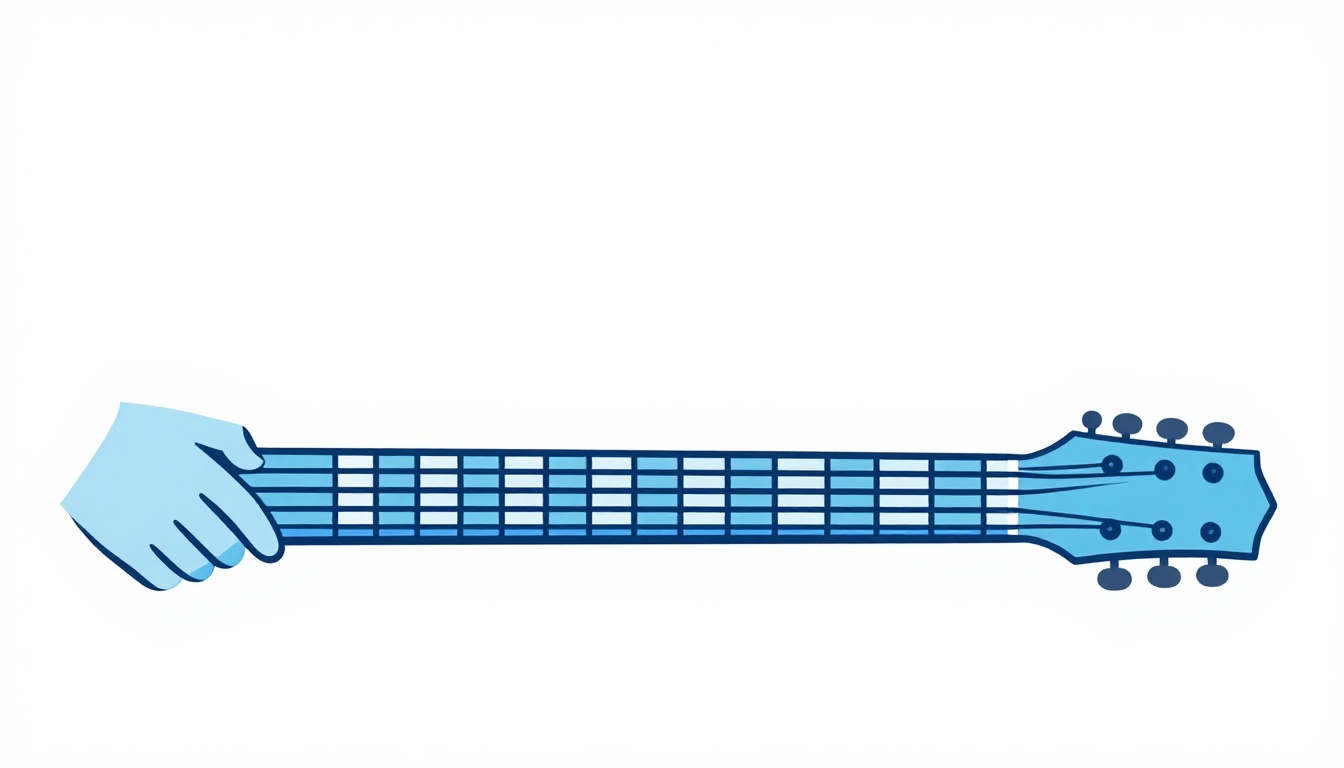
The B minor scale on guitar is seven notes: B, C#, D, E, F#, G, and A. Unlike A minor or E minor, B has no open string to build from, so the two shapes most players learn first are a low-position run using the first four frets plus open strings, and a movable box shape rooted at the 7th fret of the low E string. Both get you playing the scale within a few minutes. What takes longer, and what this post actually covers, is making it sound like music instead of an exercise, and understanding why B minor behaves so differently from the minor keys you may have learned before it.
The Notes in the B Minor Scale
B natural minor is built from a fixed pattern of whole steps (two frets) and half steps (one fret): whole, half, whole, whole, half, whole, whole. Starting on B and following that pattern gives you every note in the scale.
| Degree | Note | Interval from B |
|---|---|---|
| 1 (root) | B | Start |
| 2 | C# | Major 2nd |
| b3 | D | Minor 3rd |
| 4 | E | Perfect 4th |
| 5 | F# | Perfect 5th |
| b6 | G | Minor 6th |
| b7 | A | Minor 7th |
| 1 (octave) | B | Octave |
Two notes in that list carry a sharp: C# and F#. Those two sharps are the whole key signature, B minor shares them note for note with D major, and it is worth naming up front because it changes how this scale sits under your hand compared with a scale like A minor that uses no sharps or flats at all.
Compare this to the B minor pentatonic scale, which some players learn first since it strips out two notes and simplifies the shape. Pentatonic removes the 2nd (C#) and the 6th (G) and keeps the other five notes. The scale in this post is the complete, seven-note version those five notes were taken from.
Why B Minor Has No Open-String Shortcut
If you have already learned the E minor or A minor scale, B minor will feel noticeably different the moment you reach for it, and the reason is simple: none of B minor's seven notes sit on an open string as the root. E minor's root is the open low E string. A minor's root is the open A string. B minor's root, B, only exists as an open string on the 2nd string, which is the third-lowest note in the chord, not the low end most scale shapes are built around.
That single fact is also why the B minor chord has no easy open-position version and needs a barre, a detail worth knowing before you get to the chord shapes later in this post. It is not a flaw in how the scale is taught, it is simply where B falls on a guitar tuned E-A-D-G-B-E, low to high. Every key on the instrument has some quirk that makes it sit slightly differently under the hand, and B minor's is the absence of a free, unfretted root.
Why Guitarists Reach for B Minor So Often
Despite having no open-string shortcut, B minor is one of the more commonly used minor keys, and the reason is its relationship to two guitar-friendly major keys. B minor is the relative minor of D major, one of the most common open-chord keys on the instrument, and it also appears constantly inside songs written in G major and A major, since B minor is built on the 6th degree of G major's relative scale and shares several chords with both. A song can move through open-position D, G, A, and Em chords for an entire verse and land on a B minor chord in the chorus without a single unfamiliar shape showing up elsewhere in the progression.
That gives B minor a strange status: the scale itself has no open-string convenience, but the chords around it in a typical progression are some of the easiest on the guitar. Learning this scale properly is often less about a brand new key and more about filling in the one piece, B minor, that the rest of your open-chord vocabulary has already been circling.
The B Minor Scale in Low Position
Even without an open root, B minor's other six notes line up closely with the guitar's open strings. Every open string except the low and high E's alternate note lands inside the scale: open A, open D, open G, and open B are all scale tones, and B specifically rings as the root on the open 2nd string. That makes a genuine low-position shape possible, built from the first four frets plus open strings, starting from the root at the 2nd fret of the 5th string (A string).
| String | Fret | Note | Finger |
|---|---|---|---|
| 5 (A) | 2 | B | 1 |
| 5 (A) | 4 | C# | 3 |
| 4 (D) | Open | D | - |
| 4 (D) | 2 | E | 1 |
| 4 (D) | 4 | F# | 3 |
| 3 (G) | Open | G | - |
| 3 (G) | 2 | A | 1 |
| 3 (G) | 4 | B | 3 |
Play that in order, low to high, and you go from B up to B, a full octave of the natural minor scale, using only the 5th, 4th, and 3rd strings. Then play it backward from the top B down to the 2nd-fret B on the 5th string to hear the same scale in reverse. Both directions matter. Most players over-practice ascending and then freeze the first time a descending line shows up in a song.
The Fuller Low-Position Version
The one-octave shape above is the fastest way in, but the low position holds more of the scale than that. Extend across all six strings, staying within the first four frets the whole time, and you get more than two octaves without a single position shift.
| String | Fret | Note |
|---|---|---|
| 6 (low E) | Open | E |
| 6 (low E) | 2 | F# |
| 6 (low E) | 3 | G |
| 5 (A) | Open | A |
| 5 (A) | 2 | B |
| 5 (A) | 4 | C# |
| 4 (D) | Open | D |
| 4 (D) | 2 | E |
| 4 (D) | 4 | F# |
| 3 (G) | Open | G |
| 3 (G) | 2 | A |
| 3 (G) | 4 | B |
| 2 (B) | Open | B |
| 2 (B) | 2 | C# |
| 2 (B) | 3 | D |
| 1 (high E) | Open | E |
| 1 (high E) | 2 | F# |
| 1 (high E) | 3 | G |
Notice that the low E and high E strings never touch the root here, they carry the 4th, 5th, and b6 degrees instead. That is the trade-off for having no open root: this shape leans on the middle strings for B itself, at the open 2nd string and the 2nd fret of the 5th string, while the outer strings fill in color tones around it.
Fingering the Low-Position Shape
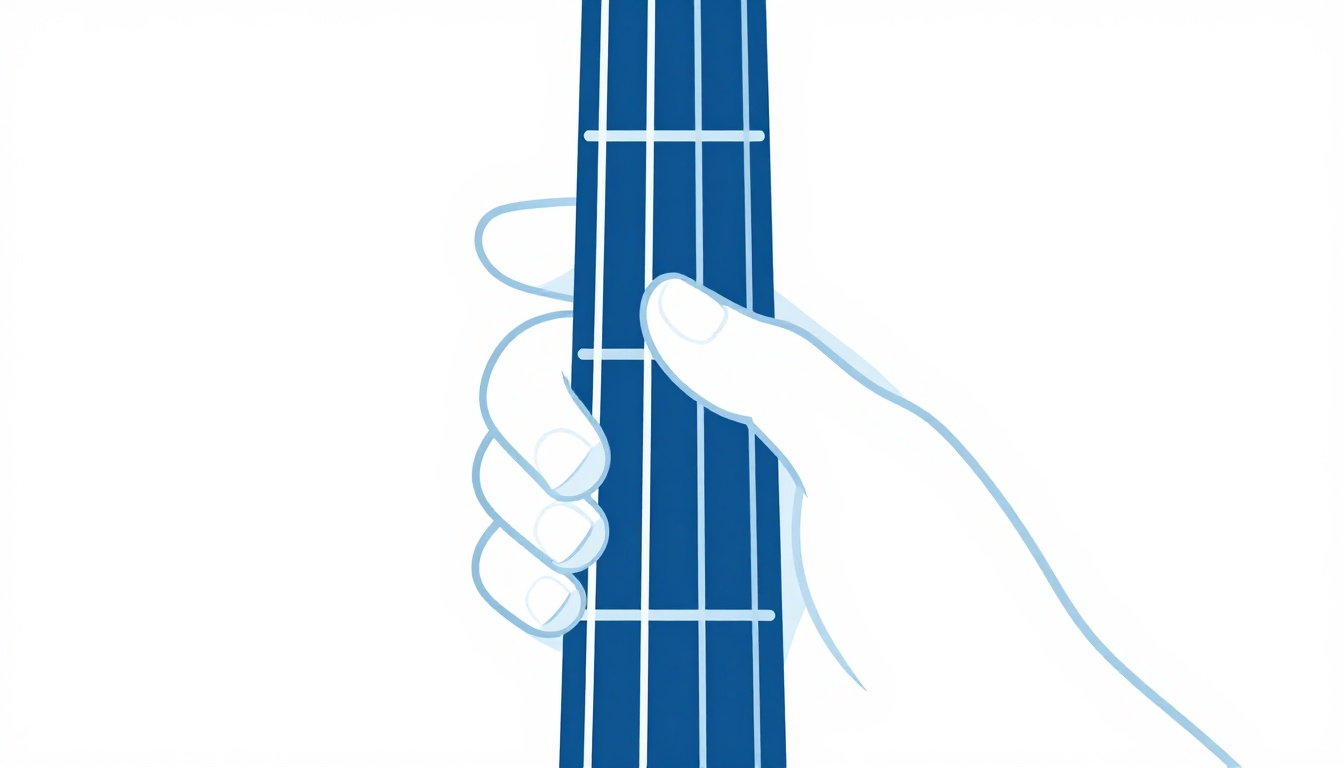
This shape only uses the open strings, the 2nd fret, and the 4th fret, so it does not follow the strict one-finger-per-fret rule you may already know from other scales. Use your index finger for every note on the 2nd fret and your ring finger for every note on the 4th fret, letting the open strings ring with no finger down at all. That two-finger approach keeps your hand relaxed across a shape that would otherwise ask your middle finger to sit idle the whole way through.
The one exception is the 2nd string (B), where the notes fall on the open string, the 2nd fret, and the 3rd fret rather than the 2nd and 4th. Use your index finger for the 2nd fret (C#) and your middle finger for the 3rd fret (D) there, since the two notes sit only a fret apart. Keep your thumb roughly behind the 2nd fret on the back of the neck, not hooked over the top, so your fingers can reach both the 2nd and 4th frets without your whole hand shifting position.
Reading This Scale From Tab
If you come across this scale written out as tab instead of the tables above, it is the same information in a different layout. Tab uses six horizontal lines, one per string, read bottom to top as low E to high E, with a number on a line telling you which fret to press. A "0" means play that string open. A line of tab for the one-octave low-position run from earlier would show a 2 on the 5th-string line, then a 4, moving to the 4th-string line for a 0, a 2, a 4, then up to the 3rd-string line for a 0, a 2, and a 4. There is no separate skill to learn here beyond matching each number to its fret and each line to its string; if the shape is already under your fingers from the tables above, tab for the same scale should look immediately familiar rather than like a new notation to decode.
The Movable Box Shape (7th Fret)
The low-position shape is comfortable, but it spreads across three or four frets of open strings rather than a single compact hand position. The next shape most players learn is a movable box, and because B has no open string of its own, this box starts where B first appears on the low E string: the 7th fret.
| String | Frets | Notes |
|---|---|---|
| 6 (low E) | 7, 9, 10 | B, C#, D |
| 5 (A) | 7, 9, 10 | E, F#, G |
| 4 (D) | 7, 9 | A, B |
| 3 (G) | 7, 9 | D, E |
| 2 (B) | 7, 8, 10 | F#, G, A |
| 1 (high E) | 7, 9, 10 | B, C#, D |
This box carries three root notes, on the 7th fret of the 6th string, the 9th fret of the 4th string, and the 7th fret of the 1st string, so wherever your eye lands in this shape, a B is close by. It is also the same shape used for the movable box version of any natural minor scale, just positioned wherever that scale's root falls on the low E string. If you already know a minor scale box shape rooted somewhere else on the neck, this is that same shape, moved so the root lines up with B.
Fingering the Movable Box
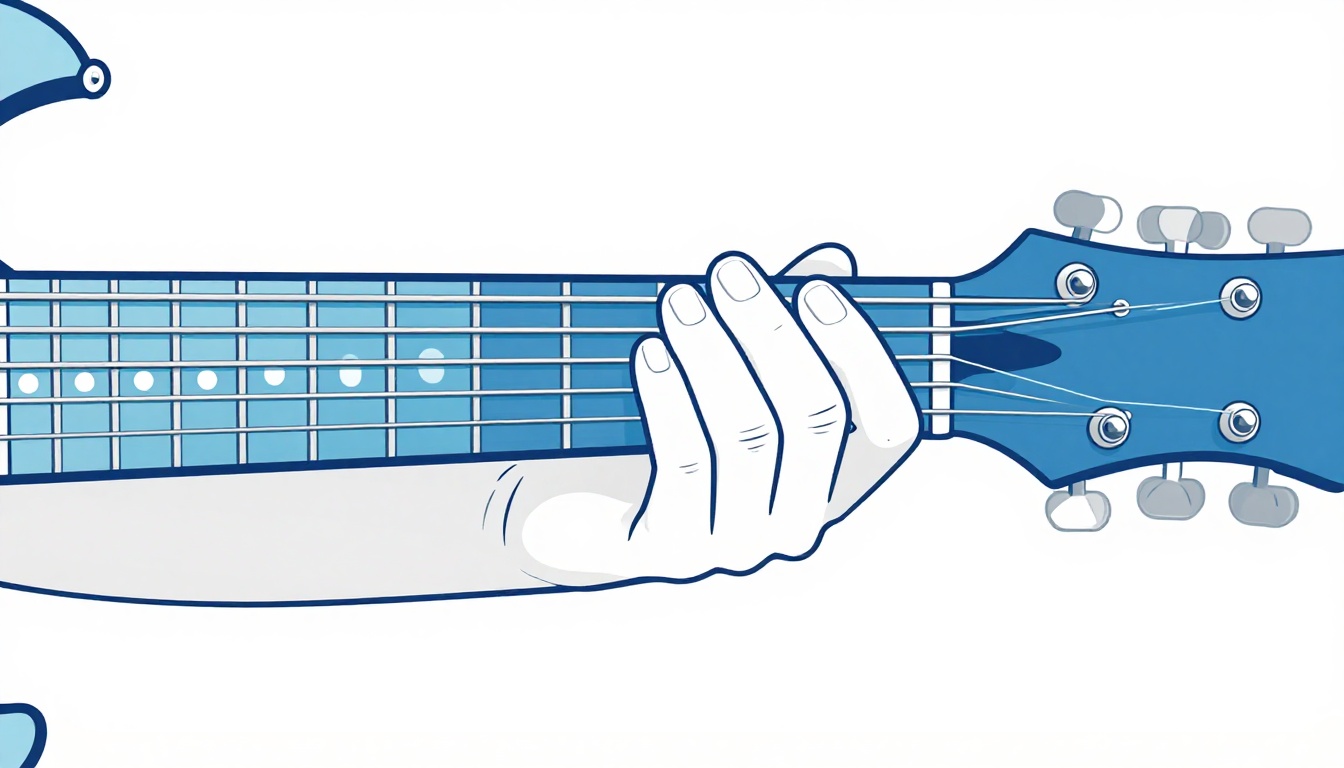
Treat this shape as one-finger-per-fret, anchored to the lowest fret in the box: index finger on everything at the 7th fret, middle finger on the single note at the 8th fret (the G on the 2nd string), ring finger on everything at the 9th fret, and pinky on everything at the 10th fret. That is four fingers each doing one specific job, a different feel from the low-position shape's mix of open strings and a two-finger reach.
The 6th, 5th, 1st, and 2nd strings each carry three notes spanning frets 7 to 10, a genuine stretch. The 4th and 3rd strings only carry two notes each, frets 7 and 9, which gives your hand a brief rest in the middle of the shape before the wider stretch resumes on the 2nd string. Play it slowly enough that you feel that alternation, rather than forcing a constant stretch across all six strings.
Adjusting the Shape for Smaller Hands
The movable box asks your fretting hand to cover four frets, a real stretch even though the frets themselves are physically closer together at the 7th fret than they are down near the nut, which helps somewhat. Rather than forcing the strict one-finger-per-fret rule everywhere, shift your whole hand up by one fret partway through the shape: play the 7th and 9th-fret notes with your index and ring fingers as written, but for the 10th-fret notes, slide your hand slightly rather than reaching your pinky back. This trades a small hand shift for a smaller stretch, and it is a completely normal adjustment, not a workaround for doing it "wrong."
On a left-handed guitar, the string order in every table above mirrors left to right: what these tables call the 6th string (low E) sits closest to the floor rather than the ceiling. The fret numbers, note names, and finger logic are all identical, only the physical layout under your eye flips.
Finding B Anywhere on the Neck
Beyond the low-position shape and the 7th-fret box, the root note B shows up in the same handful of places on every guitar, and knowing them means you are never more than a glance away from a starting point.
| String | Fret | Fret (octave up) |
|---|---|---|
| 6 (low E) | 7 | 19 |
| 5 (A) | 2 | 14 |
| 4 (D) | 9 | - |
| 3 (G) | 4 | 16 |
| 2 (B) | Open | 12 |
| 1 (high E) | 7 | 19 |
The open 2nd string is worth locking in first, since it is the only place B rings for free without fretting a single note. The 2nd fret of the 5th string is worth knowing next, since it anchors both the low-position shape and the barre chord shape covered later in this post.
How the Positions Connect Into One Fretboard
The low-position shape and the 7th-fret box are not two unrelated shapes, they are two neighboring views of the same seven notes. The open 2nd string (B) and the same note's octave at the 7th fret of the low E string are separated by the width of the neck, but they are the exact same note letter, and the same relationship holds for every note in between, played lower down near the nut or higher up the neck.
Between those two shapes lies most of the neck, and guitarists commonly fill that middle ground with root positions around the 4th fret (3rd string), the 9th fret (4th string), and the 12th fret (2nd string, the octave above the open B), each one the starting point for another version of this scale, often organized into five interlocking positions tied to the CAGED system. You do not need all five to start playing real music in this key. The two shapes already covered here, low position and the 7th-fret box, are enough to solo over a B minor progression in two different registers for a long time before that becomes a real limitation.
B Minor and Its Relative Major, D Major
B minor and D major share every single note: B, C#, D, E, F#, G, A. The only difference is which note your ear treats as home. Resolve a phrase to B and it sounds like B minor, moody and unresolved in a specific way. Resolve the exact same notes to D and it sounds like D major, bright and settled.
This means every shape in this post already doubles as a D major scale shape, just aimed at a different target note. Play the low-position run from earlier but land your long notes on D instead of B, and you are playing D major using fingerings you already have under your hand. It also explains why a chord progression can sit "in B minor" for a verse and lean into a D major feeling for a chorus without a single note changing, only the emphasis does. It is worth comparing this directly against the D major scale if you want to hear how the same seven notes shift character depending on which one the music resolves to.
B Minor and the Aeolian Mode
If you have run into the word "Aeolian" while reading about guitar modes, it is worth knowing that B natural minor and B Aeolian are the same seven notes in the same order, just named from two different traditions. "Natural minor" is the name used in standard major and minor key theory, while "Aeolian" is the name for the same pattern within the seven-mode system built from the major scale. You are not learning a second, different scale by exploring modes later, you already know this one. For the full picture of how Aeolian relates to the other six modes, see the guide to guitar modes.
B Minor Scale vs. B Minor Pentatonic Scale
If you already play B minor pentatonic, the full natural minor scale in this post is not a replacement, it is an expansion. Pentatonic keeps five notes, B, D, E, F#, A, and leaves out the 2nd (C#) and the 6th (G). Natural minor puts both of those back in.
| Scale | Notes |
|---|---|
| B minor pentatonic (5 notes) | B, D, E, F#, A |
| B natural minor (7 notes) | B, C#, D, E, F#, G, A |
Those two extra notes, C# and G, are not decoration, they change what the scale can do. C# sits a whole step above the root and pulls toward the minor 3rd. G sits a half step below F# and creates real tension leading down into the 5th. Both are more exposed than the pentatonic notes around them, more likely to sound wrong if you land on one at the wrong moment, which is exactly why pentatonic usually gets taught first: fewer notes, fewer wrong turns. Once phrasing with five notes feels natural, adding C# and G back in is what gives a line more color and more places to create tension before resolving it. For the general shape system this scale builds on, see the guide to the guitar pentatonic scale.
Natural Minor vs. Harmonic Minor vs. Melodic Minor
"The B minor scale" almost always means natural minor, the version covered so far in this post. It has two well-known relatives that share most of its notes and change the character of the scale by altering just one or two of them.
| Scale | Notes | What changed |
|---|---|---|
| B natural minor | B, C#, D, E, F#, G, A | Baseline |
| B harmonic minor | B, C#, D, E, F#, G, A# | 7th raised a half step |
| B melodic minor (ascending) | B, C#, D, E, F#, G#, A# | 6th and 7th raised a half step |
Raising the 7th from A to A# in harmonic minor closes the gap between the 7th and the root down to a half step, the same "leading tone" pull that major keys have, which is what gives harmonic minor its distinctive, slightly exotic sound. That gap between the new A# and the G just before it is a stretch of three frets on one string, a wider jump than anything in natural minor, which is part of why harmonic minor feels noticeably harder under the fingers the first time through. For a full breakdown of that scale's shapes and where it gets used, see the guide to the harmonic minor scale.
Melodic minor, in its classical form, raises both the 6th and the 7th when ascending specifically to smooth out that gap, then drops back to the natural minor notes when descending. In practice, most guitarists learning rock, blues, or pop material will use natural minor for the vast majority of playing and reach for harmonic minor only when a song or a lick specifically calls for that raised-7th sound.
The Chords Built From the B Minor Scale
Every chord that belongs naturally in the key of B minor comes from stacking notes of this same scale in thirds, one on top of another, starting from each of the seven degrees.
| Degree | Chord | Notes |
|---|---|---|
| i | B minor | B, D, F# |
| ii° | C# diminished | C#, E, G |
| III | D major | D, F#, A |
| iv | E minor | E, G, B |
| v | F# minor | F#, A, C# |
| VI | G major | G, B, D |
| VII | A major | A, C#, E |
Notice that four of the seven, D, Em, G, and A, are major or minor chords built from the exact same seven notes you have been fretting as a scale, and every one of them is a common open-position chord shape. That overlap is not a coincidence, it is the whole reason the scale and the chords in a key are taught together: the notes you use to solo are drawn from the same pool as the notes in the chords underneath you.
Seventh Chords Built From the Same Scale
Stack one more third on top of each triad above, and the same seven scale degrees produce seven-note chords with a richer, more colored sound, common in jazz and in more harmonically adventurous rock and pop.
| Degree | Chord | Notes |
|---|---|---|
| i7 | B minor 7 | B, D, F#, A |
| ii7b5 | C# half-diminished 7 | C#, E, G, B |
| IIImaj7 | D major 7 | D, F#, A, C# |
| iv7 | E minor 7 | E, G, B, D |
| v7 | F# minor 7 | F#, A, C#, E |
| VImaj7 | G major 7 | G, B, D, F# |
| VII7 | A dominant 7 | A, C#, E, G |
Every note in every one of those seven chords is still drawn from the same B, C#, D, E, F#, G, A pool as the scale itself. Nothing here is a new set of notes to learn, it is the same seven notes recombined into denser stacks. Bm7 in particular, adding the A to a plain Bm triad, is worth knowing on sight, since dropping a single finger off the full barre shape is often the fastest way into it.
Chord Progressions in B Minor
Four shapes account for a large share of the B minor chord progressions you will run into.
The i-iv-v progression (Bm, Em, F#m) is the most direct minor-key equivalent of the I-IV-V pattern most beginners learn in a major key, and it moves through chords built entirely from the natural minor scale without needing any borrowed chords.
The i-VI-VII progression (Bm, G, A) leans on the major chords built from the b6 and b7 degrees, and it has a lifted, driving quality that shows up constantly in rock and pop written in a minor key. Because it resolves back to Bm at the top of the loop, it can repeat indefinitely without ever feeling like it needs to escape into a major key to sound complete.
The i-VII-VI-VII progression (Bm, A, G, A) is a close cousin of the one above, descending through the VII and VI before circling back, and it is common enough that recognizing it by ear is worth the time on its own.
The i-III-VII-VI progression (Bm, D, A, G) climbs from the root up to the relative major before descending back through the b7 and b6, and it is one of the most widely used four-chord loops in popular music written in a minor key, largely because every chord in it is easy to reach from the one before it, especially since D, A, and G are all common open-position shapes.
All four use only chords already in the diatonic tables above, which means the scale shapes from earlier in this post line up directly with the chord tones in every one of them.
How This Scale Connects to the Bm Barre Chord
The full B minor chord, one of the first barre chords most players learn, is built from three of the same notes as this scale: B (root), D (b3), and F# (5). It is played by barring your index finger across all six strings at the 2nd fret, then adding your ring finger on the 4th fret of the D string, your pinky on the 4th fret of the G string, and your middle finger on the 3rd fret of the B string.
That shape sits in exactly the same stretch of neck as the low-position scale from earlier in this post. Play the barre chord, then pick out its three notes inside the low-position scale table: the root B at the 2nd fret of the 5th string, the b3 (D) as the open 4th string, and the 5th (F#) at the 4th fret of the 4th string. Resolving a solo phrase onto B, D, or F#, the three notes of the Bm chord, tends to sound settled and "in the pocket" against a Bm chord, while resolving onto C# or G, the two notes natural minor adds beyond pentatonic, creates more tension that wants to move somewhere else. Neither is wrong, they are just different tools: chord tones for landing, the other scale tones for passing through on the way there. For the full barre shape plus three easier no-barre versions, see the guide to the B minor guitar chord.
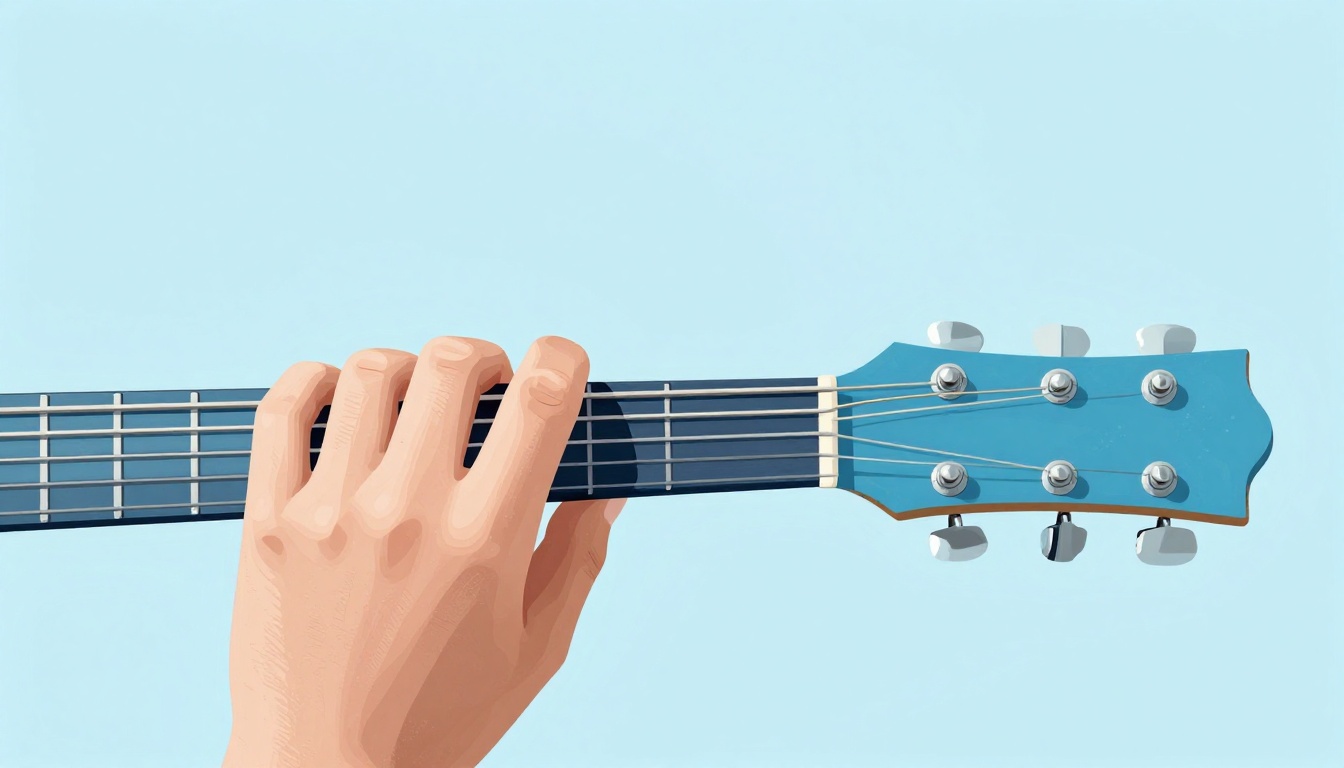
Why It Isn't Working
If the shapes above are technically correct but the scale still sounds rough, muted, or lifeless coming out of your hands, the cause is almost always one of these.
You're Muting a String Without Meaning To
A fretting finger that leans even slightly onto the string next to it will kill that string's sound, and in a scale shape where several fingers are close together across adjacent strings, this happens constantly without the player noticing. It is especially common in the 7th-fret box, since your pinky has to stretch across four frets to reach the top notes cleanly. Curl your fingers so each one contacts the string on its tip, close to (but just behind) the fret wire, not flat across the pad. Play each note in the scale alone and listen for a clean, ringing sound before moving to the next.
You're Losing the Root
It is easy to play every note in a shape correctly and still lose track of which one is "home," and B minor makes this slightly harder than a key like E minor or A minor, since the root is not sitting on an open string calling attention to itself. Practice landing deliberately on the root B at the end of a phrase, held slightly longer than the notes around it, until your ear locks onto it as the note the whole scale is orbiting.
It Sounds Like an Exercise, Not Music
Playing a scale strictly up and down, one note at a time, at a fixed tempo, will always sound like practice rather than a musical line, because that is not how real melodies move. The fix is not a different scale, it is different rhythm and direction: skip notes, repeat one, double back, rest on a beat instead of always filling it. A scale is raw material, not a finished phrase.
Your Hand Cramps in the Movable Box
The three-note-per-string stretch in the 7th-fret box is a genuine reach, even though the frets themselves are physically closer together up there than they are near the nut. Keep your thumb centered behind the 8th or 9th fret rather than chasing whichever finger is currently pressing, and take breaks. A hand that is tensing up to fight the stretch will sound stiff even when the notes are technically correct.
You Sound Different Every Time You Repeat a Phrase
Inconsistent picking-hand attack, alternating between hard and soft strokes without meaning to, makes a scale line sound uneven even when every fretted note lands correctly. Practice a short phrase slowly enough to keep your pick attack even across every note, then bring the tempo up gradually rather than immediately.
Your Timing Drifts the Moment You Stop Counting
Scales practiced silently, without a metronome or a backing track, tend to speed up on the easy notes and slow down on the awkward ones, which trains an uneven sense of time without you noticing. A metronome, even a slow one, exposes that drift immediately and gives you something honest to play against.
Turning the Scale Into Something Musical
Once the raw shapes are under your fingers, a few simple techniques are what separate "I can play the notes" from "that sounded like a real phrase." Hammer-ons and pull-offs, fretting a note without a fresh pick stroke, let you connect two notes on the same string with a slur instead of a hard attack on every single one, which is closer to how a phrased vocal line moves. Sliding a finger from one fret to the next scale tone on the same string does the same job in the other direction, connecting notes smoothly rather than picking each one separately.
Sequences are another useful tool: instead of playing the scale straight (1-2-3-4-5-6-7), try it in groups of three (1-2-3, 2-3-4, 3-4-5, and so on) or in broken thirds (1-3, 2-4, 3-5). Neither pattern is difficult once you know the notes, and both force your hand to move through the shape in an order it has not memorized by rote, which is usually when a scale starts sounding like a lick instead of a drill.
String skipping, deliberately jumping from one string to a non-adjacent one instead of always moving to the next string over, is a third tool worth adding once the first two feel comfortable. Using the low-position table from earlier, try playing the b3 (D) on the open 4th string, then jump straight to the b7 (A) at the 2nd fret of the 3rd string, skipping past the notes in between. It sounds noticeably more like a melodic leap than a scale run, because that is closer to how a lot of real melodies actually move, in jumps as often as in steps.
Picking Hand Technique for This Scale
Alternate picking, strictly switching between a downstroke and an upstroke for every note, is the default approach for playing this scale at any real tempo. It is more efficient than picking every note with a downstroke, since your pick is never traveling further than it needs to reach the next string. When a phrase crosses from one string to the next, the general rule is to let the direction fall wherever it naturally lands rather than resetting to a downstroke at the start of every string, which keeps the motion smooth instead of choppy.
Palm muting, resting the edge of your picking hand lightly on the strings near the bridge, can also change the character of this scale considerably, turning an open, ringing line into a tighter, more percussive one. It is worth practicing the same phrase both muted and open to hear how much of a scale's character comes from the picking hand rather than the notes themselves.
Vibrato on a Held Note
A note held without any movement, even a perfectly in-tune one, tends to sound flat and static compared to a note with vibrato, a small, controlled wavering in pitch created by rocking your fretting finger back and forth slightly while holding the string down. Vibrato is most useful on longer notes, particularly the root B when you land on it at the end of a phrase, since it turns a held note from something that just stops into something that feels intentional and expressive.
Start slow and exaggerated to learn the motion, then narrow it down once it feels controlled. A vibrato that is too fast or too wide from the start usually sounds nervous rather than musical; the goal is a smooth, even wave, not a rapid shake.

Where You'll Hear This Scale
B minor's close relationship to D major, plus its frequent appearance inside songs written around G and A major, makes it one of the more commonly used minor keys in acoustic, pop, and rock music, even though the scale itself asks more of the fretting hand than E minor or A minor do. Rather than memorizing a list of specific songs, the more transferable skill is training your ear to recognize a minor key by its sound, the same somber, unresolved quality this scale carries throughout, and knowing that a chorus built around a B minor chord inside an otherwise open-chord song is very likely drawing from these same seven notes.
Playing the Scale Over a Chord Progression
The fastest way to hear this scale as music rather than an exercise is to play it against a real chord progression underneath it, either a recording, a looper, or a second guitarist holding down chords while you solo. Try it over the i-iv-v progression (Bm, Em, F#m) from earlier in this post: as each chord changes, lean into the notes that belong to that specific chord (the root, 3rd, and 5th of whichever chord is currently sounding) rather than treating the whole progression as one long, undifferentiated B minor scale to noodle over.
That small shift, choosing target notes that match the current chord instead of playing the scale on autopilot, is most of what separates a soloist who sounds like they are following the song from one who sounds like they are just running scale patterns over the top of it.
Ear Training Before You Fret
Before you reach for the fretboard, sing or hum the scale, ascending and descending, from the root. If you can hear a phrase in your head before your fingers play it, your hand starts moving toward what you meant to play rather than toward whatever shape happens to be nearby. This matters more in a seven-note scale than a five-note pentatonic one, because there are more notes close together and more chances for your hand to land on the wrong neighbor if your ear is not leading the way.
A simple daily habit: play the root B, then try to sing the next note before you play it, then check yourself against the fretboard. Repeat ascending through the full scale, then reverse it descending. This is slow, unglamorous work, and it pays off faster than almost anything else on this list.
Practicing With a Drone Note
A drone, a single sustained note, usually the root, played underneath whatever you are practicing, is a simple way to sharpen your ear to how each scale degree actually relates to "home." Loop a single held B note, or use any tuner or drone app set to B, then play through the scale slowly over the top of it. The open 2nd string is a convenient way to sound the drone yourself on a second guitar or a looper pedal, since it is the one place B rings without fretting anything.
Notes that are stable against the drone, particularly the root, the b3, and the 5th, will sound settled and restful. Notes that are more tense, especially the 2nd and the b6, will sound like they are pulling toward a neighboring note. Hearing that tension and release against a fixed reference pitch, rather than only against a full chord progression, isolates exactly what each individual scale degree contributes, which is a different and more precise kind of listening than practicing against a full band or backing track.
Common Mistakes Beginners Make With This Scale
Skipping the low-position shape entirely and jumping straight to the 7th-fret box is one of the most common. The low-position shape teaches your ear the sound of the scale with less of a technical demand, since it uses open strings rather than a full four-fret stretch, and skipping past that in a hurry to learn a "cooler" high-neck shape usually means neither one gets learned solidly.
Treating the scale as only a soloing tool and never connecting it back to the chords in the key is another. The chord table earlier in this post is not a side note, it is the other half of what makes this scale useful: a scale you cannot relate to the chords underneath it is a pattern, not a musical vocabulary.
Practicing only ascending is a third. Descending lines, and lines that change direction mid-phrase, are just as common in real music as straight ascending runs, and a hand that has only drilled one direction will stumble the first time a melody doubles back.
Ignoring the metronome because "it's just a scale, not a song" is a fourth. Timing habits formed while learning a scale carry directly into everything you play afterward, and an uneven scale becomes an uneven solo.
Gripping the neck with the fretting-hand thumb wrapped over the top, like holding a baseball bat, is a fifth. It locks your wrist and makes the four-fret stretch in the movable box far harder than it needs to be. Keeping the thumb roughly centered on the back of the neck frees the rest of the hand to move independently.
A Practice Routine for the B Minor Scale
Something concrete to run today, in order:
- Play the one-octave low-position scale, ascending then descending, slowly enough that every note rings clean with no buzz or mute.
- Sing or hum the same scale before you play it, then check your ear against the fretboard.
- Set a slow metronome and play the same one-octave scale in time, focusing on even picking-hand attack.
- Move to the movable box at the 7th fret and repeat the same slow, clean, in-time approach, one string at a time before attempting the full shape.
- Play the i-iv-v progression (Bm, Em, F#m) on a looper or with a recording, and improvise short, simple phrases over it using notes from the scale, resting more than you play.
- Finish by singing the root note B and playing it once, cleanly, to end the session on the sound the whole scale is built around.
Fifteen focused minutes on that routine, done consistently, moves this scale from "something I can technically play" to "something I can actually use" far faster than an hour of unfocused noodling once a week.
Frequently Asked Questions
Is the B minor scale the same as B minor pentatonic? No. B minor pentatonic is a five-note subset of B natural minor, leaving out the 2nd (C#) and the 6th (G). The full scale in this post includes both.
Why doesn't B minor have an easy open-position shape like E minor or A minor? Because B's root note does not sit on an open string the way E and A do. The open 2nd string does ring as B, but it is the middle of the chord rather than the low end most beginner-friendly shapes are built around, so the scale relies on a low-position shape using the first four frets instead of a purely open one.
What is the relative major of B minor? D major. The two scales share every note, B, C#, D, E, F#, G, A, and only differ in which note the music resolves to as "home."
Do I need to learn harmonic minor and melodic minor too? Not right away. Natural minor covers the vast majority of rock, blues, folk, and pop playing. Harmonic and melodic minor are worth learning once you want the specific, more tense sound they add, or once you run into a lick or a song that clearly uses one.
Why is the B minor chord a barre chord if the scale itself uses open strings? The scale as a whole includes several open strings among its seven notes, but the B minor chord needs exactly three specific notes, B, D, and F#, stacked in a particular way, and no combination of open strings alone produces that stack. A barre lets you fret all three cleanly in one shape.
Can I use the B minor scale over a D major chord progression? Yes. B minor and D major share every note, so the same scale shapes work over both, provided your phrasing resolves to whichever note the song is actually centered on.
How long does it take to learn the B minor scale? The shapes themselves, low position and the 7th-fret box, can be memorized in a single sitting. Playing them cleanly, in time, and musically rather than mechanically takes ongoing practice, typically weeks rather than days.
Should I learn B minor pentatonic before the full scale? Most players learn pentatonic first, since five notes are easier to place safely than seven. If you already know B minor pentatonic, this scale is a natural next step: the same shapes with two notes added back in, C# and G, that give your phrasing more color and more tension to resolve.
GuitarLowKey
Ready for fifteen focused minutes?
Open the web app and train the change that is blocking your song.