
How to Play the Csus4 Guitar Chord (and Move Cleanly Into C)
The Csus4 guitar chord in full: the standard shape, an easier no-barre version, why it buzzes, and the small move that connects it to a plain C chord.

To play Csus4 on guitar, mute the low E string, place your ring finger on the 3rd fret of the A string, your middle finger (or pinky) on the 3rd fret of the D string, leave the G string open, then lay your index finger flat across the B string and high E string at the 1st fret. In tab shorthand that is x33011. Strum from the A string down through the high E string, five strings total.
| String | Fret | Finger |
|---|---|---|
| 6 (low E) | Muted | - |
| 5 (A) | 3 | 3 (ring) |
| 4 (D) | 3 | 2 (middle) or 4 (pinky) |
| 3 (G) | Open | - |
| 2 (B) | 1 | 1 (index, part of a small barre) |
| 1 (high E) | 1 | 1 (index, same barre) |
That small barre across two strings is the only unusual part of this chord, and it is also the reason a lot of players first meet Csus4 as "that chord that buzzes on the top string." The rest of this post covers an easier version that skips the barre entirely, why the barre buzzes when it does, how Csus4 compares to C, Csus2, and Cadd9, a moveable version for any root note, and the specific one-motion trick that connects Csus4 to a plain C chord, since that relationship is the entire reason this chord is worth learning.
What Notes Make Up Csus4
Csus4 is built from three notes: C, F, and G. That is the root (C), the perfect fourth (F), and the perfect fifth (G). Compare that to plain C major, built from C, E, and G, the root, major third, and perfect fifth. The only difference is that one note: Csus4 swaps the E (major third) for an F, the note a half step above it.
| Note | Interval from C | Role |
|---|---|---|
| C | Root | Root |
| F | Perfect fourth | Suspended fourth |
| G | Perfect fifth | Fifth |
"Sus" is short for "suspended," and a suspended chord replaces the third with a neighboring note, either the one a whole step below it (giving a sus2 chord) or, as here, the one a half step above it (giving a sus4 chord). Because the third is the note that tells your ear whether a chord is major or minor, a chord with no third is neither. Csus4 sits in between, tense and unresolved, leaning hard toward the C major chord it almost is.
That lean is stronger than a sus2 chord's. F sits only a half step above E, the note it replaced, so your ear hears Csus4 as C major with one note pulled slightly out of place, straining to snap back. This is why Csus4 almost always appears right next to a C chord in real music rather than sitting on its own for long.
String Names, Numbers, and Standard Tuning
Every fret number in this post refers to strings by both name and number.
| String Number | Name | Standard Tuning |
|---|---|---|
| 6 | Low E | E |
| 5 | A | A |
| 4 | D | D |
| 3 | G | G |
| 2 | B | B |
| 1 | High E | E |
The 6th string is the thickest and sits closest to your face when the guitar is in playing position. The 1st string is the thinnest and sits closest to the floor. Fret numbers count from the nut outward, so the "3rd fret" is the third gap in the fretboard, not the third metal wire. Finger numbers follow the standard convention: 1 is the index finger, 2 is the middle finger, 3 is the ring finger, 4 is the pinky, and the thumb is written as T. All of this assumes your guitar is in standard tuning. If two strings sound off from each other, tune before judging whether your Csus4 sounds right, since even a perfectly fretted chord sounds wrong on an out-of-tune guitar.
Tuning Up Before You Play This Chord
Csus4 rings one full open string, the G string, right in the middle of the chord, with a barre and two other fretted notes built around it. If that G string is even slightly flat or sharp, the whole chord sounds sour in a way that is easy to blame on your fingers when the real problem is the tuning peg.
Tune the G string first, then check the A and D strings underneath it and the B and high E strings above it, since all five are doing real work in this chord. A clip-on tuner on the headstock is the most reliable option while you are still building your ear. If you do not have one, tune the open A string to the 5th fret of the low E string, the open D string to the 5th fret of the A string, the open G string to the 5th fret of the D string, and the open B string to the 4th fret of the G string, checking each pair rings as one steady pitch with no wavering.
Which Strings to Strum
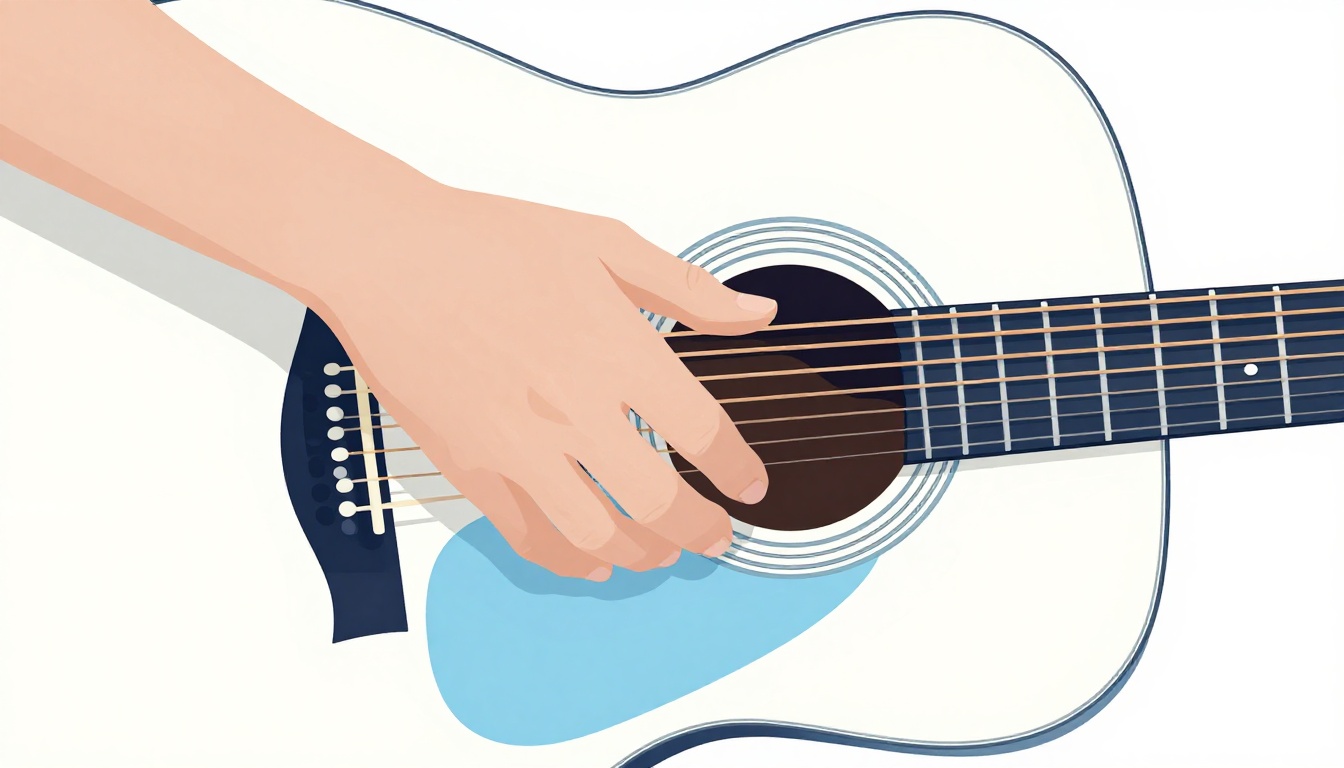
Strum from the 5th string (A) down through the 1st string (high E), five strings total. The 6th string (low E) is not part of this chord and needs to stay out of the strum entirely, not just played quietly.
If the low E string rings along with the chord, you will hear a low, out-of-key rumble underneath it, since low E is not one of the three notes, C, F, and G, that make up Csus4. It will not sound like an obviously wrong note, more like a chord that never quite settles, which is a common reason beginners assume their fretting is off when the shape is fine and the strumming hand is what needs the fix.
Two ways to keep the low E string out of the sound:
- Anchor your strum on the A string. Aim your downstroke so the first string your pick touches is the A string, not the low E. This takes deliberate aim for the first week or two and becomes automatic after that.
- Let your ring finger's underside brush the low E string. Because your ring finger is already reaching for the 5th string, the side of that same finger often rests close enough to the low E to deaden it without you doing anything extra. Do not force this, a light natural touch is enough.
Step by Step: Placing Your Fingers for the Standard Shape
Build the shape from the bottom string up rather than trying to land all four fingers at once.
- Rest your thumb behind the neck, roughly across from your first finger, low enough that your other fingers can reach the strings at an angle rather than lying flat.
- Mute the low E string (6th) by letting the side of your ring finger brush against it, or simply skip it when you strum.
- Place your ring finger on the 3rd fret of the A string (5th).
- Place your middle finger on the 3rd fret of the D string (4th), right next to your ring finger. If reaching two adjacent strings at the same fret with neighboring fingers feels cramped, use your pinky here instead and keep your middle finger free.
- Let the G string (3rd) ring completely open. Do not rest any part of your hand against it.
- Lay your index finger flat across both the B string (2nd) and the high E string (1st) at the 1st fret, forming a small two-string barre.
- Strum from the A string down through the high E string, five strings total, and listen for every note ringing clean, including the barred pair at the top.
The two-string barre is the part most players have not done before this chord, so it is worth isolating on its own. Lay the index finger flat, roll it very slightly toward its outer edge rather than the fleshy center, and pick the B and high E strings together, listening for two clean notes rather than one clean note and one buzz.
The Easier No-Barre Version
If barring two strings is not comfortable yet, there is a genuinely simpler version that skips the top string entirely and only needs three fingers, none of them barring anything.
| String | Fret | Finger |
|---|---|---|
| 6 (low E) | Muted | - |
| 5 (A) | 3 | 3 (ring) |
| 4 (D) | 3 | 2 (middle) |
| 3 (G) | Open | - |
| 2 (B) | 1 | 1 (index) |
| 1 (high E) | Muted or not strummed | - |
Drop the high E string out of the strum and every finger gets its own string: ring on the A string, middle on the D string, index on the B string, no barre required. Check the notes and it still works out to C, F, and G, the same three notes as the full version, just without the high E string doubling the F an octave up. It sounds a touch thinner but is unmistakably the same chord, and it buys you time to build the two-string barre at your own pace.
Csus4 vs C vs Csus2 vs Cadd9
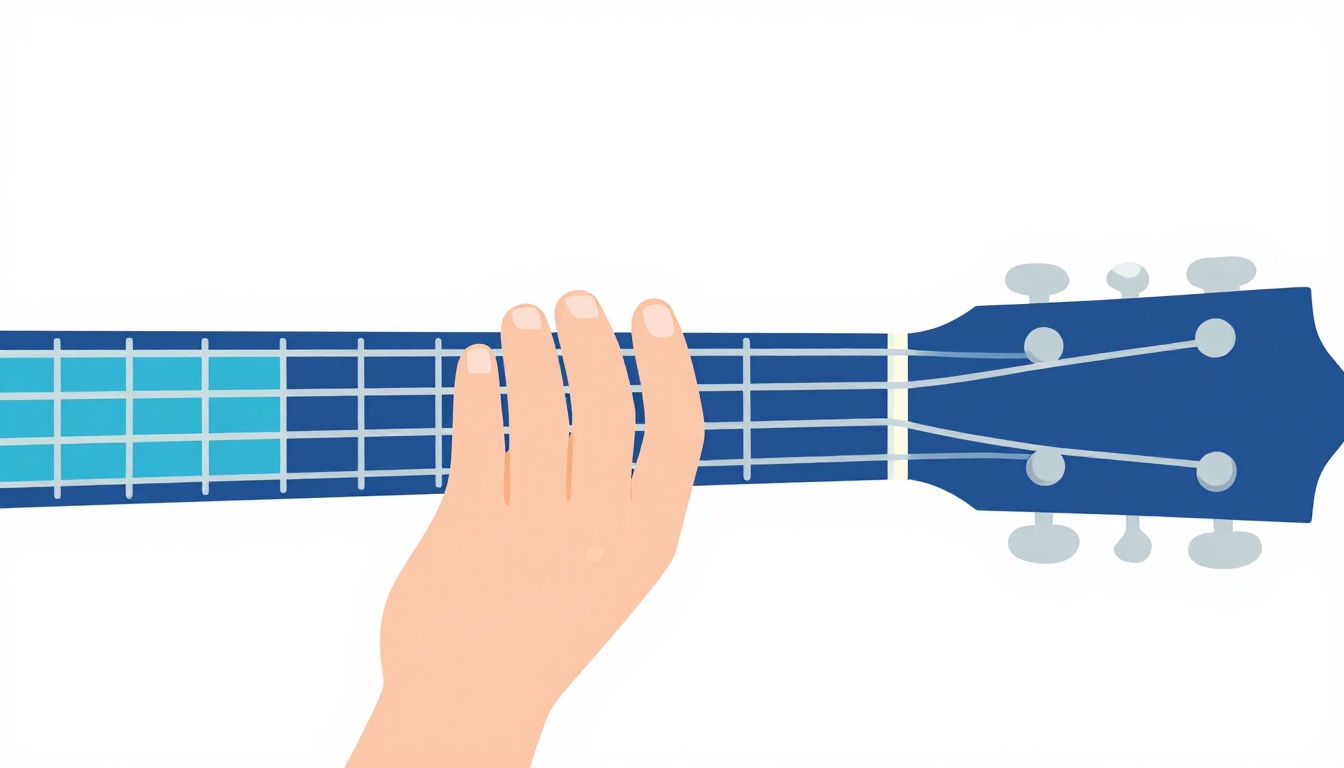
Four chords share the root note C and get confused constantly: C major, Csus2, Csus4, and Cadd9. Knowing what separates them stops you from reaching for the wrong one mid-song.
| Chord | Notes | Open Fingering | Character |
|---|---|---|---|
| C | C, E, G | x32010 | Bright, resolved, major |
| Csus2 | C, D, G | x30033 | Open, floating, neither major nor minor |
| Csus4 | C, F, G | x33011 | Tense, pulling toward C |
| Cadd9 | C, E, G, D | x32033 | Major, but colored |
C and Cadd9 both resolve, they sound like a sentence that has ended, because both keep the major third (E). Csus2 and Csus4 both hang, they sound like a sentence with no full stop, because both drop the third. Between the two suspended chords, Csus4 is the tenser of the pair: F sits only a half step from the E it replaced, so it pulls hard toward C major, while Csus2's D sits a whole step below the E it replaced and floats more calmly, without the same urgency to resolve.
The fastest way to tell all four apart by ear is to listen for how settled the chord feels, then, if it hangs, listen for whether it feels urgent (Csus4) or calm (Csus2). If you have already worked through Csus2 or Cadd9, Csus4 is the natural third chord to add to that same C-rooted family.
Csus4 vs C7sus4
Chord charts for rock and blues songs often call for C7sus4 rather than plain Csus4, and the two get mixed up constantly because the names look so similar. C7sus4 adds one more note on top of Csus4's C, F, and G: a Bb, the minor seventh.
| Chord | Notes | Character |
|---|---|---|
| Csus4 | C, F, G | Clean, three-note suspension |
| C7sus4 | C, F, G, Bb | Denser, bluesier, common in rock riffs |
That extra Bb gives C7sus4 a thicker, slightly bluesier color than the plain three-note Csus4 covered on this page, and it shows up often in rock and funk rhythm parts where a guitarist wants tension without the chord ever feeling like it belongs to a specific major or minor key. If a chart just says "Csus" with no number, it almost always means the plain Csus4 covered here rather than the seventh-chord version. When in doubt, listen for that extra, slightly muddier low note. If it is there, you are hearing C7sus4, not Csus4.
The One-Motion Move: Going From C to Csus4
This is the detail that makes Csus4 worth learning in the first place. Unlike Csus2, which needs an almost entirely different hand shape from plain C, Csus4 is a small, specific adjustment away from the standard open C chord, and once you see which three things move, the change takes barely any time at all.
Start with a standard C chord, fingered ring on the A string (3rd fret), middle on the D string (2nd fret), index on the B string (1st fret), G and high E strings open. To turn it into Csus4:
- Your ring finger does not move at all. It stays on the A string, 3rd fret, in both chords.
- Your middle finger slides up one fret, from the D string's 2nd fret to its 3rd fret. This is the note doing the actual work of the suspension, the E turning into an F.
- Your index finger flattens slightly to add the high E string to the barre it is already forming on the B string, so it now covers both strings at the 1st fret instead of just one.
Three small motions, none of them a full hand reset. Practice it as a single unit: strum C, make the three-part shift into Csus4, strum, then reverse to shift back. Once your hand learns to do the middle-finger slide and the index-finger flatten at the same time, this becomes one of the fastest chord changes in the entire C-chord family, closer to a decoration on the C shape than a change to a new chord.
Why Csus4 Is Not Working
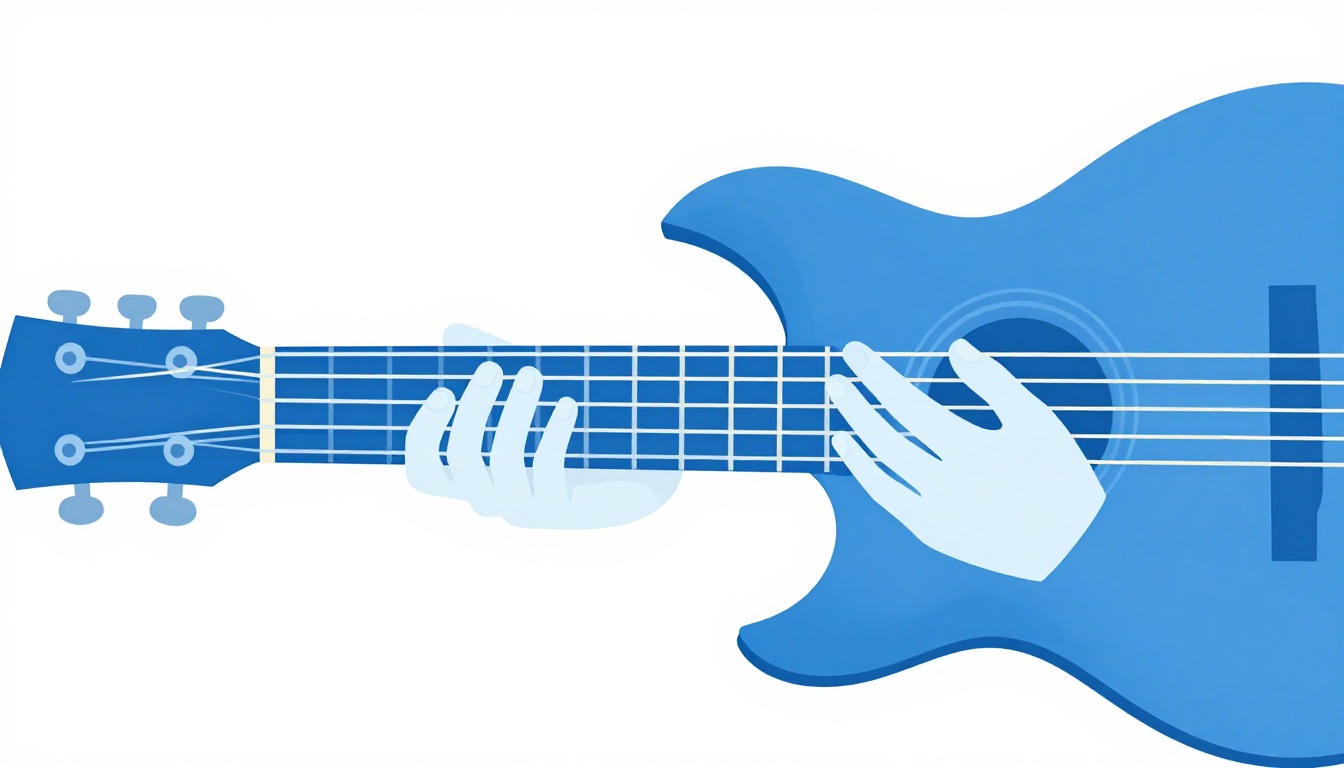
A buzz, a dead string, or a chord that will not ring clean almost always comes from one of these causes. Work through them one at a time.
The barre is uneven
A barre only works if the finger applies even pressure across both strings at once. New players often press harder on the string closer to the palm (the B string) and let the high E string go slack, or the reverse. Roll your index finger very slightly toward its outer edge, which is flatter and firmer than the fleshy center of the fingertip, and you will get a more even bite on both strings.
You are pressing in the middle of the fret space instead of behind the wire
Fret numbers count the space between two metal fret wires, not the wire itself. A finger pressed in the middle of that space, or up near the wire behind it, needs noticeably more force to avoid a buzz than one pressed right up against the fret wire on the side closer to the guitar's body. Check the barre and the D string finger both sit just behind their fret wires.
The ring and middle fingers are choking each other
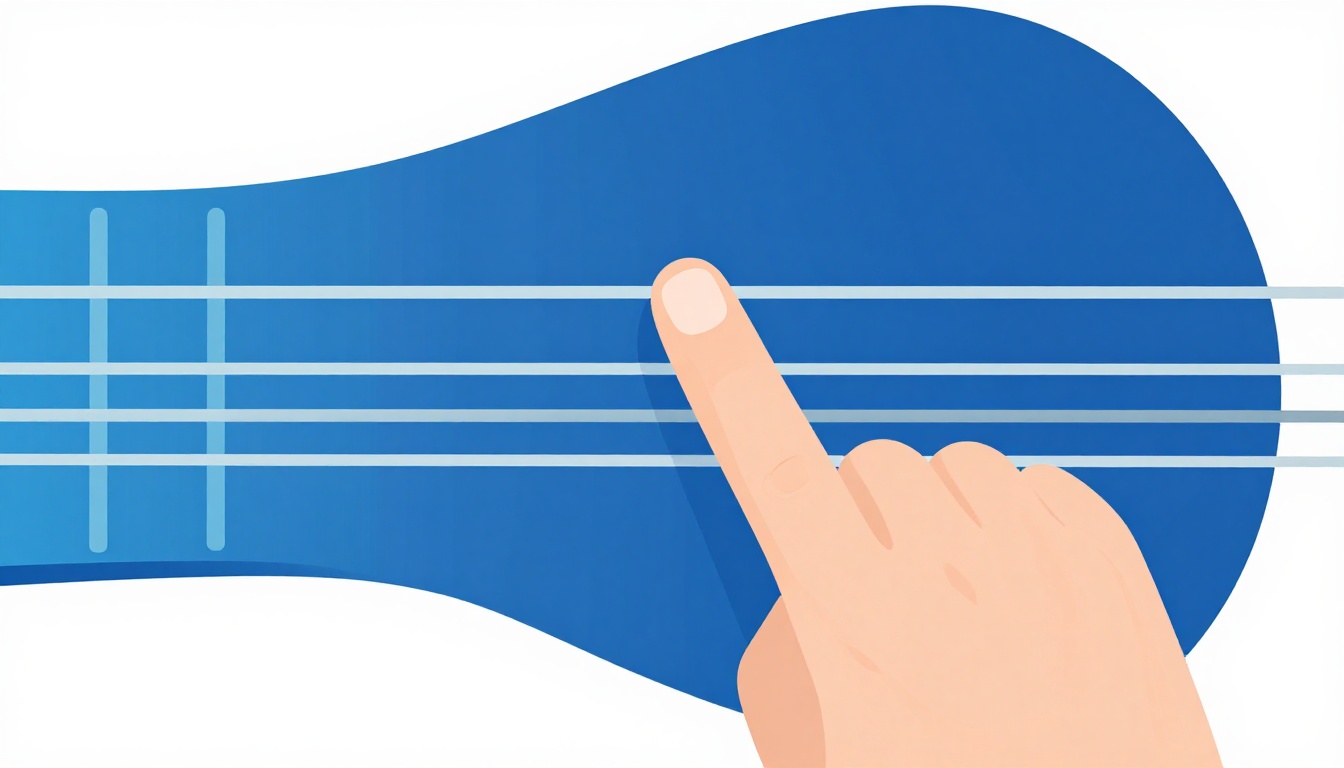
Because the ring finger (A string) and middle finger (D string) sit on adjacent strings at the same fret, it is easy for one to lean over and mute the string next to it, especially while your hand is still learning the shape. Arch both fingers so only the very tip contacts the string, and check that neither one is resting against its neighbor.
The open G string is getting muted by accident
The G string sits directly between your D string finger and your barre, with nothing fretting it at all. If either neighboring finger leans back even slightly, it can mute the G string without you noticing. Pick the open G string on its own while your hand holds the Csus4 shape and confirm it rings exactly as it does with your fretting hand off the guitar.
Not enough downward force on the barre
Even with good placement, the barre needs real, continuous pressure across both strings, and that pressure has to hold steady the entire time you strum, not just for the first instant. New players' hands tire quickly holding a barre because the muscles used for it are not yet built up. Fret the two-string barre on its own, pick each string individually, and add pressure gradually until both ring out clean. This is a strength and habit problem, not a technique problem, and it improves with repetition alone.
Your thumb has crept over the top of the neck
If your thumb rides up and over the top edge of the neck instead of staying behind it, it pulls your whole hand's angle flatter to compensate, which flattens the index finger's barre at the same time. Keep your thumb low on the back of the neck, roughly behind the gap between your index and middle fingers, and the barre naturally arches more without you having to think about it separately.
A Short Warm-Up for the Barre
If the two-string barre on the B and high E strings is the one part of this chord that will not cooperate, a short dedicated warm-up before you attempt the full shape tends to help more than repeating the whole chord over and over.
Start with just the index finger, off the guitar entirely, and press its tip against your thumb, feeling which part of the fingertip makes first contact. That same contact point, closer to the outer edge than the fleshy center, is what you want touching the strings.
Then, on the guitar, lay the index finger flat across only the B and high E strings, at the 1st fret, with no other fingers involved yet. Pick both strings together and listen for two clean notes rather than one clean note and one buzz. Roll the finger slightly toward its outer edge until both ring out, then relax the hand completely and repeat the whole motion from scratch, rather than holding the position and just adding pressure. Building the barre fresh each time trains the placement itself, not just the strength to force a bad placement into working.
Do ten of these clean, deliberate repetitions before adding the ring and middle fingers and forming the complete Csus4 shape. Most players find the barre noticeably easier within the same practice session once it has been isolated like this, since the other fingers are no longer distracting from the one part that actually needs the work.
The Alternate Voicing With the High E Fretted
Instead of muting the high E string in the easy version or barring it at the 1st fret in the standard shape, some players fret it at the 3rd fret instead, giving a fuller, brighter voicing.
| String | Fret | Finger |
|---|---|---|
| 6 (low E) | Muted | - |
| 5 (A) | 3 | 3 (ring) |
| 4 (D) | 3 | 2 (middle) |
| 3 (G) | Open | - |
| 2 (B) | 1 | 1 (index) |
| 1 (high E) | 3 | 4 (pinky) |
This voicing doubles the fifth (G) on top instead of the fourth (F), since the high E string's 3rd fret is a G, not an F. It trades the two-string barre for a stretch to the pinky, so it suits a hand that finds barring awkward but does not mind a reach. The chord contains the same three notes, C, F, and G, just voiced slightly differently, with a brighter top note.
Csus4 Over a Different Bass Note (Csus4/G)
The Csus4 shape can sit over a different bass note without changing your fretting hand much. Add the low E string, fretted at the 3rd fret (G), instead of muting it, and the chord becomes Csus4/G, with the fifth in the bass rather than the root.
| Voicing | Tab | Bass Note | Feel |
|---|---|---|---|
| Csus4 | x33011 | C (root) | Standard, balanced |
| Csus4/G | 3-3-3-0-1-1 | G (fifth) | Fuller low end, second inversion |
You will not need this often as a beginner, but it explains why some recordings of a song built on Csus4 sound slightly fuller or more grounded than the plain open version. Barre the low E string with the same ring finger you are already using on the A string, angling it slightly to catch both strings at the 3rd fret, and the rest of the shape stays exactly as it was.
The Moveable Barre Version, for Playing Csus4 Anywhere on the Neck
Open Csus4 is tied to the key of C because it uses open strings. Once you can also play it as a barre chord, you can move the same shape to any root note on the neck.
The moveable version is based on the open A suspended fourth shape (Asus4, x02230). Barre your index finger across the low E, A, and high E strings at the 3rd fret, muting the low E string with the underside of that same finger, then place your middle finger on the D string at the 5th fret, your ring finger on the G string at the 5th fret, and your pinky on the B string at the 6th fret.
| String | Fret | Finger |
|---|---|---|
| 6 (low E) | Muted with the barre | - |
| 5 (A) | 3 | 1 (barre) |
| 4 (D) | 5 | 2 (middle) |
| 3 (G) | 5 | 3 (ring) |
| 2 (B) | 6 | 4 (pinky) |
| 1 (high E) | 3 | 1 (barre) |
The 3rd fret of the A string is C, which is why this shape lands on Csus4 even though it is built on an A-shape template. Slide the entire shape up or down the neck and the barre's root note on the A string tells you which sus4 chord you are playing: two frets down at the 1st fret gives you Bsus4, two frets up at the 5th fret gives you Dsus4.
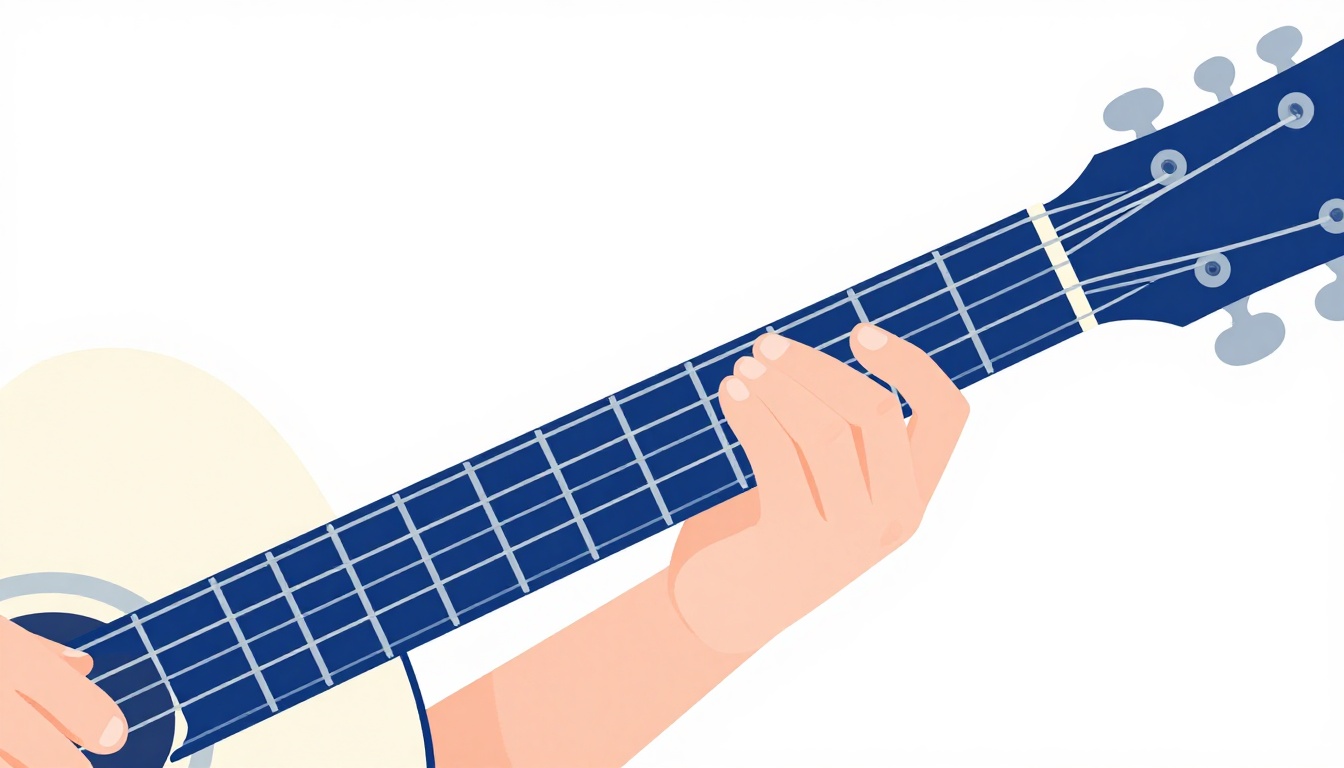
This version is genuinely harder than the open one. The barre needs to hold three strings evenly while the D and G strings ring two frets higher, and the pinky is stretching a further fret past that. Treat it as a stretch goal once the open version, in either the standard or the no-barre form, is solid, not a required stop on the way there.
Changing From Csus4 Into Other Chords
Beyond its close relationship to C, Csus4 shows up as a passing or connecting chord on the way to several other common shapes.
Csus4 to C. Covered in full above: the ring finger stays put, the middle finger drops back one fret, and the index finger relaxes out of its barre to fret only the B string. This is the fastest change in this entire family.
Csus4 to F. If you use a non-barre F shape, your index finger's job on the B string carries over almost directly to F's high E string note, so treat this as a small shift rather than a full reset, moving one finger at a time.
Csus4 to G. This is closer to a full hand reset, since G's standard open shape uses the low E and A strings in a way Csus4 does not. Lift out of the barre and rebuild G from the bottom string up, ring finger first, rather than hunting for a pivot finger that is not really there.
Csus4 to Am. Your ring finger, on the A string in Csus4, only has to move down two frets to land on the D string for Am, which makes it a useful anchor point even though the rest of the hand rebuilds around it.
Csus4 to Dm. Both chords lean on the middle and upper strings rather than the low ones, so this change is more about relaxing the barre and letting the fingers find new frets than about forcing any single finger to stay in place.
Practice each of these as a two-chord loop, back and forth slowly with a metronome, before dropping them into a full progression.
Left-Hand Position: The Fundamentals Underneath Every Shape Above
Every fix on this page assumes a few basics about how your fretting hand sits on the neck, and it is worth checking these directly if more than one chord in this family feels consistently difficult rather than just one specific finger.
Keep your thumb low on the back of the neck, roughly opposite the gap between your index and middle fingers, rather than high near the top edge or wrapped over it. A low thumb gives your fingers a more open angle to come down on the strings from above, which is what lets a barre arch instead of lying flat.
Angle your wrist very slightly outward, away from the body of the guitar, rather than keeping it perfectly straight. A completely straight wrist tends to flatten the fingers as they reach for higher strings, while a small outward angle opens up the hand's natural curl and gives the barre finger room to roll onto its firmer outer edge.
Keep your fretting-hand elbow reasonably close to your side rather than winging outward. An elbow that drifts away from the body pulls the whole forearm's angle out of line with the neck, which then has to be compensated for somewhere in the wrist or fingers, usually at the cost of a clean barre.
None of these are specific to Csus4, but a two-string barre exposes bad hand position faster than a simple single-finger chord does, since a barre has no room for even slight flatness before a string chokes.
Where Csus4 Fits in a Key
Csus4 shows up constantly as a decorated version of whichever C chord already belongs in the key you are playing in, rather than as a chord you go looking for on its own.
As the I Chord in the Key of C Major
In the key of C major, C is the tonic, the "home" chord. Swapping it for Csus4 right before landing on C adds a small, satisfying pull into that resolution, since every note in Csus4 (C, F, G) is also in the C major scale.
As the IV Chord in the Key of G Major
In the key of G major, C is the IV chord. Csus4 works the same way here, adding tension to the IV chord for a beat or two before it resolves, either back to C itself or onward to G.
As the V Chord in the Key of F Major
In the key of F major, C is the V chord, the one with the strongest pull back to the tonic. A Csus4 to C move right before returning to F is a common way to delay that pull just long enough to be noticed.
In all three cases the underlying chord function does not change. C is still the tonic in C major, still the IV in G major, still the V in F major, whether you play it plain or suspended. Csus4 decorates a chord that already belongs where it is.
Chord Progressions That Use Csus4
Csus4 rarely stands alone. It almost always sits right next to the plain C chord it is built from.
| Progression | Chords | Feel |
|---|---|---|
| Classic resolution | C, Csus4, C | Tension added and released within one chord |
| Delayed arrival | F, Csus4, C | Csus4 delays the landing on C by a beat |
| Borrowed subdominant | G, C, Csus4, C | Csus4 sits as a brief detour on the way back to C |
| Suspension pair | C, Csus2, Csus4, C | Hits the note below the third, then the note above it, then resolves, all over the same root |
Try each of these slowly with a metronome before worrying about speed. The point at this stage is landing every finger in the right spot on the first attempt, not playing fast.
Songs That Use Csus4
Chord charts for The Beatles' "Let It Be" commonly include a Csus4 as a passing chord near the end of the progression, resolving directly into C. It functions exactly the way this page has described throughout: a brief, half-step pull toward the tonic rather than a chord that sits on its own for long. If you already know the plain C chord in that song, dropping in the one-motion move from earlier in this post is the fastest way to add the suspension without relearning the whole progression.
Suspended fourth chords more broadly are common across folk, pop, and rock guitar parts specifically because of that resolving quality, used as connective tissue between a chord and itself, a beat or two of tension right before the chord you were already playing lands again.
Training Your Ear to Recognize Csus4
Once you can play the chord cleanly, it is worth spending time being able to hear it by name in a recording, since that is what lets you figure out a song by ear instead of hunting for a tab online. Play C major and Csus4 back to back a dozen times, paying attention specifically to which note changed. Say the words "third" when you play C and "fourth" when you play Csus4 out loud as you go, connecting the sound to the name rather than just the shape.
The giveaway in a recording is usually a small, urgent pull rather than anything obvious. A song that sounds settled on its C chord is probably playing plain C. A moment where the same chord feels like it is straining forward, almost catching on something, right before it lands back on a chord you recognize as C, is a strong candidate for Csus4. This kind of ear training pays off well beyond this one chord, since the same listening habit, comparing a chord against its plain major version and noticing exactly which note moved, works for every suspended and added-note chord you will meet later.
Playing Csus4 Fingerstyle
Everything above assumes a strum, but Csus4 works just as well plucked note by note, and the shape does not change at all, only how your picking hand approaches it.
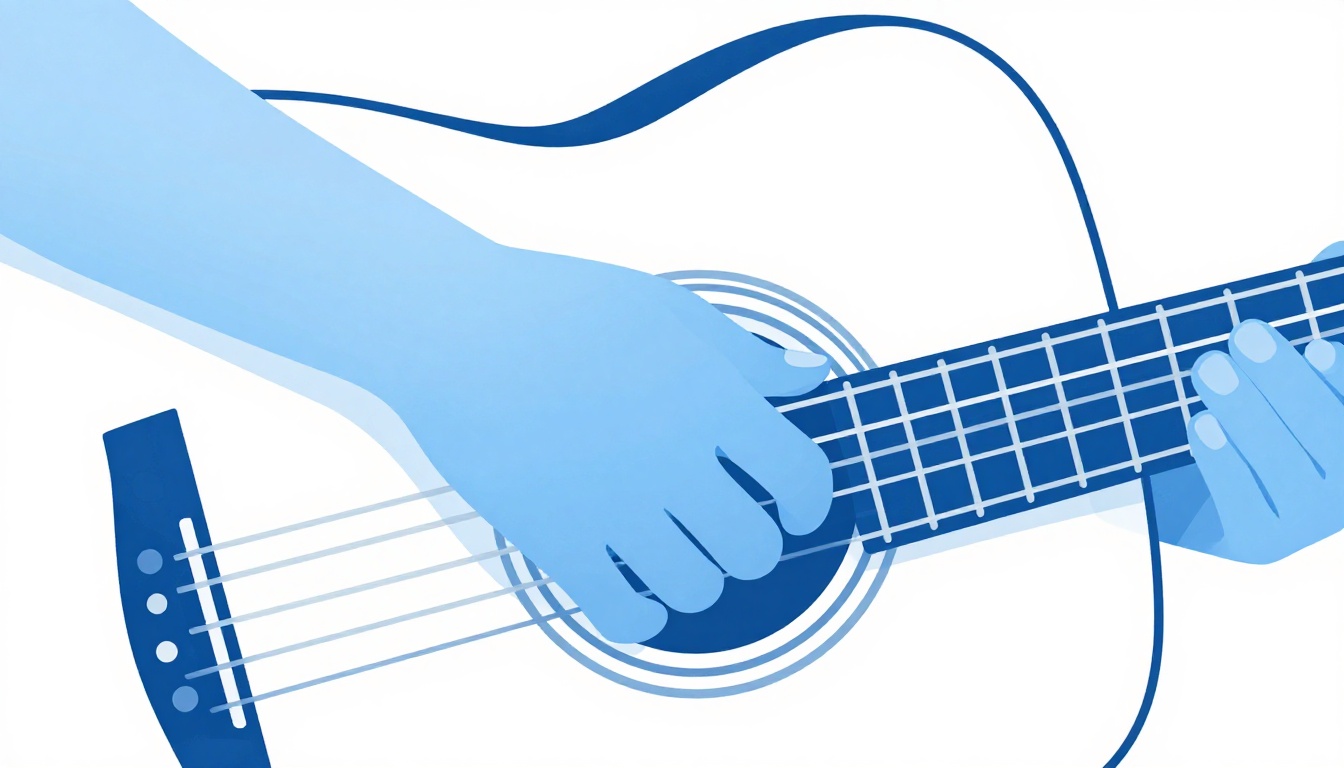
A simple pattern to start with: thumb on the A string, then index finger on the D string, middle finger on the G string, ring finger on the B string, played one after another rather than all at once. If you are using the full barred version, add the high E string with your ring or pinky once the four-note pattern feels even.
The one-motion move into C works inside a fingerpicked pattern too. Play the four-note thumb-index-middle-ring pattern once on Csus4, then let the middle finger drop back a fret and the index finger relax out of its barre exactly as your ring finger plucks the B string on the next repeat, so the resolution and the pluck land together. This produces a small, deliberate accent right on the note that changes, which is a large part of why this movement sounds so natural fingerpicked.
Using a Capo With Csus4
Every fingering on this page is a shape, not a fixed pitch, so putting a capo on the neck changes what note actually sounds without changing anything about how your hand moves. Clip a capo on the 2nd fret and play the exact same open Csus4 shape covered at the top of this page, and you get Dsus4 at concert pitch, since the capo has raised every open string by two semitones.
This matters most when you are playing along with a recording in a key that does not have a comfortable open Csus4 shape of its own. Rather than learning a new, harder fingering for a different suspended chord, capo up or down to the fret that puts the song in C, and use the shape you already know. Count the number of frets between the recording's actual key and C to figure out where the capo needs to sit.
How Csus4 Looks in a Chord Chart or Tab
Chord charts and diagrams describe this shape in a few different ways, and it helps to recognize all of them, since you will run into each one eventually.
A six-character string of frets, read left to right for the 6th string down to the 1st, is the most compact way to write it: x 3 3 0 1 1. The "x" means the low E string is muted or not played, "3 3" gives the frets for the A and D strings, "0" means the G string rings open, and "1 1" gives the frets for the B and high E strings, matching the table near the top of this page exactly.
A vertical chord diagram, the kind printed in most songbooks, shows the same information as a small grid: six vertical lines for the strings, horizontal lines for frets, dots where you press down, a curved or straight line connecting two dots to show a barre, and an "x" or "o" above each string that is muted or open. Reading one is really just reading the table above turned sideways, string by string, fret by fret.
In a tab, the numbers-on-lines format used for single-note lines and riffs rather than strummed chords, you would see the same fretted notes stacked as a chord hit, written as a small vertical group of numbers at one point in the timeline rather than spread across a full measure, since a strummed chord in tab notation is just several notes played at the same instant.
Common Mistakes With Suspended Chords in General
Beyond the specific buzzing causes already covered, a few habits trip up players learning sus chords as a category, not just Csus4 specifically.
- Holding the suspended chord too long. Because a sus chord has no third, it does not commit to major or minor, and letting it ring on its own for several full bars starts to sound unresolved in a way that reads as unfinished rather than intentional. Most uses of Csus4 in real songs last a beat or two before resolving back to C.
- Treating every "sus" chord as interchangeable. Sus2 and sus4 are different intervals with different sounds, and a chord chart that just says "Csus" without specifying which one is leaving out real information. Check a recording to hear which one is actually being played before you guess.
- Forgetting which note moved. The fastest way to learn any new sus chord is to compare it to the major chord you already know and identify exactly which single note changed and by how much. That comparison is what makes the C, Csus2, Csus4 family fast to learn as a set.
- Practicing the shape only in isolation. A sus chord that sounds perfect on its own, held indefinitely while you check each string, can still fall apart the moment it has to arrive on beat one of a real strum pattern. Once the static shape is clean, the next step is always practicing the specific move into it at the actual speed the song needs.
Every Csus4 Voicing at a Glance
| Voicing | Tab | Difficulty | Best For |
|---|---|---|---|
| No-barre version | x3301x | Beginner | The lightest version, no barre needed |
| Standard open Csus4 | x33011 | Beginner to intermediate | The default, and the one most tabs mean |
| High-E-fretted alternate | x33013 | Beginner to intermediate | Same notes, brighter top voiced with the fifth |
| Csus4/G | 3-3-3-0-1-1 | Intermediate | Fuller low end, fifth in the bass |
| A-shape barre | x-3-5-5-6-3 | Intermediate to advanced | Moving the same shape to any root note |
A Practice Routine for Today
Five focused minutes a day on this chord and its most common changes will get you further than an hour of unfocused strumming once a week. Spend the first session on the basics, then fold the rest into whatever else you are already practicing.
- Two minutes: Fret the standard Csus4 shape, strum once, hold, and listen. Check each string individually: low E muted with no sound at all, A and D clean, G ringing open and clear, B and high E both clean off the barre. Reset your hand and repeat ten times.
- Three minutes: Practice the no-barre version until it is reliable, then add the barre back in and compare how each one sounds and feels.
- Five minutes: Drill the one-motion move between C and Csus4, back and forth, slowly, one strum per chord, focusing on the ring finger staying completely still while the middle finger and index finger do the work.
- Five minutes: Pick one transition from the "changing into other chords" section, whichever one you find hardest, and drill just that single change at a slow, steady pace.
If you want a longer arc to work through rather than repeating the same five minutes every day, spread the work out over a week instead:
Days one and two: nothing but the shape itself, starting with the no-barre version and moving to the full barred version once it feels stable. Check every string individually each time, including the muted low E.
Days three and four: the C to Csus4 one-motion move from earlier, first with just your fretting hand and no strum, then with a slow, even strum added once the shift feels automatic.
Day five: the two hardest chord changes into and out of Csus4 from your own playing, whichever two you noticed yourself hesitating on this week, practiced in isolation, ten repetitions each.
Day six: one full progression from the table above, at a slow, deliberate tempo with a metronome, ideally against a song you are actually trying to learn.
Day seven: play through anything from the week at whatever tempo feels natural, without a metronome, just to hear how it sounds as music rather than as an exercise. This is the day the chord stops being a shape you are studying and starts being a sound you reach for.
Frequently Asked Questions
Is Csus4 hard to play? The no-barre version is easy, comparable to many beginner open chords. The standard version with its two-string barre is a step up in difficulty, though an easier step than a full six-string barre chord, since only two strings need even pressure rather than all six.
Is Csus4 major or minor? Neither. It has no third, the note that decides major or minor, so it sits in a neutral, unresolved space between the two.
What is the difference between Csus4 and Csus2? Csus4 replaces the third with the note a half step above it (F). Csus2 replaces the third with the note a whole step below it (D). Csus4 has a much stronger pull back toward C major, while Csus2 sounds calmer and more open.
What is the difference between Csus4 and Cadd4? Csus4 replaces the third (E) with the fourth (F) entirely, so the chord has no third at all. Cadd4 keeps the third and adds the fourth on top, giving you both E and F in the same chord, a denser and more dissonant sound than Csus4's cleaner, three-note structure.
Why does Csus4 sound unfinished? Because the note that normally settles a chord into major or minor territory has been removed. Your ear expects that resolution and does not get it until the next chord arrives, which is usually a plain C.
Do I always have to resolve Csus4 to C? No, but it is by far the most common use, and the reason the chord exists in most guitar parts. Practicing the resolution to C first will make the chord's purpose click faster if you are learning it for the first time.
Can I strum all six strings for Csus4? Not for the open shape. Strumming the low E string adds a note that is not part of the chord and will muddy the sound. The moveable barre version further up the neck is built to use the barre itself to correctly mute or voice the low strings.
Is there an easier version for small hands or new players? Yes, the no-barre version covered earlier in this post, which drops the high E string entirely and only asks for three fingers, none of them barring anything.
Is Csus4 the same shape as Dsus4, just moved down? No. Dsus4's open shape and Csus4's open shape are built differently because of where each root note falls relative to the guitar's open strings. Once you move Csus4 into its moveable A-shape barre form, though, sliding that same shape down two frets does give you Bsus4, and up two frets gives you Dsus4, so the barre versions of this whole family do share one shape.
How is Csus4 different from a plain C chord played with a capo? A capo changes which pitch a shape produces, not which notes are present relative to the root. Csus4 changes which notes are present relative to the root, swapping the third for the fourth. The two are solving completely different problems, and neither one substitutes for the other.
If plain C major is still settling into your hand, or you want to compare Csus4 against its close relative, Csus2, both are worth working through alongside this one, since all three share the same root and most of the same open strings. And if you are just getting started with GuitarLowKey's daily lessons, fifteen focused minutes like the routine above is exactly the pace the whole site is built around.
GuitarLowKey
Ready for fifteen focused minutes?
Open the web app and train the change that is blocking your song.