
Für Elise Guitar Tab: The Famous Theme, Fret by Fret
The guitar tab for Für Elise's famous opening theme, fret by fret, the tuning and timing it needs, and how to build the bass line in underneath it.

The opening theme of Beethoven's "Für Elise" is played on the high E string of your guitar with this tab: 12, 11, 12, 11, 12, 7, 10, 8, 5. That covers the E-D#-E-D#-E-B-D-C-A phrase everyone recognizes in the first two seconds. It works in standard tuning, E-A-D-G-B-E low to high, no capo required. The rest of this post covers the timing that makes those nine notes actually sound like the piece, the bass accompaniment underneath the melody, and every reason a beginner's version of this theme ends up sounding close but not quite right.
"Für Elise" was written for solo piano, not guitar, so nothing about it was designed around a fretboard. That is both the challenge and the reason it works so well as a guitar piece once you get past the opening line: the famous theme sits almost entirely within a five-fret span on one string, which is rare for a melody this recognizable, and rarer still for one written 200 years before the instrument you are about to play it on became common.
Song Basics at a Glance
Here is everything worth knowing before you touch the fretboard.
| Detail | Value |
|---|---|
| Composer | Ludwig van Beethoven |
| Full title | Bagatelle No. 25 in A minor, WoO 59 |
| Written | 1810 |
| First published | 1867, more than 40 years after Beethoven's death |
| Original instrument | Solo piano |
| Key | A minor (main theme) |
| Time signature | 3/8 |
| Tempo marking | Poco moto ("a little motion") |
| Form | Rondo, A-B-A-C-A |
| Guitar tuning used here | Standard, E-A-D-G-B-E |
Every fret number in this post assumes standard tuning. If a note sounds off in a way that carefully following the tab should not produce, check your tuning first.
Where "Für Elise" Comes From
Beethoven wrote the piece in 1810, but it never saw print in his lifetime. It sat unpublished for more than 40 years until the German musicologist Ludwig Nohl found the manuscript and published it in 1867 as part of a collection of Beethoven's letters and papers, by which point Beethoven had been dead for four decades. That gap is part of why the piece carries a nickname rather than a title Beethoven himself gave it in the way he named his symphonies or sonatas; "Für Elise" simply means "for Elise" in German, and nobody alive today knows for certain who Elise was.
The leading candidates are Therese Malfatti, a student Beethoven is thought to have proposed marriage to around the time the piece was written, the soprano Elisabeth Röckel, and a child prodigy named Elise Barensfeld. One musicologist has even suggested the opening notes themselves spell out a version of the name, since the German note name for E-flat is pronounced "Es," giving you E, (L), (I), S, E if you squint at it the right way. None of this changes a single fret you press, but it explains why a piece this famous carries a title that is really just a guess at a dedication nobody wrote down clearly enough to survive.
Für Elise's Unlikely Everyday Fame
Most classical pieces this old stay inside concert halls and piano lesson books. "Für Elise" escaped both. Its opening eight bars became one of the most recognizable pieces of music in the world well outside classical circles, showing up in music boxes, ringtones, and novelty recordings for over a century. In Taiwan, a recording of the piece is used by garbage trucks to signal their arrival in a neighborhood, and in Sri Lanka a version of the melody is used the same way by traveling bread vendors, both places where the tune has become a practical, everyday signal rather than a piece of concert music anyone consciously thinks about.
That ubiquity is part of why so many guitarists want to learn it despite it never having been written with guitar in mind. Almost everyone already has the melody memorized by ear before ever trying to play it, which is a rare starting point for a piece of this vintage and one that makes the moment your fretting hand actually reproduces it feel disproportionately satisfying compared to how technically simple the opening theme actually is.
Why a Piano Piece Works on a Single Guitar String
A piano plays one note per finger across ten fingers on two hands. A guitarist playing a melody has, realistically, one hand doing the fretting and a small number of strings to work with at once. Most attempts to adapt piano music for guitar run into trouble because piano writing assumes a range and a polyphony a single guitarist cannot fully reproduce.
The famous opening of "Für Elise" is an exception, and a lucky one for guitarists. The right-hand melody in Beethoven's original spans less than an octave, moving between E5 and A4, which happens to fit almost entirely within a five-fret block on the guitar's high E string. That is not a coincidence anyone planned around a future instrument; it is simply how this particular melodic idea was written, and it means you can play the single most recognizable eight bars of the piece with one finger sliding around a five-fret range on one string, something that is genuinely rare for a piece this well known.
The left-hand accompaniment, the rolling low notes under the melody, is a separate matter and asks more of a solo guitarist, which is covered later in this post once the melody itself is solid.
The Opening Theme, Fret by Fret
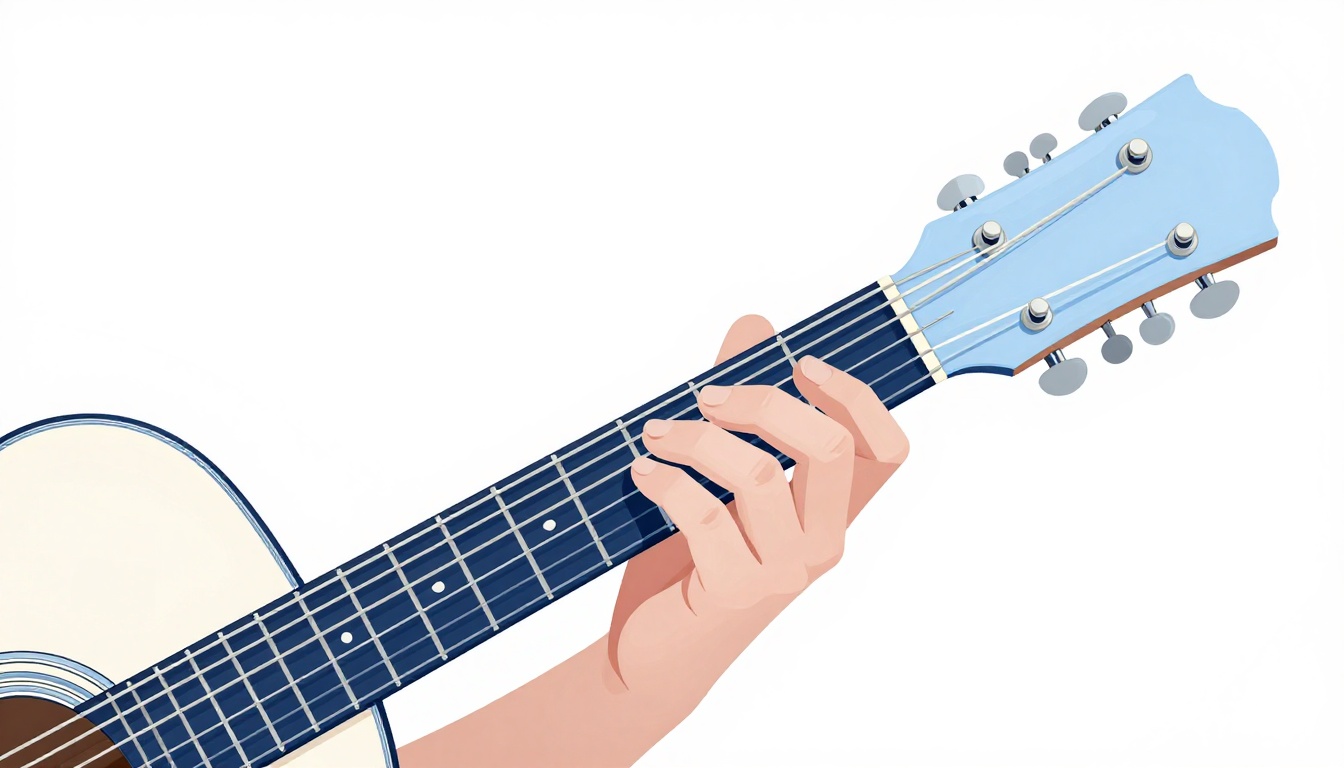
This is Theme A, the part everyone means when they say "the Für Elise part." Play all nine notes on the high E string (string 1).
| Note | String | Fret | Finger |
|---|---|---|---|
| E5 | 1 (high E) | 12 | 4 |
| D#5 | 1 (high E) | 11 | 3 |
| E5 | 1 (high E) | 12 | 4 |
| D#5 | 1 (high E) | 11 | 3 |
| E5 | 1 (high E) | 12 | 4 |
| B4 | 1 (high E) | 7 | 1 |
| D5 | 1 (high E) | 10 | 3 |
| C5 | 1 (high E) | 8 | 2 |
| A4 | 1 (high E) | 5 | 1 |
Play it in tab form and it looks like this:
e|--12-11-12-11-12--7--10--8--5--|
B|--------------------------------|
G|--------------------------------|
D|--------------------------------|
A|--------------------------------|
E|--------------------------------|
Everything in that phrase sits between frets 5 and 12 on one string, so once your fretting hand finds fret 12 and settles there, the rest of the phrase is small backward and forward movements from that anchor point rather than a hunt across the neck. The finger numbers above are a starting suggestion, not a rule. Some guitarists prefer covering frets 10, 11, and 12 with fingers 2, 3, and 4 and treating the jump down to fret 7 and fret 5 as a full hand shift; either approach is correct as long as your fingering is consistent every time you repeat the phrase.
Standard Tuning or Drop D for This Piece
Most guitar arrangements of "Für Elise" use standard tuning, and the tab above assumes it. You do not need to retune anything to play the famous opening theme.
Some fuller fingerstyle arrangements that include the bass accompaniment use Drop D tuning instead, lowering the low E string down a whole step to D and often transposing the whole piece down to D minor. The reasoning is straightforward: a fuller arrangement needs a low bass note to anchor the left-hand part, and an open low D string gives a solid, ringing root note that a fretted low E cannot match without extra left-hand work.
| Approach | Tuning | What it is best for |
|---|---|---|
| Melody only | Standard, E-A-D-G-B-E | Learning the famous theme fast, no retuning needed |
| Full fingerstyle arrangement | Drop D, D-A-D-G-B-E | Solo arrangements that add the rolling bass line underneath |
If you are here specifically for the recognizable opening phrase, stay in standard tuning. Reach for Drop D only once you are trying to build out the full arrangement with the bass part included, which is covered further down.
Counting the 3/8 Time Signature
"Für Elise" is written in 3/8 time, which trips up a lot of guitarists coming from rock and pop, where 4/4 is the default assumption for almost everything. A 3/8 measure holds three eighth notes, so you count "one, two, three" per bar, with each count landing on an eighth note rather than a quarter note the way "one, two, three, four" usually does in a waltz-feel 3/4 bar.
In practice, this means the famous opening phrase moves faster relative to the beat than it might sound like at a glance. The E-D#-E-D#-E run at the start is five eighth notes in quick succession, essentially one and two-thirds of a bar, before the phrase continues into B-D-C-A. Counting out loud, "one-two-three, one-two-three," while playing the phrase slowly is the fastest way to internalize where each note actually falls, rather than relying on how the phrase sounds from having heard the recording a hundred times.
The tempo marking Beethoven gave the piece is "Poco moto," Italian for "a little motion," which is a mood instruction more than a strict metronome number. Most performances sit at a walking, unhurried pace, closer to a stroll than a race, which is worth keeping in mind before you push tempo, since rushing this piece is one of the fastest ways to make it sound wrong even when every note is correct.
Getting the E to D# Oscillation Clean
The opening five notes, E-D#-E-D#-E, alternate rapidly between fret 12 and fret 11 on the high E string. This tiny movement is the single most recognizable sound in the piece, and it is also the part most likely to sound sloppy in a beginner's first attempts.
Use One Finger, Not Two
Fretting fret 12 and fret 11 with two different fingers introduces a coordination problem you do not need: your hand has to time two different fingers lifting and pressing in alternation, and any tiny mismatch between them shows up as an audible hitch. Using a single finger, most commonly your fourth finger (pinky) or third finger, and simply rocking it back one fret and forward one fret again removes that coordination problem entirely. The finger never leaves the string; it just rolls between the two frets.
Keep the Motion Small
Because the two frets sit right next to each other, the physical motion needed is tiny, a few millimeters of finger movement, not a visible hand shift. Beginners sometimes exaggerate the motion the way they would for a bigger interval elsewhere on the neck, which slows the alternation down and makes it sound labored rather than smooth. Practice the E-D# alternation on its own, at a slow, even pulse, before attaching it to the rest of the phrase, and keep the motion as economical as your hand allows.
Picking Consistency Matters as Much as Fretting
Every note in this phrase needs a clean pick or fingertip strike for the alternation to read clearly. If your picking hand strikes some notes harder than others, the phrase sounds uneven even when the fretting is perfect. Practice the E-D# alternation with a metronome at a slow tempo and listen specifically for whether every note has the same volume and clarity, not just whether the pitches are correct.

Adding the Bass Arpeggio Underneath the Melody
Beethoven's original writes a rolling left-hand accompaniment under the melody, broken chords played one note at a time rather than struck together, which gives the piece its constant sense of forward motion even though the melody itself pauses often. Reproducing this on a single guitar, played by one person, means finding a way to sound both the melody and a moving bass line at once, which is a genuinely different challenge from playing the melody alone.
The most common solution is to let your thumb handle a steady, repeating bass pattern on the lower strings, typically alternating between two or three notes that outline the underlying chord, while your other fingers pick out the melody higher up. For the A minor sections, that usually means your thumb moving between the open low E string (or a fretted note if you are in Drop D and want the root on the D string) and a note a few frets up on the A string, filling in the harmony while your fingers handle the E-D#-E-D#-E melody above it.
This is meaningfully harder than the melody-only version covered earlier in this post, because your two hands are now doing two independent, overlapping jobs rather than one shared job. If you are new to fingerstyle playing generally, it is worth being comfortable with the melody alone first, since trying to add the bass part before the melody is automatic under your fingers usually means both parts suffer rather than either one improving.
A Simplified Bass Pattern to Start With
Rather than attempting Beethoven's full broken-chord accompaniment immediately, a simplified version keeps a single sustained or slowly repeated bass note under each phrase of the melody rather than a constantly moving line. This loses some of the original's momentum but gives your fretting and picking hands room to focus on the melody's timing first, with the fuller accompaniment added once that is solid.
| Stage | Bass part | What it teaches |
|---|---|---|
| 1 | No bass, melody only | Timing and the E-D# oscillation |
| 2 | One sustained low note per phrase | Coordinating two hands without constant bass movement |
| 3 | Full rolling arpeggio bass | The complete fingerstyle arrangement |
A Fingerstyle Pattern for Melody and Bass Together
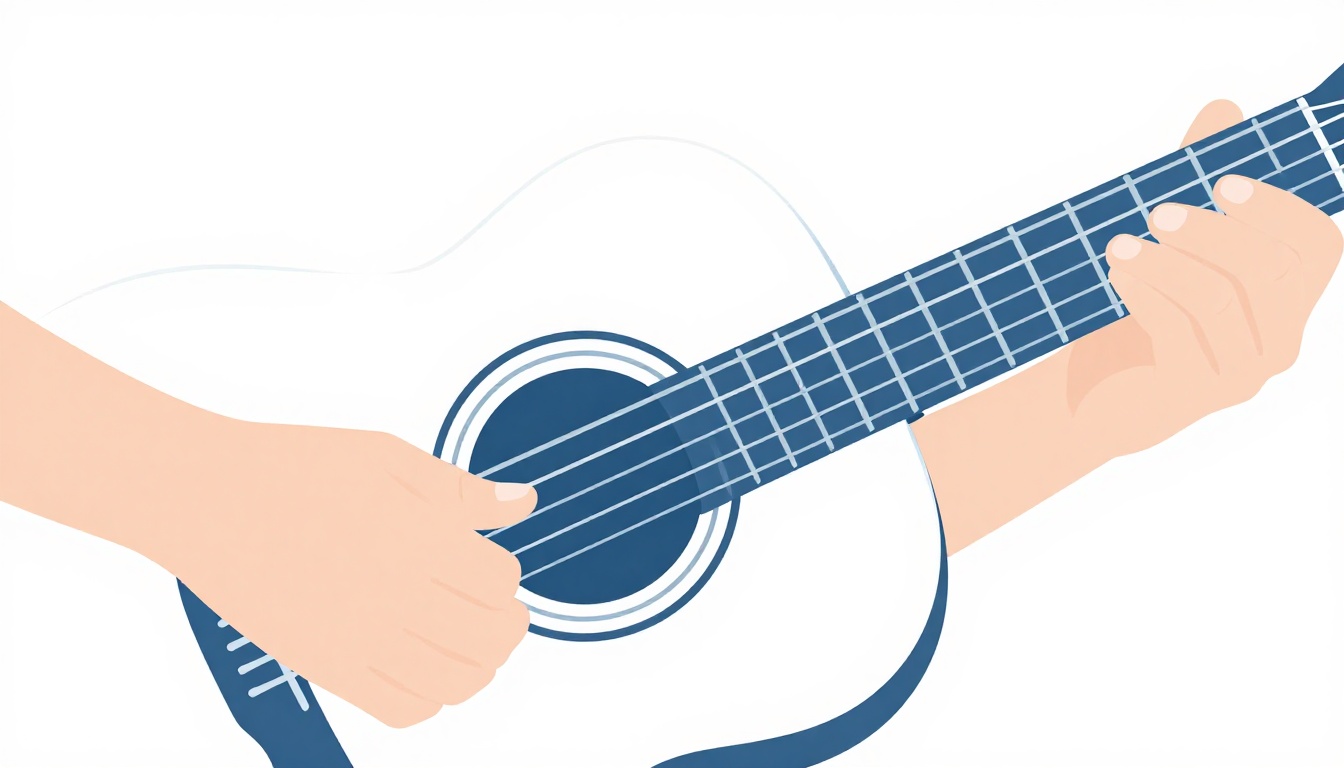
Classical and fingerstyle guitar technique names each right-hand finger with a letter, borrowed from Spanish: p for thumb (pulgar), i for index, m for middle, and a for ring finger. Assigning a consistent letter to a consistent job is what makes playing two independent parts with one hand possible at all.
A workable starting assignment for this piece is: p plays the bass notes on the low strings, i and m share the melody notes on the high E and B strings, and a is held in reserve for any moment the arrangement asks for a third note struck alongside the melody, such as a passing harmony note in the fuller arrangement. Practicing this assignment slowly, saying each letter out loud as you play its note, helps your hand learn which finger owns which job before you ask it to do that job at tempo.
Practicing Thumb and Fingers Independently
Before combining bass and melody, isolate each hand's job completely. Play just the bass pattern with your thumb alone, evenly, for a full minute. Then play just the melody with your fingers alone. Only once both feel automatic on their own should you combine them, and expect the first several attempts at combining them to feel clumsy even though each part individually feels easy; that gap between "easy alone" and "coordinated together" is normal for anyone learning independent-hand fingerstyle technique, not a sign you are doing something wrong.
Why Your Version Doesn't Sound Right
If you have the fret numbers correct and it still sounds off, it is almost always one of these.
Playing D Natural Instead of D#
The single most common note error in this piece is fretting D natural, one fret lower than it should be, instead of D#. On the high E string, D# sits at fret 11 and D natural sits at fret 10. Since the two notes are only a semitone apart, the error is subtle enough that some beginners do not catch it by ear right away, but it changes the character of the opening phrase from its distinctive chromatic tension to a plainer, less interesting interval. If the opening does not sound quite like the recording you know, checking fret 11 versus fret 10 is the first thing to verify.
Playing the Wrong Octave
Because the melody moves between notes that also exist an octave lower or higher elsewhere on the neck, it is easy to grab the right note name in the wrong octave, especially once you start experimenting with alternate fingerings further down the neck. A wrong-octave note is still musically "correct" in the sense that it shares a name with the intended note, but it will sound noticeably off against the rest of the phrase, since the melody's shape depends on specific octave placement, not just the right letter names.
Rushing the Eighth Notes
The opening E-D#-E-D#-E run moves quickly in 3/8 time, and beginners often speed it up further without realizing it, especially once the fretting hand feels comfortable with the small oscillation. A rushed opening throws off everything that follows it, since the rest of the phrase is timed relative to that opening run, not independently. Practicing with a metronome, even after the notes feel automatic, catches this kind of gradual speeding up that your ear adjusts to in the moment but that sounds clearly wrong on playback.
Muting the Bass Line by Accident
Once you add the thumb-driven bass part, it is common for the thumb to strike a string too softly, or for the fretting hand to accidentally mute a bass note meant to ring, especially while your attention is on the melody above it. Listen specifically for the bass line in isolation periodically while practicing the combined part, since it is easy for your attention, and therefore your ear's judgment, to drift entirely toward the melody and let bass problems go unnoticed.
Letting the High Notes Ring Into Each Other
The melody's small movements between adjacent or near-adjacent frets can blur together if your fretting hand does not lift cleanly off each note before moving to the next one, especially at fret 12 where less string length remains to ring clearly. If the opening phrase sounds smeared rather than crisp, check whether your fretting finger is lifting fully between notes rather than sliding or dragging.
Letting Notes Ring: The Guitarist's Substitute for a Sustain Pedal
A pianist playing "Für Elise" has a sustain pedal available, a foot control that lets struck notes keep ringing after the fingers have released the keys, blending the melody and the rolling bass line into a single wash of sound rather than a series of separate, cleanly stopped notes. A guitar has no equivalent pedal, which means a guitarist has to recreate that blended, sustained quality entirely through fretting-hand choices instead.
The main tool available is simply choosing, where possible, to let a fretted or open note continue ringing rather than muting it the instant you move to the next one. On the high E string melody, this mostly is not an option, since the notes move to new frets on the same string and the earlier note necessarily stops when the string is refretted. Where it matters more is in the bass accompaniment: letting an open low string ring across several beats, rather than cutting it off the moment your thumb moves on to its next note, is what gives a fingerstyle arrangement some of the same blended, resonant quality a piano gets from its pedal.
This is a subtle effect and easy to overlook, since it does not show up as a specific note or fret in a tab the way everything else in this post does. Listening specifically for whether your bass notes are ringing through or getting choked off early, and adjusting your fretting hand to allow the ones that should sustain to actually do so, is a genuine, if less obvious, part of making a fingerstyle arrangement of this piece sound full rather than clipped.
Learning It by Ear vs From Tab
Because almost everyone already knows this melody well before ever trying to play it, "Für Elise" is one of the more realistic pieces to attempt learning partly by ear rather than purely from tab, and there is a genuine case for doing both together rather than choosing one exclusively.
Learning from tab, as covered throughout this post, guarantees you the correct fret numbers and timing without guesswork, which matters especially for the D versus D# distinction covered earlier, an error your ear might not catch immediately even though it is only a single fret off. Learning by ear, once you already have the correct fret numbers under your fingers from the tab, sharpens your ability to recognize when your own playing has drifted from the reference recording you know, whether that is a timing issue, an inconsistent oscillation between the E and D#, or a bass note that is not sustaining the way it should.
A reasonable approach is to learn the tab first, exactly as written, and then spend time afterward playing along with a recording, using your ear to catch anything the tab alone did not fully convey, dynamics, the exact feel of the 3/8 timing, or how much a bass note should ring before the next one arrives. Tab gets you the correct notes; your ear, once trained on this specific melody, is what gets you the feel.
Picking With a Pick vs Fingers
Most arrangements of "Für Elise," including every source used for this post, are built around fingerstyle technique rather than a flatpick, and for good reason once you get past the melody-only version: a pick can play the melody alone reasonably well, but it cannot simultaneously pluck a moving bass line and a melody line the way your thumb and fingers can.
If you only want the melody-only version covered near the top of this post, a pick works fine, and it is a reasonable way to get the recognizable opening theme under your fingers quickly if you have never done fingerstyle playing before. The moment you want the fuller arrangement with the rolling bass part included, fingerstyle technique becomes close to mandatory, since it is what allows one hand to genuinely do two independent jobs at once.
Nylon-String vs Steel-String Guitar for This Piece
"Für Elise" was written for piano, so unlike a folk or classical guitar piece composed for the instrument, nothing about it dictates which type of guitar you should use. Both nylon-string classical guitars and steel-string acoustics can play every note covered in this post.
That said, the two instruments give noticeably different results. Nylon strings produce a softer, warmer, more rounded tone that many listeners associate with classical repertoire, and the lower string tension is gentler on fingertips during the extended fingerpicking practice a full arrangement demands, which matters if you are new to fingerstyle playing generally. Steel strings ring brighter and sustain longer, which can make the melody's higher notes, particularly the repeated fret 12 in the opening phrase, project more clearly, but the higher tension asks more of your fingertips over a long practice session.
Neither instrument is wrong for this piece, and plenty of well-regarded recordings exist on both. If you only own one type of guitar, there is no reason to acquire the other specifically for this piece. If you are choosing between two guitars you already own, nylon strings are the more traditional and generally more comfortable choice for extended fingerstyle practice, while steel strings give a brighter, more cutting version of the same melody.
Playing It as a Two-Guitar Duet
Because the melody and the bass accompaniment genuinely are two separate, independent musical lines in Beethoven's original writing, splitting them between two guitarists is a natural and often easier way to play the piece with the full arrangement intact, rather than asking one player to coordinate both parts alone.
In a duet arrangement, one guitarist plays the Theme A melody exactly as covered earlier in this post, staying on the high E string in the 5th-to-12th-fret range, while a second guitarist handles the rolling bass accompaniment on the lower strings, either in standard tuning or Drop D. This splits the coordination challenge that makes the solo fingerstyle version difficult into two much simpler, single-line parts, and it is a genuinely good option if you are learning alongside another guitarist, a student and a teacher, or two friends who both want to play but neither wants to tackle the full solo arrangement yet.
The Rest of the Piece: Theme B, the Return, and Theme C
"Für Elise" is built as a rondo, a form where a main theme keeps returning between contrasting sections, following an A-B-A-C-A pattern. Everything covered so far is Theme A, the section that returns three separate times across the piece and is genuinely the part almost everyone means when they say they want to learn "Für Elise."
Theme B moves into F major and is considerably more technically demanding than Theme A, both on piano and in guitar transcription, before returning to the familiar A minor theme. Theme C shifts further, into D minor, introducing a more agitated character built on repeated pedal-point chords and dramatic diminished seventh chords, a noticeably darker and more harmonically tense passage than anything in Theme A, before the piece resolves back to the main theme one final time to close.
| Section | Key | Character |
|---|---|---|
| A (main theme) | A minor | The famous, widely recognized melody |
| B | F major | More technically demanding, brighter |
| A (return) | A minor | Main theme repeats |
| C | D minor | Agitated, built on diminished seventh chords |
| A (final return) | A minor | Closes the piece |
For most guitarists, especially anyone arriving at this piece specifically because of its famous opening, learning Theme A thoroughly, including the bass accompaniment, is a complete and satisfying goal on its own. Theme B and Theme C ask for considerably more range across the neck and more advanced fingerstyle coordination, and are a reasonable next project once Theme A feels genuinely comfortable rather than something to add before that point.
What Makes the Later Sections Harder on Guitar
On piano, moving into a new key mostly means the hands find a different set of white and black keys. On guitar, a key change usually means the melody and accompaniment move into a different region of the neck entirely, which is a bigger physical adjustment than it looks like on paper. Theme B's shift into F major, in particular, pushes the melodic material higher and wider across the fretboard than anything in Theme A, asking for more position shifts within a single phrase rather than the compact five-fret span the famous opening theme stays inside.
Theme C's diminished seventh chords are also a different technical animal from anything in Theme A. A diminished seventh chord is built from stacked minor thirds, which on guitar tends to produce shapes that do not repeat the comfortable, single-string simplicity of the opening melody, and instead ask for small, precise stretches across adjacent strings. None of this is a reason to avoid the later sections if you want the complete piece, but it is worth knowing going in that Theme B and Theme C are a real step up in technical demand from Theme A, not simply "more of the same melody continued."
The Piece's Own "Right Note" Controversy
Even the printed sheet music for "Für Elise" is not fully settled, which is a strange thing to learn about a piece this famous. The dispute centers on a single note in bar 7 and the equivalent spot each time Theme A repeats. Ludwig Nohl's original 1867 publication, based on Beethoven's autograph manuscript that has since been lost, gives the note as E, the root of the chord. A separate surviving document, an earlier draft in Beethoven's own hand held at the Beethoven-Haus in Bonn, gives the same spot as D instead, the seventh of the chord rather than the root.
The publisher G. Henle Verlag, whose Urtext editions are widely treated as the modern scholarly standard for Beethoven's music, ultimately chose D for their edition, reasoning that the draft represents Beethoven's own documented handwriting, that a D produces a more harmonically interesting dominant seventh chord consistent with how Beethoven treats similar passages elsewhere in the piece, and that Nohl may have quietly "corrected" what looked like a dissonant note back to a plainer, more conventional one when he transcribed the now-missing original. Since that original manuscript has never resurfaced, nobody can fully settle which note Beethoven actually intended to be final.
None of this changes the guitar tab given earlier in this post, which follows the far more commonly used E version that most recordings, sheet music, and guitar arrangements are built on. But it is worth knowing if you ever compare two printed versions of this piece and notice they disagree on a note in that spot, since both have a real manuscript behind them rather than one simply being a transcription error.
A Chord-Based Version If You'd Rather Strum Than Fingerpick
Everything covered so far treats "Für Elise" as a single melodic line, which is how the piece is actually written and the only way to reproduce its famous opening theme note for note. If fingerpicking a melody is not where you want to start, or you want a simpler way to accompany someone else playing or singing the tune, a chord-based approach built on the underlying A minor harmony is a reasonable simplification, even though it does not reproduce the melody itself.
The piece's main theme is built over A minor harmony with a dominant chord based on E, which on guitar means the open chords A minor, C major, G major, and E major (or E7) cover most of the underlying movement. A simple strummed or arpeggiated pattern through Am, then E (or E7), then back to Am gives you the harmonic backbone under the famous opening phrase without needing to fingerpick the melody itself.
| Chord | Role | Common open shape |
|---|---|---|
| Am | The tonic, home base of the piece | X02210 |
| E or E7 | The dominant, creates the pull back to Am | 022100 (E) or 020100 (E7) |
| C | Relative major, used in the piece's broader harmony | X32010 |
| G | Used in later sections and transitions | 320003 |
This is a genuinely different, and easier, way into the piece than the note-for-note tab covered earlier, and it is a reasonable starting point if basic open chords are where you currently are as a player. It will not sound like the piece most people recognize, since the melody is what makes "Für Elise" instantly identifiable, not the underlying chords, but it is a legitimate way to accompany the tune or warm up on the harmony before attempting the full melodic version.
Easier and Melody-Only Versions for Beginners
If the full fingerstyle arrangement with the bass line feels like too much right now, there is nothing wrong with stopping at the melody-only version. It is, on its own, the single most recognizable eight bars in this piece, and playing it cleanly and in time is a genuine, complete accomplishment rather than a lesser version of the "real" piece.
| Version | What you play | Skill needed |
|---|---|---|
| Opening phrase only | The nine-note E-D#-E-D#-E-B-D-C-A run | Basic fretting, one string |
| Full Theme A melody, no bass | All eight bars of the main theme, single line | Fretting across a five-fret span, timing in 3/8 |
| Theme A with simplified bass | Melody plus one sustained low note per phrase | Basic two-hand coordination |
| Full fingerstyle arrangement | Melody plus rolling bass accompaniment | Independent thumb and finger coordination |
Starting at the top of that table and working down as each stage becomes genuinely comfortable, rather than jumping straight to a full fingerstyle arrangement, is the more reliable path to actually playing this piece well rather than playing a rushed, uneven version of the hardest form of it.

Playing Higher Up the Neck vs Open Position
The tab given earlier in this post keeps the entire opening theme within frets 5 through 12 on the high E string, which is a genuinely comfortable, compact position once your hand settles there. Some arrangements instead spread the same melody notes across open strings and lower frets closer to the nut, which changes the tone slightly, open strings ring a little brighter and longer than the same pitch fretted further up the neck, but asks for more string crossing rather than the single-string simplicity of the version in this post.
Neither approach is more correct than the other; they are different arrangement choices trading off tone against hand position. If you are learning this piece for the first time, the single-string version given here is the more forgiving starting point, since it removes string-crossing coordination from the list of things you need to think about while you are still learning the melody's timing and the E-D# oscillation.
Common Mistakes Beyond the Notes Themselves
Treating It Like a Fast, Flashy Piece
Because the opening notes move quickly within their own small phrase, it is tempting to treat the whole piece as fast and showy. Beethoven's own tempo marking, "Poco moto," a little motion, argues against that reading. The piece's character comes from its melodic and harmonic content, not from speed, and playing it faster than a comfortable walking pace usually makes it sound rushed rather than impressive.
Ignoring Dynamics
Piano performances of this piece lean heavily on dynamic contrast, playing some phrases softly and others with more weight, which is a large part of what keeps a mostly quiet, repetitive melody interesting across several minutes. A guitar version played at a single unchanging volume throughout loses much of that interest, even with every note and every rhythm correct. Varying your attack, picking or plucking some phrases more gently than others, is worth building in once the notes themselves are secure.
Skipping the Slow Practice Because the Melody Feels Familiar
Because most people already know this melody by ear before ever trying to play it, there is a strong temptation to skip slow, deliberate practice and jump straight to playing it at a natural-feeling tempo. Familiarity with how it should sound is not the same as your hands being able to produce it accurately yet, and skipping the slow stage tends to bake in small timing and fretting errors that are harder to unlearn later than they would have been to avoid in the first place.
Not Isolating the Bass Part When It Goes Wrong
When a fuller fingerstyle attempt sounds messy, it is common to assume the problem is the melody, since that is the part you are most consciously focused on, and to re-practice it repeatedly without improvement. Often the actual problem is in the bass line, which is receiving less conscious attention and is therefore where errors hide. Isolating and checking the bass part on its own, the way suggested earlier in this post, catches this kind of misdiagnosed problem quickly.
How Long This Piece Actually Takes to Learn
The opening nine-note phrase, on its own, is learnable by most beginners within a single practice session, since it is confined to one string and a five-fret range. The full eight-bar Theme A melody, played cleanly and in time, is realistic within a week of short daily practice for someone already comfortable with basic fretting, mostly because the timing in 3/8 and the E-D# oscillation both take some repetition to feel natural rather than because the notes themselves are difficult to find.
The full fingerstyle arrangement, melody and rolling bass together, is a considerably longer project, often several weeks for someone new to independent two-hand fingerstyle coordination, since that skill generalizes well beyond this one piece and is worth developing patiently rather than rushing specifically to finish "Für Elise." If your goal is genuinely just the famous opening theme rather than a full performance-ready arrangement, you can reasonably expect to be playing it recognizably within days, not weeks.
A Practice Routine for Für Elise
Start with the opening nine-note phrase alone, slow, until the E-D# oscillation feels smooth and even. Extend to the full eight-bar Theme A melody once that phrase is solid. Only after the full melody is comfortable at a steady tempo should you introduce the bass accompaniment, first as a single sustained note per phrase, then as the fuller rolling pattern.
| Days | Focus |
|---|---|
| 1 to 2 | Opening nine-note phrase, slow, isolating the E-D# oscillation |
| 3 to 4 | Full Theme A melody, all eight bars, melody only |
| 5 to 6 | Simplified bass part added, one sustained note per phrase |
| 7 to 9 | Full rolling bass accompaniment introduced, slow tempo |
| 10 | Full Theme A, melody and bass together, tempo brought up gradually |
If you are building this into a short daily habit rather than one long session, the homepage has more on structuring focused fifteen-minute practice blocks that actually stick. If reading tab notation itself, rather than this specific piece, still feels unfamiliar, how to read guitar tab covers the six-line system and every symbol from the ground up.
Frequently Asked Questions
What key is "Für Elise" in?
The main theme, the famous part almost everyone means by the title, is in A minor. Later sections in the piece move through F major and D minor before returning to A minor at the end.
Do I need a special tuning to play the opening theme?
No. The famous nine-note opening phrase plays entirely on the high E string in standard tuning, E-A-D-G-B-E. Drop D tuning is only useful once you add the fuller bass accompaniment.
Why does my version sound wrong even though the notes seem right?
The most common cause is fretting D natural (fret 10) instead of D# (fret 11) on the high E string during the opening run. The two notes are a semitone apart and easy to mix up if you are not checking the fret number carefully.
Is "Für Elise" hard to play on guitar?
The famous opening theme, melody only, is genuinely approachable for a beginner comfortable with basic fretting and counting in a time signature other than 4/4. The fuller fingerstyle arrangement with the rolling bass accompaniment is considerably harder, since it asks your two hands to do independent, overlapping jobs at once.
Do I need to know classical guitar technique to play this?
Fingerstyle technique, thumb and fingers rather than a flatpick, is necessary for the full arrangement with the bass line, but you do not need formal classical guitar training. If you only want the melody-only version, a pick works fine.
What tempo should I play it at?
Beethoven marked the piece "Poco moto," meaning a little motion, which points toward an unhurried, walking pace rather than a fast tempo. Most recordings sit closer to a relaxed stroll than a race, and rushing the piece is one of the more common ways a technically correct version still sounds wrong.
Can I play just the famous part without learning the whole piece?
Yes. Theme A, the melody covered in full in this post, is a complete, self-contained, and widely recognized eight bars on its own. Many guitarists learn exactly this much and stop there, and there is nothing incomplete about doing so.
Who was Elise?
Nobody knows for certain. The leading theories point to Therese Malfatti, a student Beethoven may have proposed to, the soprano Elisabeth Röckel, or a child prodigy named Elise Barensfeld. The manuscript itself was not published until decades after Beethoven's death, and no surviving document confirms which one it was.
Should I learn the melody or the full fingerstyle arrangement first?
The melody. Theme A's melody alone, without the bass accompaniment, is a complete and satisfying goal on its own, and trying to add the bass part before the melody is fully automatic under your fingers tends to slow down progress on both rather than speeding either one up.
Is this piece in the public domain?
Yes. Beethoven composed it in 1810 and it was first published in 1867, both well outside any copyright term still in force today. Any arrangement, tab, or recording of the underlying composition is free to use, though a specific published arrangement or recorded performance can still carry its own separate rights.
GuitarLowKey
Ready for fifteen focused minutes?
Open the web app and train the change that is blocking your song.